Review: Victoria (2015), or “Help Me, Alessia Cara!”

VictoriaVictoria opens with strobe lights, club music, and bathroom graffiti. The first few minutes of the film feel like a particularly intoxicating blend of A Night at the Roxbury and Gaspar Noé’s Enter the Void. Victoria, a young Spanish girl played by Laia Costa, dances her way through a crowd and is quickly harassed by several “real Berlin” guys. This is when the film becomes frustrating to watch.
Despite their reprehensible, arguably predatory moments early in the film, the “real Berlin” guys—primarily Sonne, Boxer, and Blinker—induct Victoria into their close-knit, Trainspotting-style group. Sonne and Victoria begin to develop a relationship, and all seems well in this hazy late-night version of Berlin—until Boxer needs a favor. Then this one-shot film becomes a blur of guns, lights, and muffled dialogue.

Like a dark, more visceral version of Whit Stillman’s The Last Days of Disco, Victoria’s story questions the necessity of maturity. Though, as a character, Victoria has strength and courage, she possesses a sort of self-aware naïveté, a seemingly conscious willingness to allow the forces around her to guide her actions. The fact that this film is a single continuous take enhances the idea that Victoria’s life is one steady stream of pressures and obligations—she never has a moment to reflect. In this way, Victoria is more relatable than many films: there are no cuts, no blackouts, no second attempts. The audience can analyze how the ugly minutiae of every moment impacts Victoria’s spirit. Continue reading

The Most Intriguing TV Opening Credit Sequences

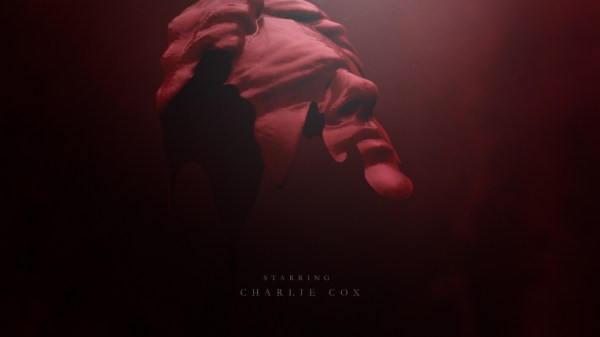
DaredevilNetflix assumes that I want to skip opening credit sequences, which isn’t true. Yes, Netflix, I have been binge-watching Marvel’s Daredevil for the past six hours, but I still want to see the melting maroon wax (or blood?) statue of Lady Justice turn slowly as the eerie cadence of high notes fights with the low, booming bass sounds that slowly intensify beneath them. It gets me in the mood.
A title sequence is an emotional trigger, and I appreciate the opportunity to mentally prepare myself for the narrative that follows. This article contains an analysis of some of the more musically intriguing and visually engaging opening sequences. Obviously, some opening credit sequences, like those of The Simpsons and The Fresh Prince of Bel-Air, are well-established classics, so I will not discuss those below. Other title sequences feature brilliant theme music but do not offer much in terms of visuals, like those of Firefly and Battlestar Galactica. Even the simple melodies of shows like Scrubs and Gilmore Girls work well as triggers of nostalgia and empathy, but they will not appear below.

Other classic intro sequences that will not be discussed here: the concise opening of The Twilight Zone, the friendly notes of Cheers, the mission statement of Star Trek, the Big History explanations of The Big Bang Theory, and the catchy expositional songs of The Brady Bunch and Gilligan’s Island.

Dexter Continue reading

Review: 10 Cloverfield Lane (2016)

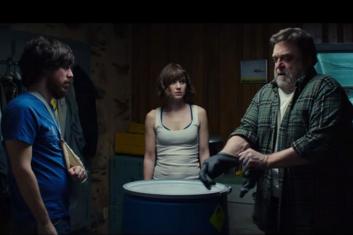
10 cloverfield laneI loved Cloverfield. As an avid monster movie fan and gamer—I liken the feel of Cloverfield to a mix of Call of Duty and Resident Evil—this is not the type of sequel I anticipated. When the marketing for 10 Cloverfield Lane came out, I was baffled that what looked like a psychological thriller bore the Cloverfield title and was the supposed next entry in a giant alien monster movie franchise. All these things left my expectations low but hopeful.

The beginning starts cautiously, establishing the mood with a strong and foreboding score at the forefront. You are given details and character hints without any dialogue. Then, once you’ve been established in the world and you settle in for what you expect to be a slow build to the first tension of a slow psychological thriller, everything explodes on screen in full audio and visual. I think this opening epitomizes the shock that I felt throughout the entire film. This movie is an odd but pleasant surprise throughout, and definitely nothing I was expecting.

The thing that stands out first is the score and the sound mixing. The mechanical noise of the door opening and shutting, the clatter of objects, the jostling of a car shaking and rolling; all the sound in the film feels like it’s turned up to 11 and it presents a visceral world that keeps you braced for something terrible yet to come. At some points I thought the sound and the score might’ve tried a little too hard to push the drama of a scene, but they played a big part in shaping it as well. Ultimately, as the film rises to its peaks the sound really stands out in delivering the drama of each scene. Continue reading

Why “Which Movie Director Would Direct My Life?” Is a Very Important Question

Community AndreWhen countless individuals sat down to read Rick Warren’s The Purpose Driven Life with some chardonnay and oversized Snuggies, they likely did so with a sense of cautious enthusiasm and understandable desperation. Who, honestly, would not want to discover how to make his or her life as meaningful as possible? Secular or not, human beings search for meaning. Laurence Fishburne’s vague philosophizing in The Matrix taught me that, on some level, everyone searches for truth. And, from what I’ve learned from Community‘s Jeff Winger about the search for truth, personal introspection seems like a good place to start. If I can’t know the truth about life, I can at least know the truth about myself, right?
Equipped with that half-baked logic, I propose that the following question can effectively serve as a lens through which to peer deep into your soul:

Which film director would direct your life?

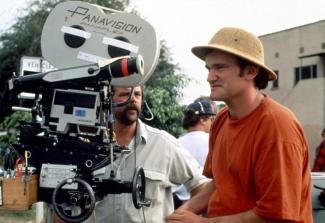
Quentin TarantinoObservant readers will note that I used “would” instead of other possible auxiliary verbs. This diction suggests, among other things, that your life harmonizes with the style of a particular director so well that that director would have no choice but to direct your life. That director is your soul mate, your spirit animal, your emotional doppelganger. To pick your director, you must know yourself. This is where the introspection begins.

Some matches may be obvious. If you appreciate calculated violence, targeted monologues (mostly about violence), and looking in car trunks (or out of them), then Quentin Tarantino would direct your life. Wes Anderson would direct the lives of those who prefer quirky symmetry (meaning lives that feature chaotic naïveté over backdrops of security and comfort). And Ang Lee would direct your life if it is filled with frustrating beauty—an aesthetically pleasing pain, as if the beauty highlights the acuteness of your angst.

Kathryn BigelowSome directors are difficult to categorize. The following paragraphs explain several brilliant directors and their ideal matches.

Kathryn Bigelow often showcases the struggles and consequences associated with fierce individuality. Her protagonists are alone against the world, whether that world is symbolized as a bomb, a looming nuclear war, or Osama bin Laden. Her emotional doppelgängers are strong-willed, almost hard-headed individuals who believe that, ultimately, one truly significant accomplishment can overshadow an entire life filled with loneliness and skepticism.

If Sam Mendes directs your life, you fall into one of two categories: you are either a somewhat weathered renegade who fights for the greater good, or you live in the suburbs. And, as odd as it sounds, those two categories are closely linked. Like extended narrative versions of “Rockin’ the Suburbs” by Ben Folds, movies like American BeautyRevolutionary Road, and Away We Go highlight the hopelessness of suburbia. Oscar-winner American Beauty combines the bleak social commentary of Paul Thomas Anderson and the unfiltered angst of Blink-182. Reframed as an inner-city spy version of Lester Burnham, James Bond becomes a stark symbol of the middle-class’s struggle against oppressive systems. To pick Sam Mendes as your life’s director, you must bounce between extremes of against-the-odds hopefulness and utter despair. You get to decide which wins: your hope (James) or your despair (Lester). Continue reading

Brilliant Short Films You Can Watch Right Now

Don HertzfeldDon Hertzfeldt is an impressive artist. Hertzfeldt is a two-time Oscar nominee, and a 2012 Indiewire Best Director poll placed Hertzfeldt above filmmakers like Richard Linklater and Steven Spielberg. While the short film genre has always been an artistic platform for profound ideas, few short films have captured the public’s attention more than Hertzfeldt’s. Rejected, for example, has gained a cult following. Rejected was first screened at the San Diego Comic Con and has since been viewed by Cartoon Network audiences and Sundance Film Festival attendees. Rejected is a simple, absurd animated short film that tackles big concepts. In about nine minutes, Hertzfeldt introduces audiences to an assortment of supposedly rejected cartoon clips. Though the characters seem basic and the narrative seems fractured, the short film as a whole shines a somber light on the plights of the forgotten.

Hertzfeldt’s latest short film, World of Tomorrow, is now on Netflix. Of World of Tomorrow, culture commentator David Sims writes:

The idea of the copy-pasted brain, and the moral quandaries that could stem from it, has enjoyed a quiet revival in sci-fi recently, with World of Tomorrow as the must-see standard-bearer. Hertzfeldt, whose work always tends towards the absurd, had never experimented with the genre before making this short, which was his first digitally produced film. As Emily and her clone drift through the “outernet,” the virtual reality through which all people in the future apparently communicate, the environment pops and crackles around them. But for all of his fantastical imagery, Hertzfeldt triumphs by focusing tightly on his protagonist’s emotions, which are seemingly haywire thanks to their being a Xerox of a Xerox of a Xerox. “I am very proud of my sadness, because it means I am more alive,” the clone proclaims, while acknowledging that she has occasionally fallen in love with inanimate objects in the past.

As World of Tomorrow proves, short films can wrinkle your brain as much as feature films can. Below are some short films (some by Hertzfeldt) that you can watch right now. Enjoy!

Everything Will Be Ok (2006) dir. Don Hertzfeldt

Created after Rejected and before World of Tomorrow, this animated short film is the first portion of a three-part story about Bill, a passive, thoughtful stick-figure man. Everything Will Be Ok is seventeen minutes of social commentary that slowly transitions from amusing and relatable to unsettling and poignant.

Are You the Favorite Person of Anybody? (2005) dir. Miguel Arteta

Written by Miranda July (The Future) and starring John C. Reilly (Step Brothers), this short film features three different responses to a seemingly simple question. Bob Davidson calls it a “profoundly simple short.” (Warning: Film may be a trigger for those with depression.)

Continue reading

Why Kimmy Gibbler Should Be Your Role Model

Fuller HouseIt has been described as “an inescapable nightmare” and “a new low in the current culture’s inability to leave behind the blankies, binkies and wubbies of one’s youth.” Writer Rich Juzwiak described the viewing experience as “what tripping on ayahuasca must be like.”

Critics do not like Fuller House.

Though, as of today, the new Fuller House has earned a paltry 38% on Rotten Tomatoes and seems to offer little more than aggressive nostalgia and thinly veiled jabs at the Olsen twins, the somewhat forced existence of this Netflix sequel has given the world an unexpected and well-needed gift: another glimpse into the life of Kimmy Gibbler, one of TV’s most underrated heroines.

Kimmy Gibbler is the socially awkward friend of D.J. and next-door neighbor of the Tanner family. Her role in the show is to permeate the often sickeningly wholesome Tanner family environment with hijinks and unsolicited opinions. Despite D.J.’s unclear motives for interacting with Kimmy—”whether it’s because she can live on the edge a little by hanging around her, or because she gets to practice her leadership skills and guide her, is uncertain”—many episodes of Full House include at least one scene with this eccentric teenager.

Taken as a whole, these scenes tell the courageous story of a unique, independent female who, which grace and wisdom, rejects the antagonistic behavior of those around her. Continue reading

88th Academy Awards: Big B’s Predictions

Best PictureThe Big Short
The Revenant
Should Win: The Big Short
Disappointment: Bridge of Spies
Should Have Been Nominated: Straight Outta Compton
Should Have Been Nominated: Star Wars: The Force Awakens
Best Director
Alejandro Gonzalez Inarritu, The Revenant
Honorable Mention: Adam McKay, The Big ShortStraight Outta Compton
Best Actor
Leonardo DiCaprio, The Revenant
Best Actress
Brie Larson, Room
Honorable Mention: Saoirse Ronan, Brooklyn
Should Have Been Nominated: Alicia VikanderEx Machina
Best Actor in a Supporting Role
Sylvester Stallone, Creed
Honorable Mention: Tom Hardy, The RevenantThe Revenant
Honorable Mention: Mark Ruffalo, Spotlight
Should Not Have Been Nominated: Christian Bale, The Big Short
Should Have Been Nominated: Oscar IsaacEx Machina
Best Actress in a Supporting Role

Continue reading

The 87th Academy Awards: Big B’s Oscar Predictions


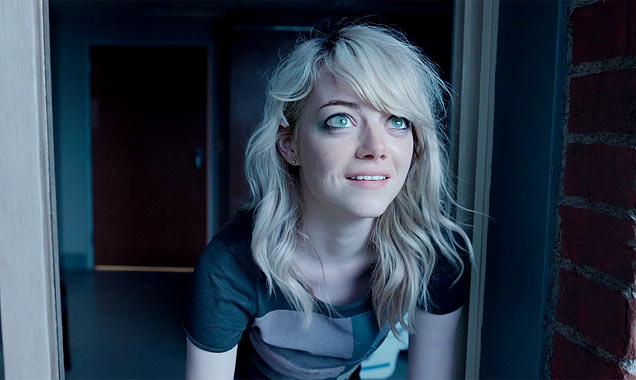
Best ActressEmma Stone

Julianne Moore, “Still Alice”

Best Supporting Actress

Patricia Arquette, “Boyhood”

Honorable Mention: Emma Stone, “Birdman”

Should not have been nominated: Keira Knightly, “The Imitation Game”

Should have been nominated: Tilda Swinton, “Snowpiercer”

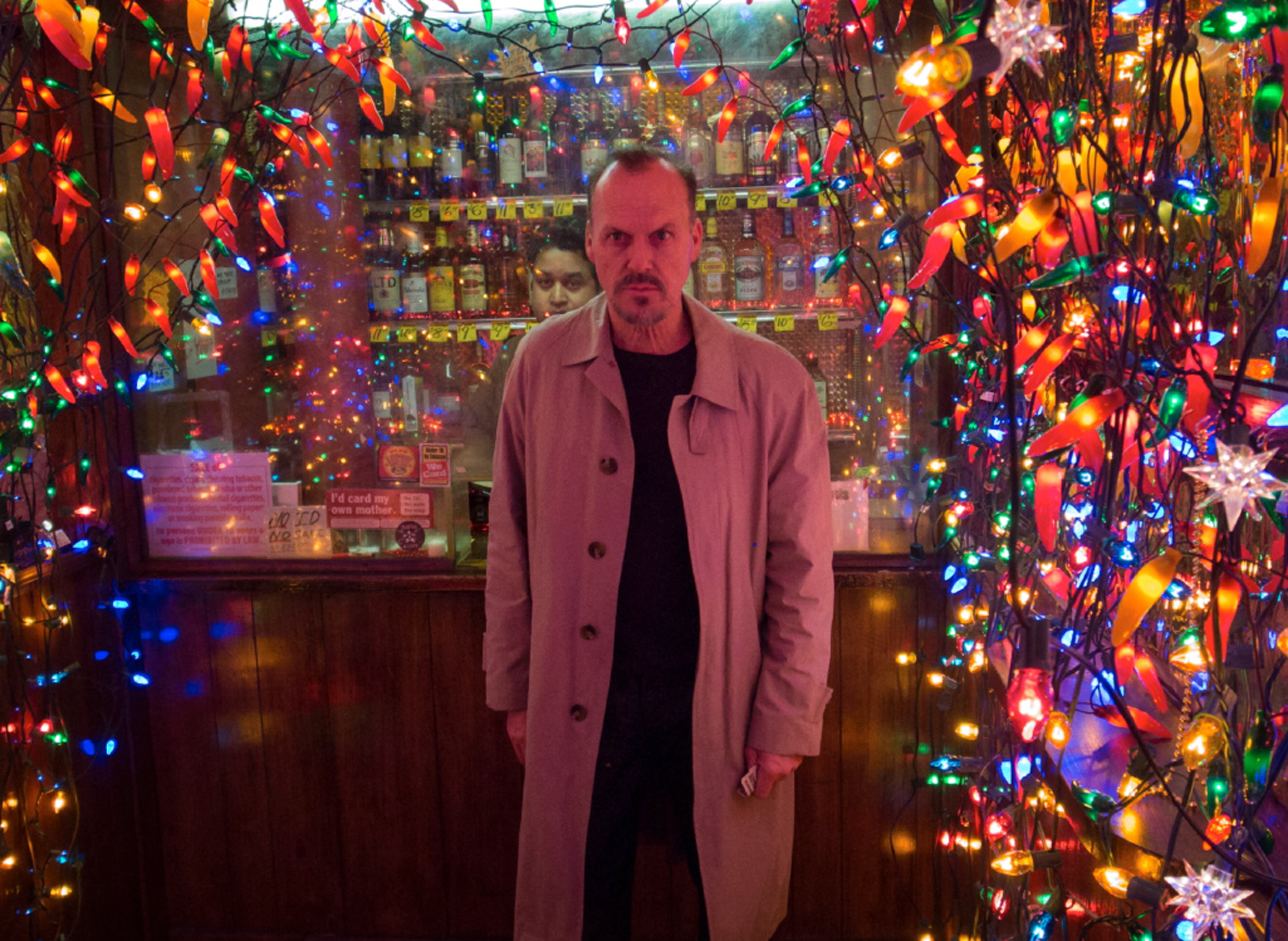
Best ActorBirdman

Michael Keaton, “Birdman or (The Unexpected Virtue of Ignorance)”

Should have been nominated: Ralph Fiennes, “The Grand Budapest Hotel”

Best Supporting Actor

J. K. Simmons, “Whiplash” Continue reading

The 86th Academy Awards: Big B’s Oscar Predictions

Oscars SITEBest Actress

Cate Blanchett, “Blue Jasmine”

Best Supporting Actress

Lupita Nyong’o, “12 Years a Slave”

Honorable Mention: Julia Roberts, “August: Osage County”

Best Actor

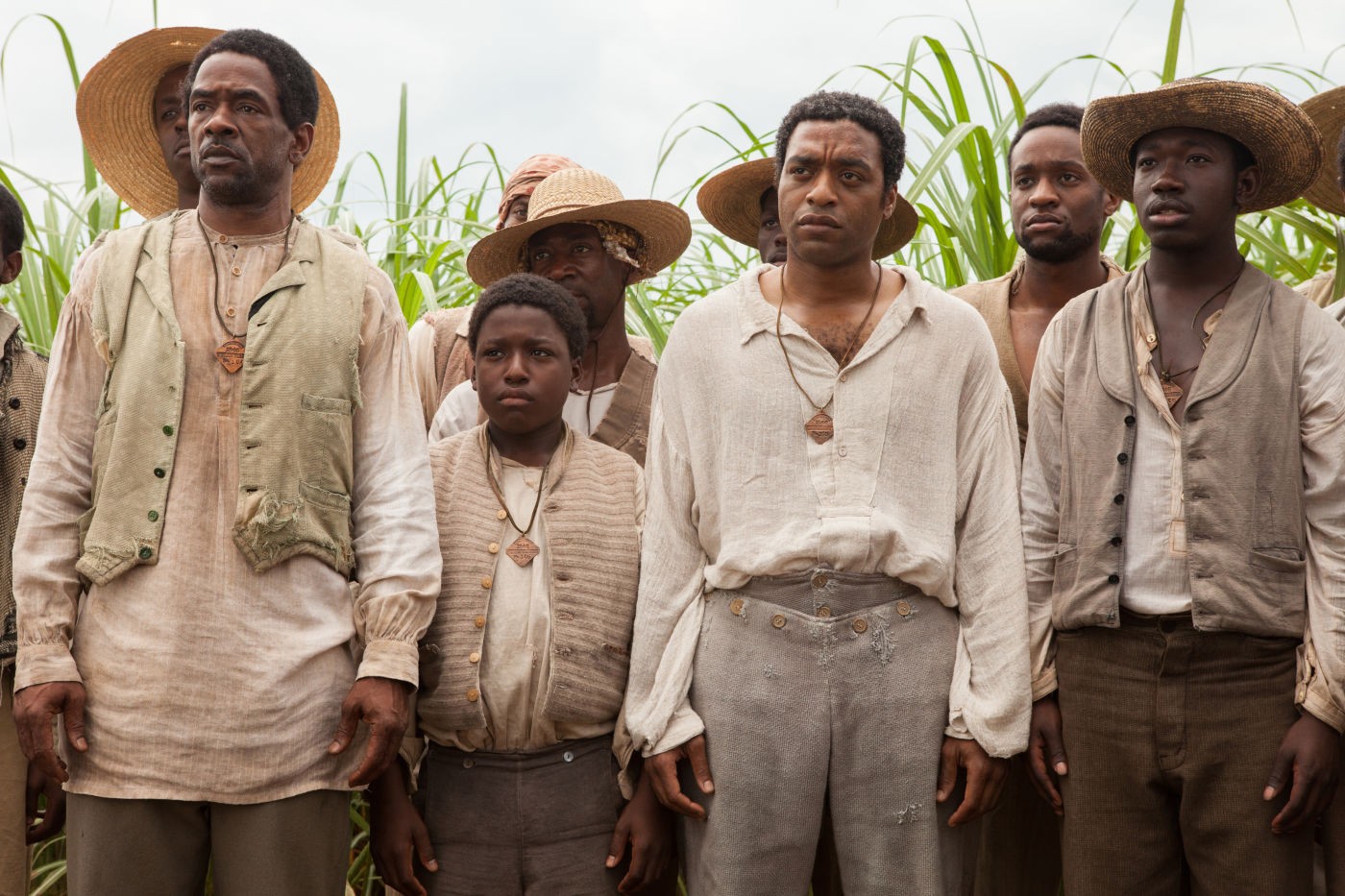
12-years-a-slaveChiwetel Ejiofor, “12 Years a Slave”

Honorable Mention: Bruce Dern, “Nebraska”

Honorable Mention: Matthew McConaughey, “Dallas Buyers Club”

Should have been nominated: Tom Hanks, “Captain Phillips”

Best Supporting Actor Continue reading

Flawed Logic in Movies: Spider-Man, Batman, and Shia LaBeouf

SPOILERS

Some films contain flawed logic, trains of thought that, at some point, hop off of the tracks and barrel through fields of plot. This occasional lapse of sound reasoning does not necessarily decrease the value of a film (in fact, some plots thrive on lapses of logic), but audiences should be aware of these deduction deficits so that similar logic pitfalls do not occur in their own lives. Enjoy the stupidity of movie characters, but don’t pretend that it’s not stupidity.

Shia I RobotI, Robot (2004)

Flaw: Shia LaBeouf should lead you into battle. In this sci-fi action movie, Shia LaBeouf plays Farber, a teenage punk who cusses and objectifies women. He is also the protagonist’s friend. Though Farber really has no reason to exist in the film aside from providing some awkward and arguably unnecessary comic relief, director Alex Proyas includes a few scenes in which Farber and Detective Spooner discuss ladies and Farber’s poor use of profanity. During these conversations, nothing redeeming is revealed about LaBeouf’s character. Farber has no depth. He is a hormonal teenager who has managed, for some unknown reason, to befriend a renegade cop. Other than his friendship with Will Smith, Farber has absolutely no qualities that should inspire a mob to follow him into battle against a hoard of assertive robots. In fact, logic should dictate that when Farber starts to mock the robots, everyone else should back away, leaving Farber to deal with his own poor life decisions. In the movie, however, a large crowd of people, apparently unaware of Farber’s substandard leadership qualifications, stand behind the teenager, ready to charge. The result is pandemonium and pain for the humans as the robots toss people into the air like confetti. Farber, however, escapes unharmed, like a cockroach after a nuclear apocalypse. Continue reading