A couple years ago, I participated in Survivor Indiana, a fan-made and independently run one-day Survivor-esque competition. The day was filled with tribes, challenges, voting, and puzzles.
I did not do well.
As it turns out, competitions like Survivor—even local single-day versions—require preparation and strategy, and I think every spectator was painfully aware that I didn’t prepare physically or strategically for the event. But despite my sad performance, I did gain a deeper appreciation for the nuances of what it takes to outwit, outplay, and outlast.
Survivor labels itself as the ultimate social experiment. If you strip away the glossy set design and the scripted moments of B-roll melodrama, Survivor is a show in which fundamentally different individuals must coexist in close quarters, navigating the vicissitudes of human nature while hungry, stressed, and physically exhausted. Even if some moments are edited for the audience, the emotional outbursts and bitter tears of contestants are undoubtedly real. Her Campus writer Riya Bhullar explains this well:
Survivor . . . creates conditions that amplify human behavior. Contestants face limited food, little sleep, constant uncertainty, and the pressure of knowing that someone will be voted out every few days. Under stress, frustrations grow, trust becomes fragile, and paranoia can quickly set in. . . . Players constantly think about how they are perceived by their tribemates, adjusting their behavior to appear trustworthy, likable, or valuable to the group.
Survivor is obviously not the truest test of human nature—non-filmed existence is filled with more profound trials and triumphs—but the long-running reality show does offer intriguing glimpses into the mindsets of people who have been pushed to places that lack comfort, companionship, and predictability.
And the more I watch the show, the more I am drawn to contestants who did not win. Who did not become well-manicured caricatures of struggle and success. Those who did not fit any clear reality television archetype. Those who have not become Instagram celebrities. Those whose faces will never be carved into the Mount Rushmore of Survivor history.
Because, in real life, most of us will not become millionaires. Most of us are not lucky enough (because it is, at least in part, a game of luck) to become Rob Mariano or Parvati Shallow or Dee Valladares.
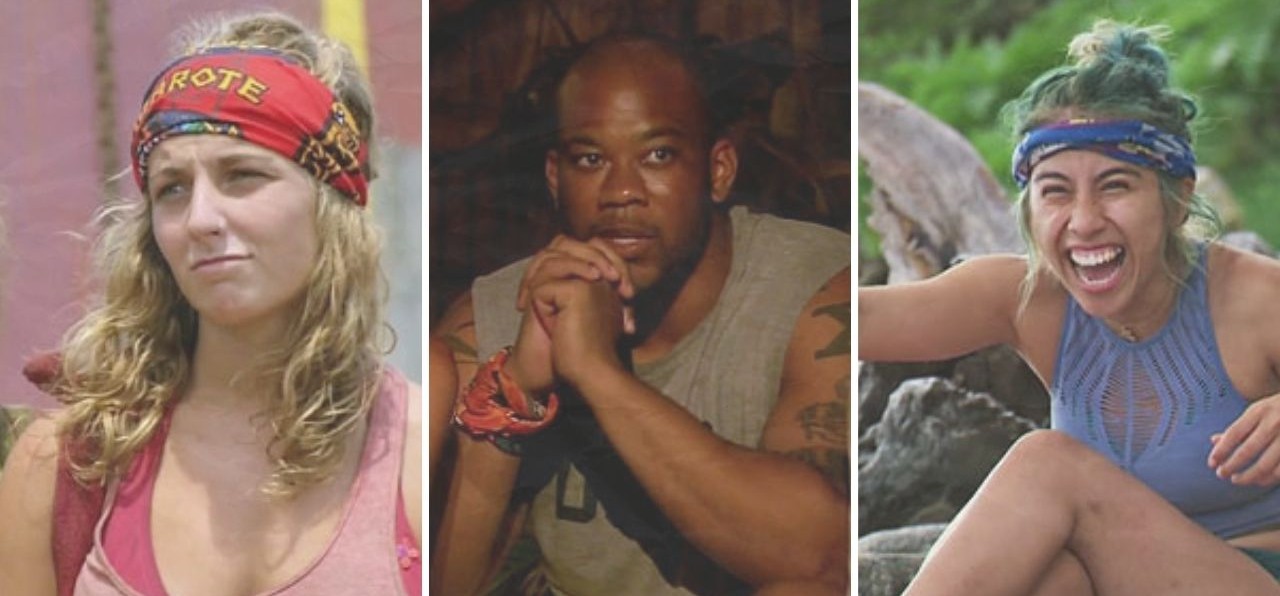
So here are ten of the most underrated and underappreciated Survivor contestants.
10. Matt Blankinship – Survivor 44
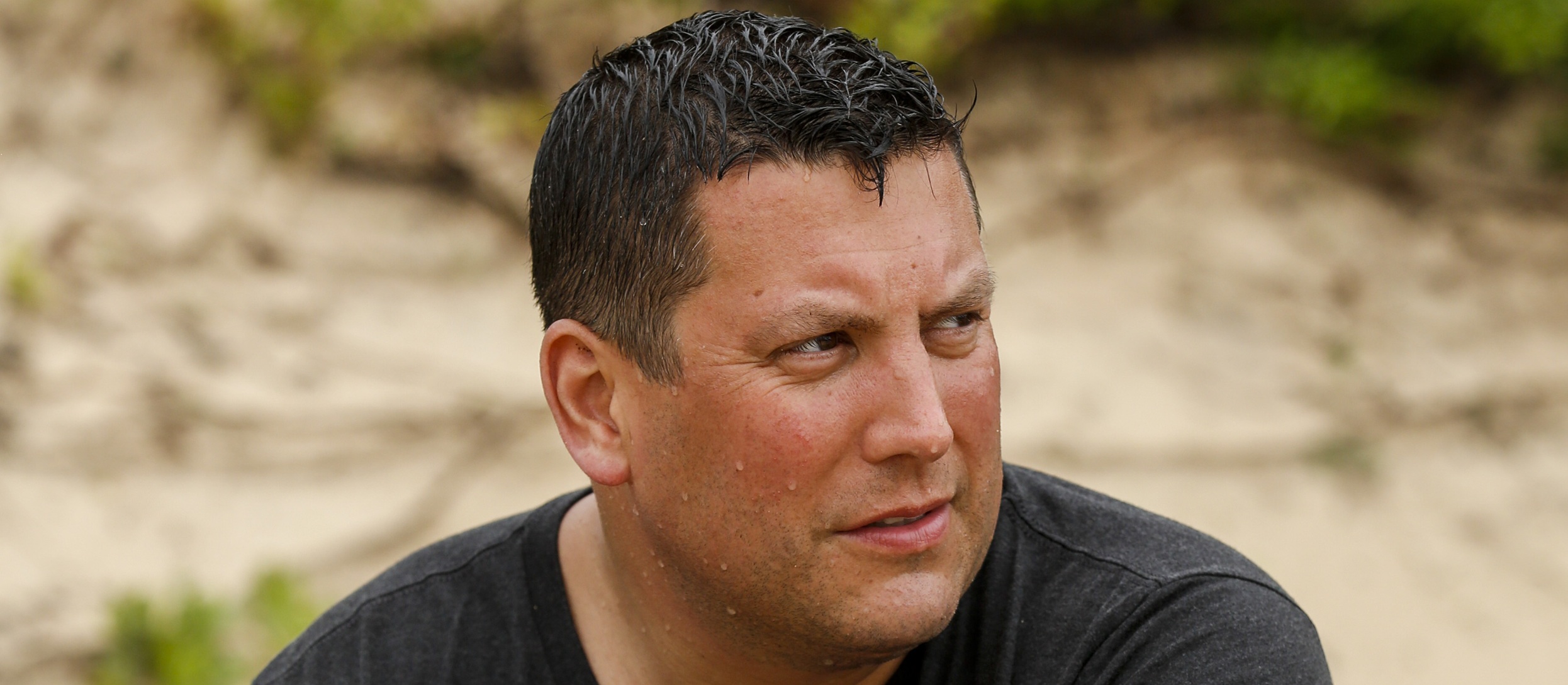
Matt was not a particularly skilled strategist, but his showmance with Frannie Marin was one of the most endearing Survivor relationships in recent history. In the episodes, it’s unclear whether Matt was oblivious to the true social dangers of on-screen flirting or if he simply didn’t care about the consequences, but Matt essentially sacrificed his gameplay for Frannie, which is refreshingly admirable. The shots of him giggling with Frannie about nerd life make Survivor 44 a uniquely heartwarming watch. And throughout this romance, Matt’s tribe managed to win most of their challenges, and Matt made it to the Jury. Most contestants have a stoically tunnel-visioned view of showmances: relationships get you voted out. But Matt ignored conventional wisdom—and he still managed to do pretty well in the game.
9. Jenn Brown – Survivor: Worlds Apart
As a member of both the pre-merge No Collar tribe and the post-merge Merica tribe (which both suffered from absurdly dumb names), Jenn Brown played the game with humor, charisma, and a fair amount of impressive strategizing. Most notably, Jenn organized a force of players to stand against the testosterone-filled alliance of Mike Holloway, Rodney Lavoie Jr., Will Sims II, and the infamous Dan Foley. The misogynistic machismo of those four contestants went mostly unchallenged—at least in the aired footage—so Jenn’s consistently straightforward and often vocalized opposition was one of the best parts of Survivor: Worlds Apart. With the help of Hali Ford and Joe Anglim (and sometimes Shirin Oskooi), Jenn valiantly combatted the vitriolic vicissitudes of Dan and the others. She even managed to singlehandedly orchestrate a blindside to remove one of the alliance’s supporters. In the end, Jenn’s campaign against the Old Man Bro Squad was somewhat unsuccessful, but her efforts should be celebrated nonetheless.
8. Bret LaBelle – Survivor: Millennials vs. Gen X
At the beginning of Survivor: Millennials vs. Gen X, Bret positioned himself as a stereotypical pull-yourself-up-by-your-bootstraps 40-something rule-follower, defined only by hard work and loyalty. But as the season progressed, Bret unveiled a surprising amount of nuance. Coming out as gay during a conversation with Zeke was just one of many moments that exemplified Bret’s evolution into a multifaceted competitor. Bret operated across tribal and generational lines, while still remaining loyal to most of his initial alliances, particularly Sunday Burquest. When Bret aligned with Zeke after losing Chris, for example, he remained loyal despite the pleadings of fellow Gen Xer (and eventual Survivor celebrity) David Wright. Bret’s gameplay was not flashy, but it was effective.
7. Kellee Kim – Survivor: Island of the Idols
Kellee played an excellent game: she was an idol-finding queen who helped direct much of the early game’s flow. Were it not for betrayals from Lauren Beck and Missy Byrd (at different times), Kellee would have dominated the post-merge game, given her idol and ability to plan. And the betrayals from Lauren, Missy, and others were no ordinary betrayals: they were absurd moves against a woman who had spoken out against sexual harassment. And those betrayals directly benefitted the perpetrator. Yes, Survivor is game that requires ruthless strategy, but there should be an element of humanity in it. Contestant Dan Spilo had harassed multiple women on the show, and Kellee was one of the only individuals who spoke out against him, even leading to a weak early verbal reprimand from producers. (Dan was eventually removed from the game, but only after he inappropriately touched a producer. Dan should have been removed much earlier.) Survivor is a tough experience already. I assume it’s so much harder to compete effectively when you’re being actively gaslighted by producers and fellow contestants. Kellee was a brilliant competitor, and she deserved better.
5. Michaela Bradshaw – Survivor: Millennials vs. Gen X and Survivor: Game Changers
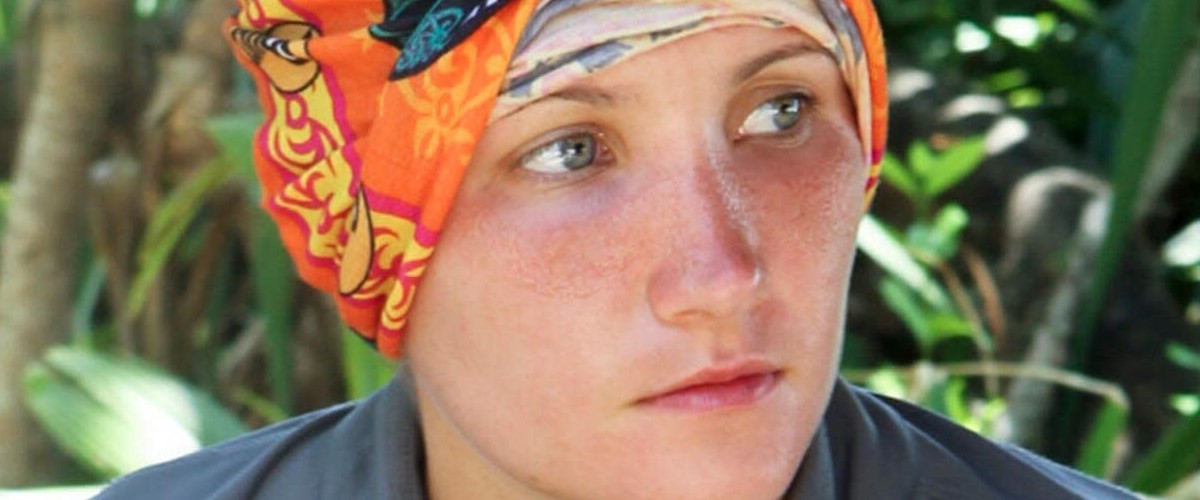
Technically, Michaela Bradshaw may not fit on this list because she was invited back to Survivor a second time for Survivor: Game Changers (meaning that she is not necessarily “underappreciated”), but her elimination from Millennials vs. Gen X left such a bad taste in my mouth that I have to vent somewhere. I will never forgive Jay Starrett and Will Wahl for blindsiding Michaela right before the merge. Having to look at Jay’s smug face in that moment was one of the more unpleasant experiences I’ve had as a Survivor fan. Michaela was athletic, loyal, charismatic, and driven, but Jay’s stubborn, unfounded paranoia robbed Survivor fans of the opportunity to witness a true survivor complete beyond the first half of the game. Here’s to you, Michaela. You’re better than all of them.
5. Kaleb Gebrewold – Survivor 45
There’s a lot to say about the abysmal performance of Survivor 45‘s Lulu tribe. A literal island of “not Survivor-ly” misfit toys, Lulu was home to several bizarrely ill-equipped contestants, including two players who—at different times—begged to leave the show, one survivor who collapsed during the game’s opening activity (before the actual challenges even began), and Emily Flippen, an intense, socially awkward investment analyst who wasted zero time firing verbal shots at everyone on the island. So as one of the two strategic, socially skilled players on the tribe, Kaleb had his work cut out for him. His impressive charisma and decent athleticism made him a target, but Kaleb had everything it takes to succeed in this game. And he could have gone far if he had been just a bit luckier.
4. Julia Landauer – Survivor: Caramoan
Fellow contestant John Cochran had this to say about Julia:
Julia, on the other hand, is such a non-entity out here. I’m tempted to say that she has like a vanilla personality, but I feel like that would be doing a great disservice to the flavor of vanilla. I mean, people actively seek out vanilla flavored products. Children clamor to get a vanilla ice cream cone. Nobody’s clamoring for anything Julia-flavored.
It’s clever—and the editors of Survivor: Caramoan certainly attempted to reinforce Cochran’s narrative—but it’s not accurate. At least not fully. In a season that included aggressive blindsides, particularly heated arguments, and several moments with real potential for violence between competitors, Julia was one of the few survivors to maintain her composure. While Brandon was screaming, while Phillip was spying, and while Dawn was crying, Julia was quietly playing her game—and she was doing it well. Julia managed to work somewhat successfully with some of the most difficult players on the island. In her pre-show interview with Entertainment Weekly, Julia said she most related to Survivor contestant “Kim Spradlin, because she was very strategic, had few enemies and was a physical threat, all while maintaining her composure.” And that is exactly how Julia played her game.
3. Tevin Davis – Survivor 46
Likeability is a complicated trait. Though likeability can be an asset in life, it is often overrated: likeability does not preclude cruelty, ignorance, or prejudice. In fact, many horrible people shroud their horribleness in layers of shallow likeability. But on Survivor, likeability becomes a measure of tact. In extreme conditions, charisma is often the first thing to dissolve. So if someone can maintain their charm and grace while tired, hot, hungry, and emotionally overwhelmed, they have a mental and social advantage over those around them. This is how Tevin played the game. He helped guide more than one vote, and he was voted out only after a chaotic post-merge live trail deliberation (where others were inexplicably manipulated by Liz Wilcox, the controversial contestant who bragged about not needing money). If Liz hadn’t been able to out-maneuver Hunter in the live trail, Tevin would have had a solid chance of making it to the final three of Survivor 46.
2. Wendy Diaz – Survivor: Edge of Extinction
Yes, Wendy stole Manu’s flint and freed Lesu’s chickens—all with bouts of unbridled laughter—but that bewilderingly chaotic energy is exactly what made Wendy such a wonderful competitor to watch. Wendy’s unpredictable gameplay made her a target, but it also arguably kept her in the game through the first Tribe Switch. In fact, Wendy positioned herself well for the Joint Tribal Council, but a tiebreaker re-vote complicated her strategy. Wendy survived the Edge of Extinction and very nearly won the re-entry challenge. The first contestant with Tourette syndrome, Wendy fought harder than most, and she did so without losing her sense of self.
1. Shamar Thomas – Survivor: Caramoan
Shamar Thomas is the most misunderstood player in Survivor history. First, some context: Survivor: Caramoan was filled with some of the most superficial, phony contestants in the history of the game, which is saying a lot. I have never hated an alliance more than I hated the initial alliance of Hope Driskill, Allie Pohevitz, Eddie Fox, and Reynold Toepfer. That group—the Quad Alliance from Basic Brand-Name Hell (my name, not theirs)—consistently acted like a group of Greek-life business majors from a Brett Ratner film. Remember the 2013 Funny or Die video where Michael Shannon reads sorority leader Rebecca Martinson’s real-life letter to her Delta Gamma sorority sisters? The one that includes some wildly profane lines? (One of the letter’s milder lines: “Double f***ing newsflash: Sigma Nu is not going to want to hang out with us if we f**king suck!”) Throughout the season, Hope, Allie, Eddie, and Reynold—especially Reynold—gave off such Delta Gamma polite-until-I’m-not vibes that it’s difficult to watch them together on screen. They literally joked on screen about feeling like the cool, popular kids from high school.
All contestants of Survivor: Caramoan contributed to a pre-show Entertainment Weekly piece in which they introduced themselves to fans. Hope used the opportunity to remind us that she’s attractive. Allie talked about her sex appeal. And Reynold—freakin’ Reynold—mentioned that he flirts “like Parvati Shallow” and hates “negative people who feel sorry for themselves.” (Reynold seems like the type of guy who would sleep with your spouse and then tell you that he did you a favor. Strong all-American family-money bitcoin-bro vibes.)
What did Shamar Thomas say to Entertainment Weekly? He said that he related to previous contestant Rupert “because he played the game with honor.” Shamar praised Rupert’s philanthropy: “[Rupert] has also worked with troubled youth. He shares my passion to help the community.” See the difference? As a character on the show, frat-boy-archetype Reynold was the walking personification of classism, arrogance, and white privilege. Shamar, on the other hand, was an Iraq War veteran from Brooklyn whose hobbies included activism and spending time with his family.
In a world filled with Reynolds, be a Shamar.
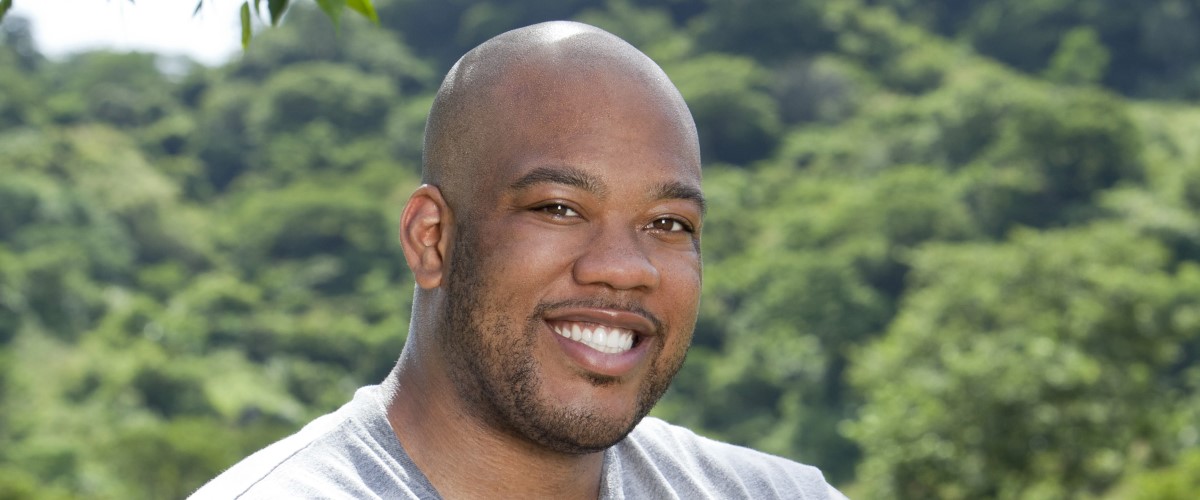
Ben Boruff is teacher and writer. Read more at BenBoruff.com.
In the first season of Crazy Ex-Girlfriend, singer and actress Rachel Bloom (playing the clever and arguably neurotic “ex-girlfriend” Rebecca Bunch) sings “I’m In a Sexy French Depression.” In the song, Bloom lampoons the many hyper-romanticized depictions of depression that exist on screen.
Bloom’s music video looks like a scene from Michelangelo Antonioni’s La Notte (1961) or Joann Sfar’s The Lady in the Car with Glasses and a Gun (2015), and it echoes the phenomenon of mental illness FOMO that exists online. Most who have interacted with Instagram, Facebook, or TikTok are aware of the proliferation of mental health self-diagnosing, a trend that is fueled by glorified depictions of depression and Gen Z’s tendency to mordantly embrace hardships.
Identifying the line between harmfully glamorized depression (and subsequent self-diagnoses) and authentic mental health advocacy can be surprisingly tricky to identify: depression looks differently from person to person. And more importantly, a cry for attention may be fueled by a genuine need for help. (Arguably, there is no such thing as just a “cry for attention”; usually, those who are most difficult to love are those who need love the most.) Nonetheless, the distinction between romanticized mental illness and genuine mental struggles is an important one.
In “Politics and the English Language,” author George Orwell discusses the dangers of misusing language: “Most people who bother with the matter at all would admit that the English language is in a bad way. . . .” Orwell argues that we have abused language to the point that some words no longer have any practical meaning, and evidence of this is everywhere. Consider the current political landscape in America: Does the word “freedom” mean anything to you anymore? Or is it simply a buzzword that politicians of all types use in speeches and advertisements to appeal to the amorphous and fickle sensibilities of voters? If it is the latter, then we have stripped the word of practical value. If anyone can invoke freedom for any cause, regardless of logic or intent, then freedom means very little.
My contention is that we are in danger of doing the same thing to words like “depression,” “anxiety,” and “mental illness.” And this will have serious consequences: We cannot effectively help those who suffer from depression and anxiety unless we believe that depression and anxiety are real medical conditions—not simply words tossed about for sympathy and clout.
Thankfully, Orwell offers a solution: “. . . one can choose—not simply accept—the phrases that will best cover the meaning, and then switch round and decide what impression one’s words are likely to make on another person.” Put simply, we should choose our words carefully, and we should be conscious of the impact that our words have on others.
Which brings us back to Rachel Bloom. Visual depictions of mental illness can be just as damaging as the FOMO-fueled romanticized self-diagnoses that exist in text online, so we need to be careful about which depictions of depression we absorb.
Luckily, some visual depictions of depression are brilliant, nuanced, and profound. Luckily, cinematic depictions of depression exist beyond the sterilized European melancholy (AKA sad “soft swindle chic“) of sexy French depressions.
Below are ten of the most compelling depictions of depression on screen.
If you or someone you know is going through a tough time, please reach out for help. There are resources available to provide support:
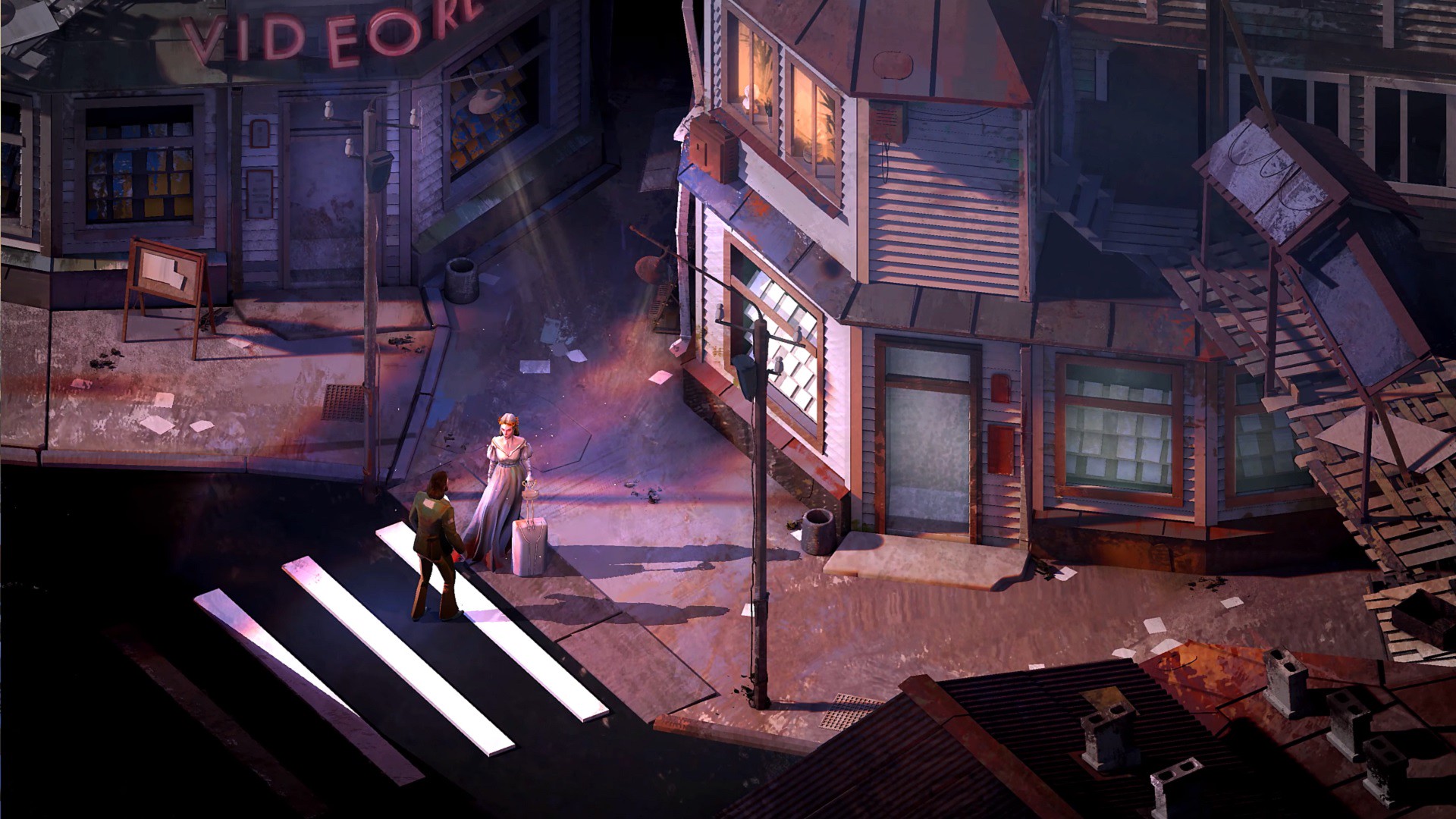
Disco Elysium is the only video game on this list, and it has more than earned its spot.
Disco Elysium is a isometric RPG that showcases the complex and chaotic story of Lieutenant Harrier “Harry” Du Bois and his attempts to solve a mysterious murder while navigating a state of drug-induced amnesia. The game’s oil-painting art style is breathtaking, and the soundtrack—both sad and exciting—provides the perfect tone for exploring the impoverished district of Martinaise within the fictional city of Revachol.
On some level, that setup is enough to justify Disco Elysium‘s place on this list. As Reddit user demonru says:
[Disco Elysium] helps me cope. I played it through twice during a month, during a terrible depressive episode and it’s deeply comforting to me. I relate to the main character on some level, the world engulfs me, the entire game is familiar and one of the kindest things I’ve encountered in my episodes. The aftertaste of the game is, to me, one of the best things about it. Listening to the soundtrack transports me to Revachol, which feels like a place I’ve lived in, and the resolution to the case and a certain subplot is just so satisfying. You put so many hours in and in the end, it’s all worth it. It’s an euphoric and engaging experience. I love it so much. I haven’t experienced it outside of a deep depressive episode yet.
But Disco Elysium goes further: the game’s mechanics explore the dark complexities of the human mind. One of the game’s key mechanics is its Thought Cabinet, which operates like a perk system for Harry’s psyche. Certain in-game decisions and conversation choices can unlock thoughts that, when “internalized,” give Harry specific buffs (or de-buffs, depending on your perspective). The Thought Cabinet is a visualized web of your character’s most notable and intimate thoughts—and the gameplay-relevant impacts of those thoughts. For example, here is the description of the Precarious World thought, which makes successes easier but offers a significant penalty while internalizing:
How not to lose? It is impossible not to. The world is balanced on the edge of a knife. It’s a game of frayed nerves. You’re pushed on by numbers and punitive measures: pain, rejection, and unpaid bills. You can either play or you can crawl under a boat and waste away — turn into salt or a flock of seagulls. Your enemies would love that. Or you can fight. The only way to load the dice is to keep on fighting.
And the Bow Collector thought, which gives you a +3 to Shivers, a skill that enhances Harry’s ability to intuit the zeitgeist and history of Revachol:
It’s early in the morning. The world is dark blue. The sparks light her face. A delicate composition of triangles. The street seems to grow longer, like in a dolly zoom. And there’s something in the air as you stand there and wave back at the shape growing smaller and smaller. Something that has always been there. A great see-through world. The tenderness you feel. The ghost of Revachol between you, carrying your signals. The holy messenger.
And this is the description of the White Mourning thought, which prompts a conversation with the Ancient Reptilian Brain, a personification of the most primal instincts lurking within the Harry’s subconscious:
…and the little guy gets smaller and smaller as you rise above the doll house world. You see him out in the snow, on the streets, in the shop on the corner, and, finally, in a matchbox house. Sitting by the window, white flowers on the window sill. You can smell them from up here: it’s awful. A white mourning. A modern death. Divorce, or something similar. All you can do is put more distance between you and him, make him smaller. Make him less you.
Another mechanic involves the skill options, which allow players to put points into one of four branches: Intellect, Psyche, Physique, and Motorics. Intellect skills, for example, include Logic, Encyclopedia, Rhetoric, Drama, Conceptualization, and Visual Calculus. And the Psyche skills are Volition (moral compass), Inland Empire (imagination), Empathy, Authority, Esprit De Corps (police mind), and Suggestion (inception/persuasion).
The mechanics, plus the gameplay itself, create a multifaceted gaming experience that explores the dark, complex subtleties of the human mind, including the possibility of depression. Disco Elysium is not the only game to depict the nuances of depression and mental health, but it is certainly one of the most compelling.
Consider how writer Logan Taylor introduces the game in his article “The Revolutionary Mind: Disco Elysium as Scale Model of Human Thought”:
There is a terror inherent to being human. We know, at all times, that some kind of pain awaits us in the future, likely not too far away. And despite this, we move forward with our lives, sometimes gleefully skating full-speed into that waiting pain. We force our way through, or at least try, and if things go well, find ourselves on the other side of it, with more in the future. It is noble to keep carrying on in the face of that. This is one of the theses of Disco Elysium.
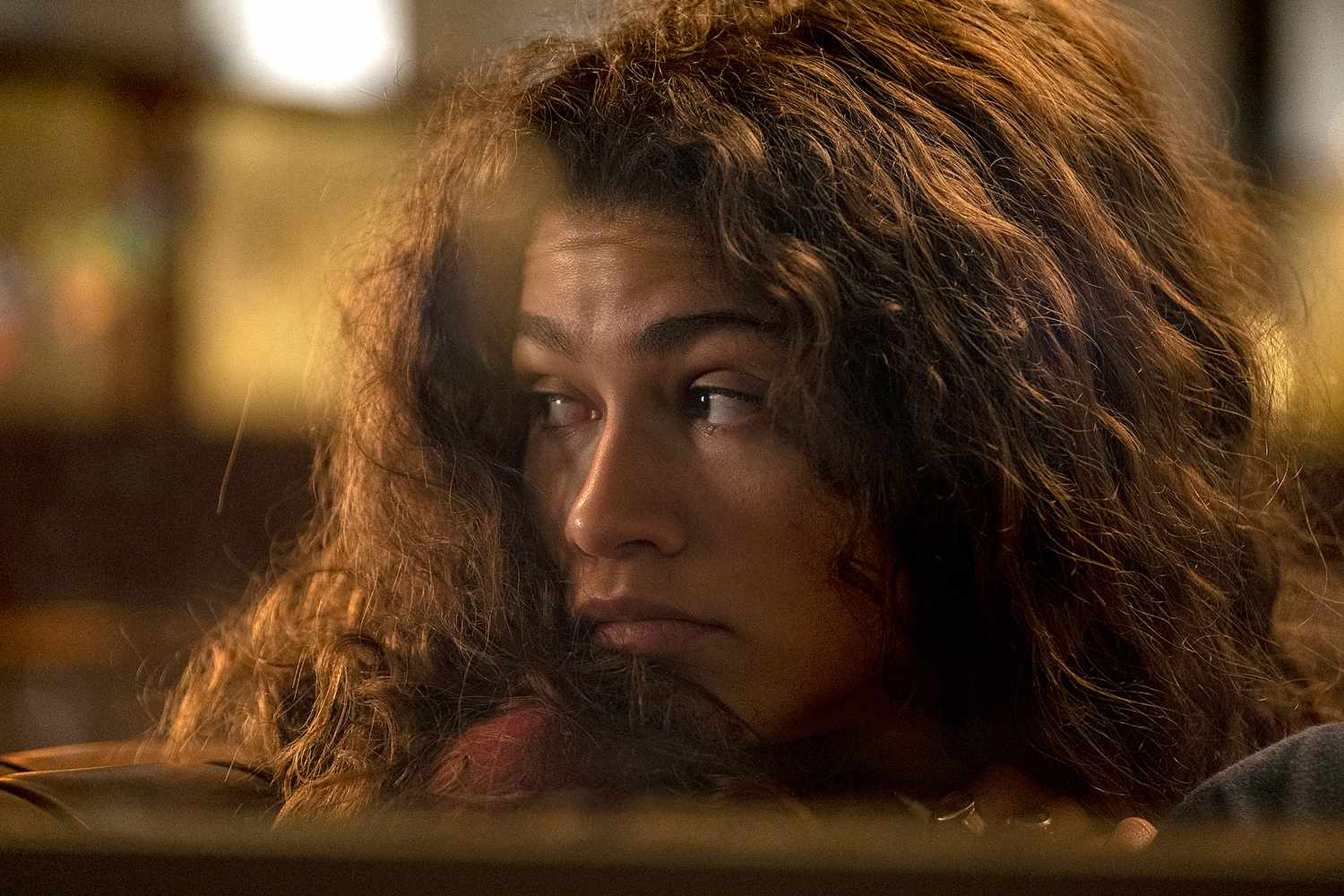
9. Euphoria (2019-2026) created by Sam Levinson
Euphoria is a problematic show—for so many reasons. First, as YouTuber Final Girl Digital explains, viewers should be consciously wary of the “adult casting decisions” that were “often exploited and used to merely showcase the teenage characters in highly eroticized scenarios.” Second, the show romanticizes an already widespread brand of teenage nihilism that effectively nullifies any drive to better the world. Finally—and most importantly for this list—Euphoria often teeters between usefully raw depictions of mental illness and damagingly glamorized portrayals of depression. In its worst moments, Euphoria fuels the harrowing trend of mental illness FOMO and self-diagnoses that saturates the Instagram and TikTok story marketplace. Mental health awareness is beneficial, but fame-chasing self-diagnoses are certainly not.
For those reasons, I highlight Euphoria with significant hesitation; however, I do want to acknowledge the profound depictions of depression (and more) woven into Zendaya’s Rue Bennett. This is Rue’s description of a depressive episode:
One, two, three, four, five, six, seven. One, two, three, four, five, six, seven. The other thing about depression is it kind of collapses time. Suddenly, you find your whole days blending together to create one endless and suffocating loop. So you find yourself trying to remember the things that made you happy. But slowly, your brain begins to erase every memory that ever brought you joy. And eventually, all you can think about is how life has always been this way. And will only continue to be this way. I had a therapist once who said that these states will wax and wane. Which gave my mother relief because it meant that, in the bad times, there would be good times. But it also gave her anxiety because it meant that, in the good times, there would be bad times. It always confused me because I didn’t really know what it meant. But it did sound a lot calmer than the way I would describe it. Granted, I didn’t realize until later what waxing and waning implied. That these feelings were fixed and constant and would never end for the rest of my life.
This is a powerful monologue, no doubt, but Euphoria‘s most impressive contribution to depression-focused discourse is its occasionally nuanced approach to interpersonal interactions. Rue’s depression is on its most intriguing display when it is not the focus of the narrative. Because in those more subtle moments, Rue’s depression-informed actions are most relatable. In real life, depression can be surprisingly difficult to identify, and friends understandably struggle to know when (and how) to intervene. Bustle‘s Gretchen Smail explains this phenomenon as it exists in Euphoria:
Rue shows all the symptoms of going through manic and depressive states, but because bipolar disorder is so misunderstood — and its effects are sometimes subtle — her friends and family simply think she’s having a rough time. . . . Even Lexi, who’s grown up with Rue and knows her well, seems to realize Rue isn’t OK, but she isn’t sure exactly what’s going on.
And, notably, these interpersonal nuances exist against a backdrop of adolescence. Despite the show’s many (arguably foolish and troublesome) attempts to paint high schoolers as fully developed adults, Rue remains wholly immature. Rue is not the worldly sage she pretends to be; instead, she is a child who desperately wants love, acceptance, and stability. Watching the show with this in mind enhances the tragedy and meaning of Rue’s journey. Her nihilistic outlook is not simply the result of negative experience: it is the result of clinical depression—a chemical imbalance in her brain. Rue is not broken: she is sick. And she has so much time left to heal, which makes her aggressive cynicism incredibly distressing. Sofia Siqueira of The Scribeexplains further:
Because she believes that she’s “too far gone,” Rue projects her dejection onto loved ones, advising them to give up on her as she has already given up on herself. Her unsparing words are no different than knives when she circles the town to verbally attack and sink every relationship she had formed since childhood. These actions are reflective of the fact that at the end of the day, Rue is just a child. Yes, she had an early and onerous introduction to substances, one that most viewers can only sympathize with. However, these experiences did not make her more mature. In actuality, they created an immense gap between what Rue is like at a normal state and a drugged one. She’s reserved and hesitant to share her emotions most of the time, and yet when she’s using, she transforms into a walking time bomb that will strike everyone with her unfiltered thoughts, many of which are heightened by her corrupted state of mind.
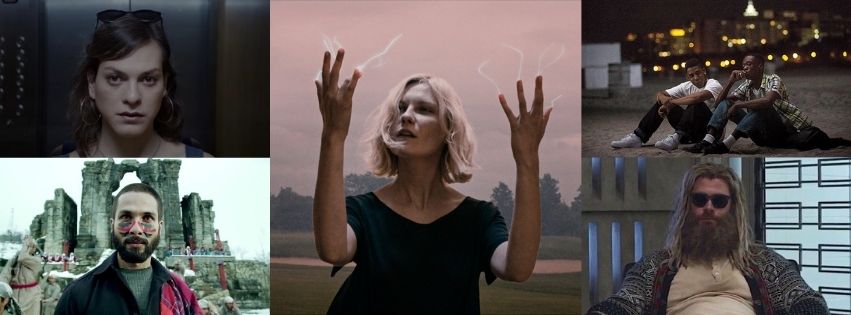
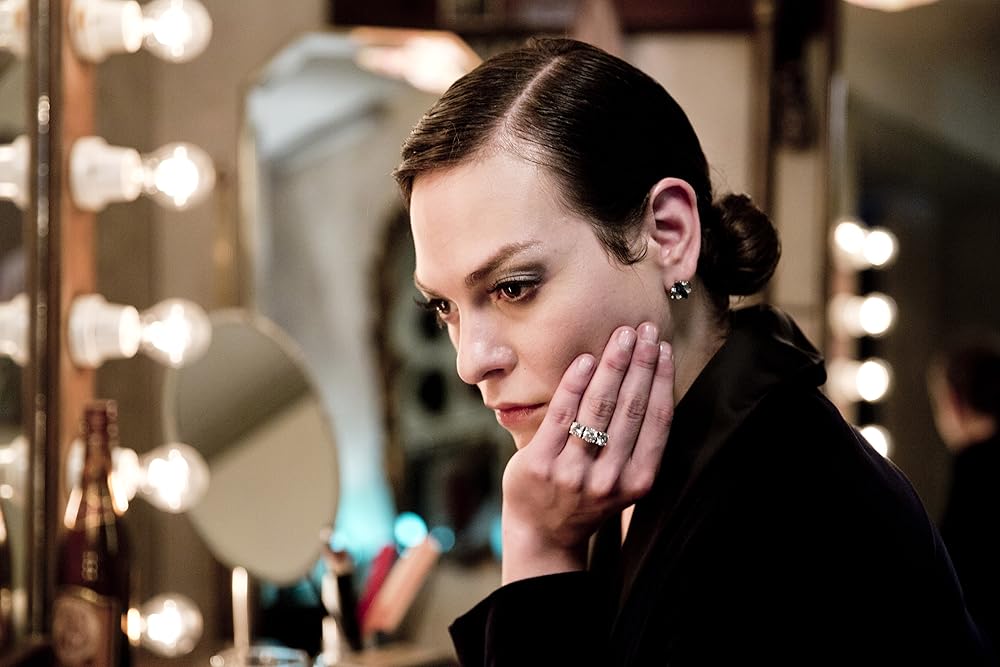
8. A Fantastic Woman (2017) dir. Sebastián Lelio
A Fantastic Woman is a Chilean film about the social and emotional struggles of a young trans woman after the death of her partner. A Fantastic Woman‘s value as a cinematic depiction of depression is less about overt nods to mental health and more about a visual and narrative exploration of deep grief, loss, and internal struggle. Consider this excerpt from Sheila O’Malley’s review of the film:
Lelio approaches this material with sensitivity and empathy. There’s restraint in his style, eloquent as it is. He weaves in elements from melodrama, from noir. Marina discovers a mysterious key in Orlando’s possessions, and her quest to discover what the key might unlock, makes up a large sequence of the film. “A Fantastic Woman” is filled with color, lights shifting from red to green to blue to yellow, bodies bathing in light, drowning in shadows. It’s an amorphous world, the borderline between night and day, consciousness and unconsciousness, is blurred. Cinematographer Benjamín Echazarreta has placed Vega at the center of every frame, her face, the back of her neck, her full body. She walks the streets of Santiago. Sometimes she is viewed from behind, sometimes she is viewed from across the street, the camera moving with her as she walks past a construction site, or along a block of storefronts. She is usually alone in the frame. Santiago often appears emptied-out of people in “A Fantastic Woman.” These choices suggest Marina’s isolation, as well as her vulnerable visibility. It’s like she’s a walking target.
For many, experiencing prolonged depression or anxiety is like walking through life with bubble-wrap over their eyes: everything is distorted. Day-to-day moments become a terraqueous mess of threats and emotional weight. And any true obstacles become exceedingly difficult to overcome.
As I read O’Malley’s review of Sebastián Lelio’s film, I was reminded of how Annie Proulx’s writes about her protagonist Quoyle in her novel The Shipping News:
Nothing was clear to lonesome Quoyle. His thoughts churned like the amorphous thing that ancient sailors, drifting into arctic half-light, called the Sea Lung; a heaving sludge of ice under fog where air blurred into water, where liquid was solid, where solids dissolved, where the sky froze and light and dark muddled.
To be depressed or anxious is to be simultaneously certain and confused. To be both aimless and destined for danger. “O, full of scorpions is my mind, dear wife!” says Shakespeare’s Macbeth. And I think both Marina and Quoyle can empathize.
A Fantastic Woman explores the psychological impacts of isolation, and it does so in a way that honors the unique struggles of its multifaceted and compelling protagonist.
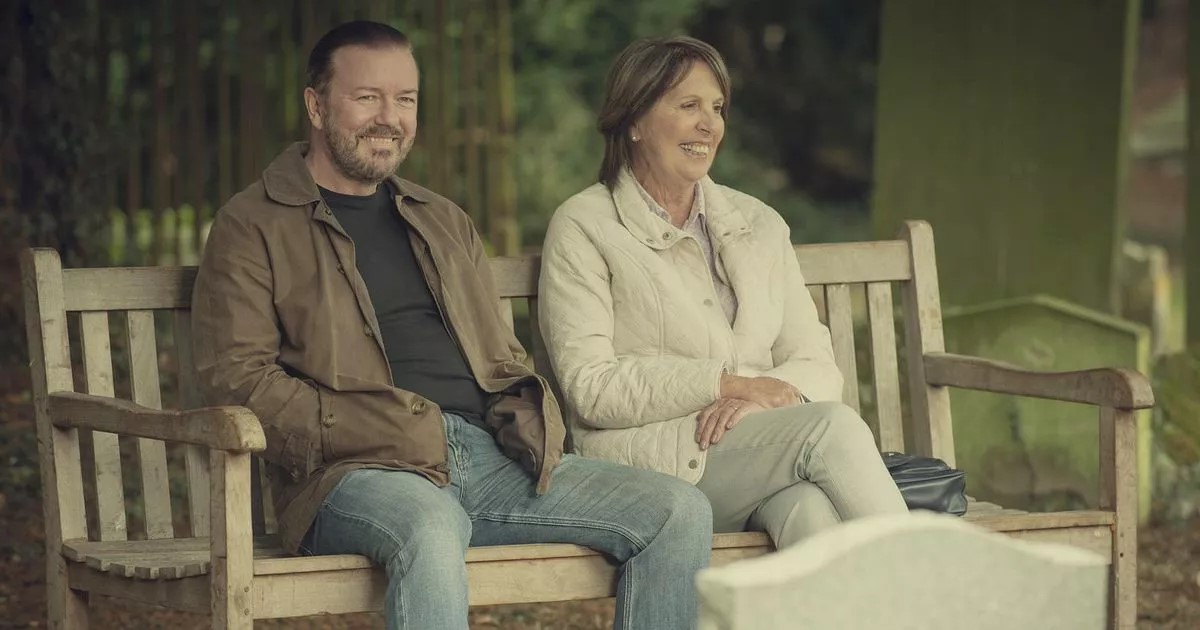
7. After Life (2019-2022) created by Ricky Gervais
I have complicated feelings about Ricky Gervais. He’s a transphobic joke-teller who masquerades as an enlightened prophet. And many people have complicated feelings about this show. Like Euphoria, there are valid reasons to avoid After Life. Many of the show’s scenes can feel pedantic, and some characters are shamefully two-dimensional.
That said, After Life explores the self-destructive nature of some depressive experiences with a surprising amount of nuance. In the first episode, we learn that Tony (played by Gervais) has lost his wife, and this loss has sparked a particularly apathetic brand of depression. Tony says:
If I become an arsehole, and I do and say what the f*** I want for as long as I want, and then when it all gets too much, I can always k*** myself. It’s like a superpower.
Self-harm can be frustratingly difficult to discuss, so Tony’s sardonic honesty is counterintuitively refreshing.
Remember: studies consistently show that discussing self-harm does not increase the likelihood of self-harm. In fact, one study reveals that “talking about suicide may in fact reduce, rather than increase suicidal ideation, and may lead to improvements in mental health in treatment-seeking populations.”
And depression and self-harm are widespread. No one is alone. From a 2022 study:
22.5 million (8.8%) adults in the U.S. experienced major depression.
4.8 million (19.5%) kids aged 12-17 experienced major depression.
3.6 million (14.6%) kids aged 12-17 experienced severe depression.
13.2 million (5.2%) adults had suicidal thoughts.
3.8 million (1.5%) adults made suicide plans.
So maybe a bit of blunt honesty is a good thing. Sometimes, it’s nice to strip away all of the harmfully romanticized sophistry that permeates social media conversations about mental health. Just speak plainly. Depression is the worst. F**k suicide.
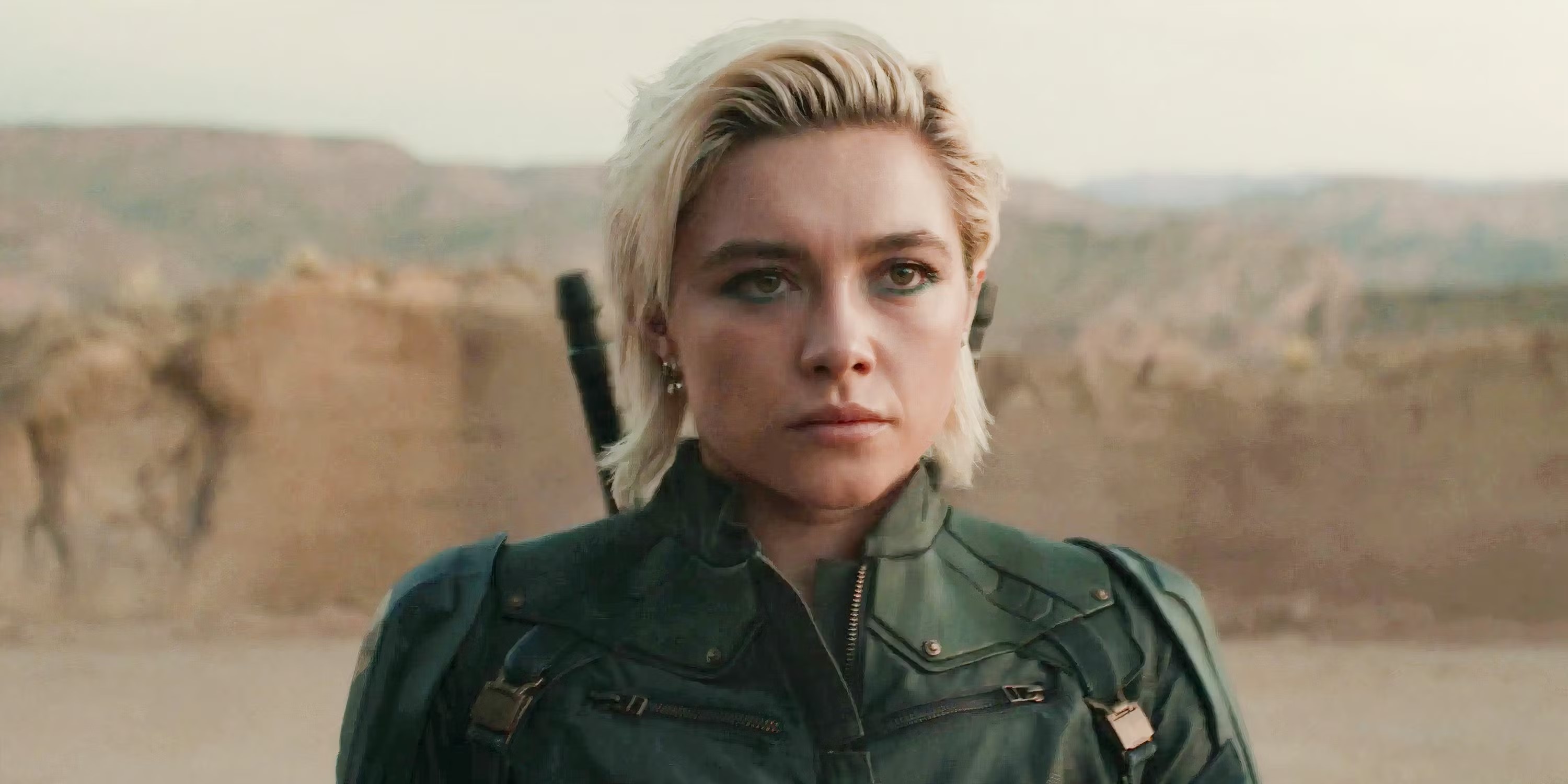
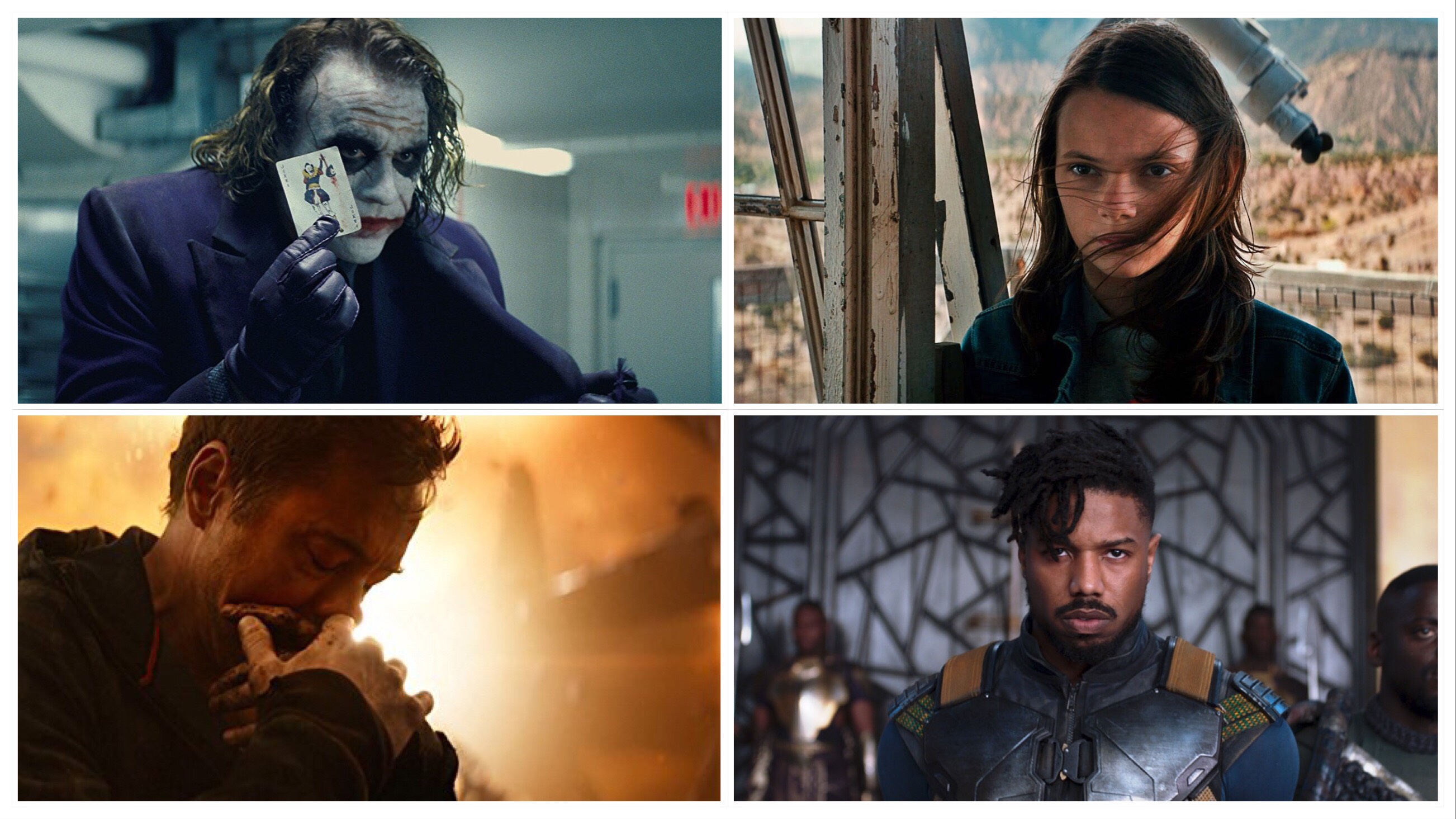
6. Thunderbolts* (2025) dir. Jake Schreier
In an article published by Psychology Today, Aaron Brinen, Psy.D., calls Thunderbolts* a “masterpiece.” Brinen writes:
Movies can deliver complex messages in the form of allegory (a story that with a hidden, symbolic meaning). But I never expected Marvel’s Thunderbolts* to be a near-perfect representation of mental illness. Specifically, post-traumatic stress disorder (PTSD), associated disorders, and how cognitive behavioral therapy helps someone recover. The movie anthropomorphizes (gives human form to) the elements we address (literally, they fight) in treatment. Finally, the movie shines a light on the fact that we all have our struggles and that it is OK. . . . The Thunderbolts* is a collection of failed anti-heroes and focuses on Yelena, an ex-assassin. They are confronted with a mysterious ex-addict, Bob. He was given superpowers but holds immense darkness inside him, driven by memories of severe abuse and associated problems. When he was changed, his internal darkness destroyed everything. While this can figuratively be the case in mental illness, in this Marvel movie, it’s literal.
Some have challenged the film’s portrayal of depression—writer Tasha Robinson argues that the movie “misses one big issue with depression, the aspect of the movie that most made me shrink in my seat in the theater: the sense of shame that comes with needing this kind of help, and with putting this much weight and demand on other people”—but most critics and moviegoers concur: Thunderbolts* offers an intriguing and mostly effective allegory of mental illness.
And though I don’t think Thunderbolts* is Marvel’s most compelling depiction of depression (as you’ll see below), I agree.
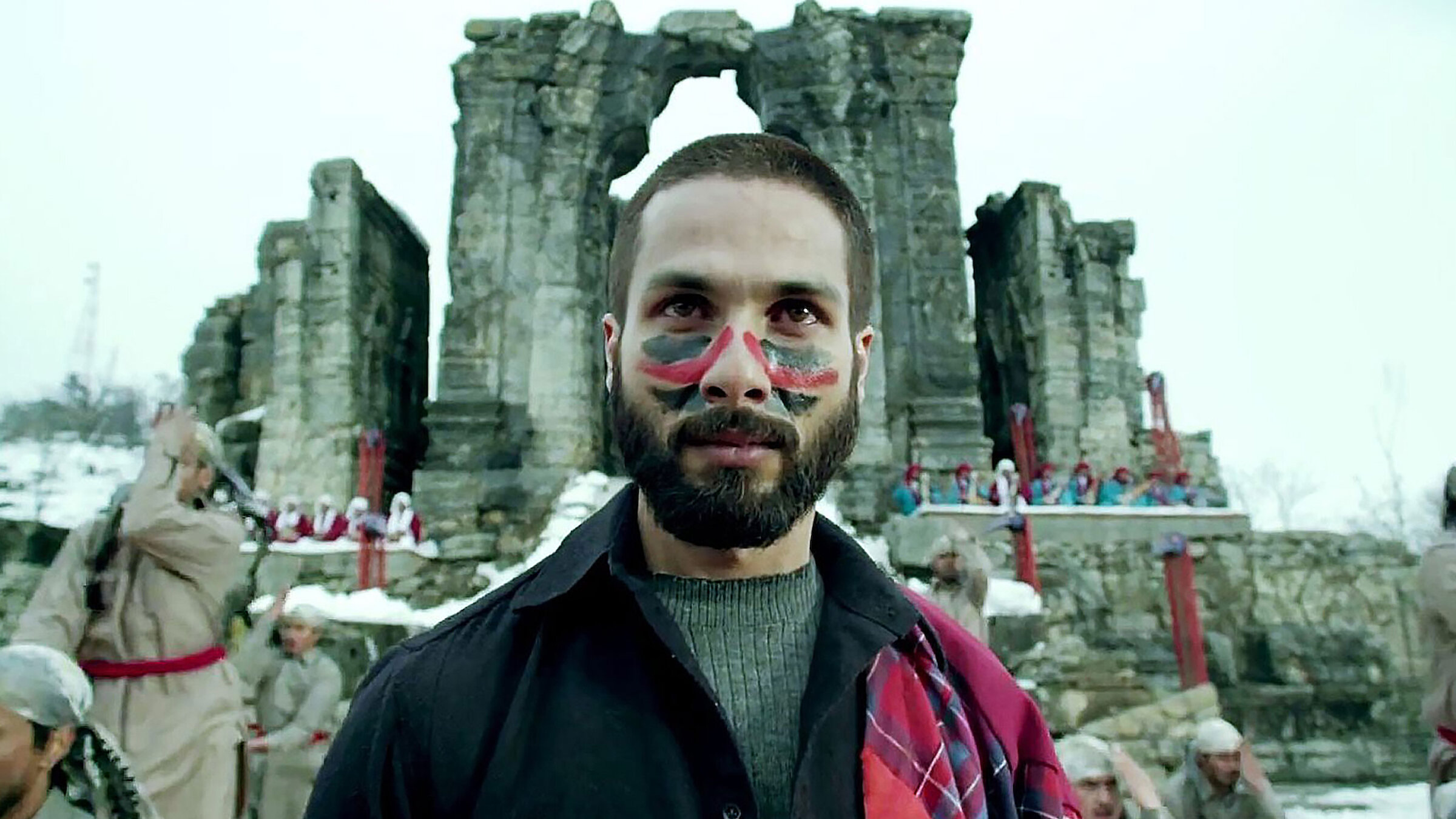
5. Haider (2014) dir. Vishal Bhardwaj
Any cinematic adaptation of William Shakespeare’s Hamlet could be on this list. Perhaps Shakespeare’s most famous depressive (though there is considerable competition for that title), Hamlet struggles with his inner demons with a level of nuance and intentionality that few other literary characters have been able to replicate: “O that this too too solid flesh would melt, / Thaw, and resolve itself into a dew! / Or that the Everlasting had not fix’d / His canon ‘gainst self-slaughter! […] But break, my heart; for I must hold my tongue.”
All filmed versions of Hamlet—or at least all that are true to the story—showcase Hamlet’s depression. From David Tennant’s sharply expressive Hamlet to Ethan Hawke’s mumblecore Hamletto Mel Gibson’s surprisingly unoffensive Hamlet to Kenneth Branagh’s perfectly multifaceted Hamlet, every actor has offered a unique flavor of the Prince of Denmark. In Haider, Shahid Kapoor’s Haider (Hamlet) showcases the belligerent energy of Hamlet’s frustrated state of mind. Many people equate depression with passivity and low energy—and those can be symptoms of depressive episodes—but depression is not always quiet or still. Research is still evolving, but some studies have linked depression with higher possibilities of violence. This does not mean that those suffering from depression are inherently violent. It also does not meant that violence is an acceptable way to cope with depression. What this does mean is that depression is a complex illness, and it manifests in different ways in different people.
Some depressives shrink. Others explode.
Vishal Bhardwaj’s Haider explores this dynamic beautifully.
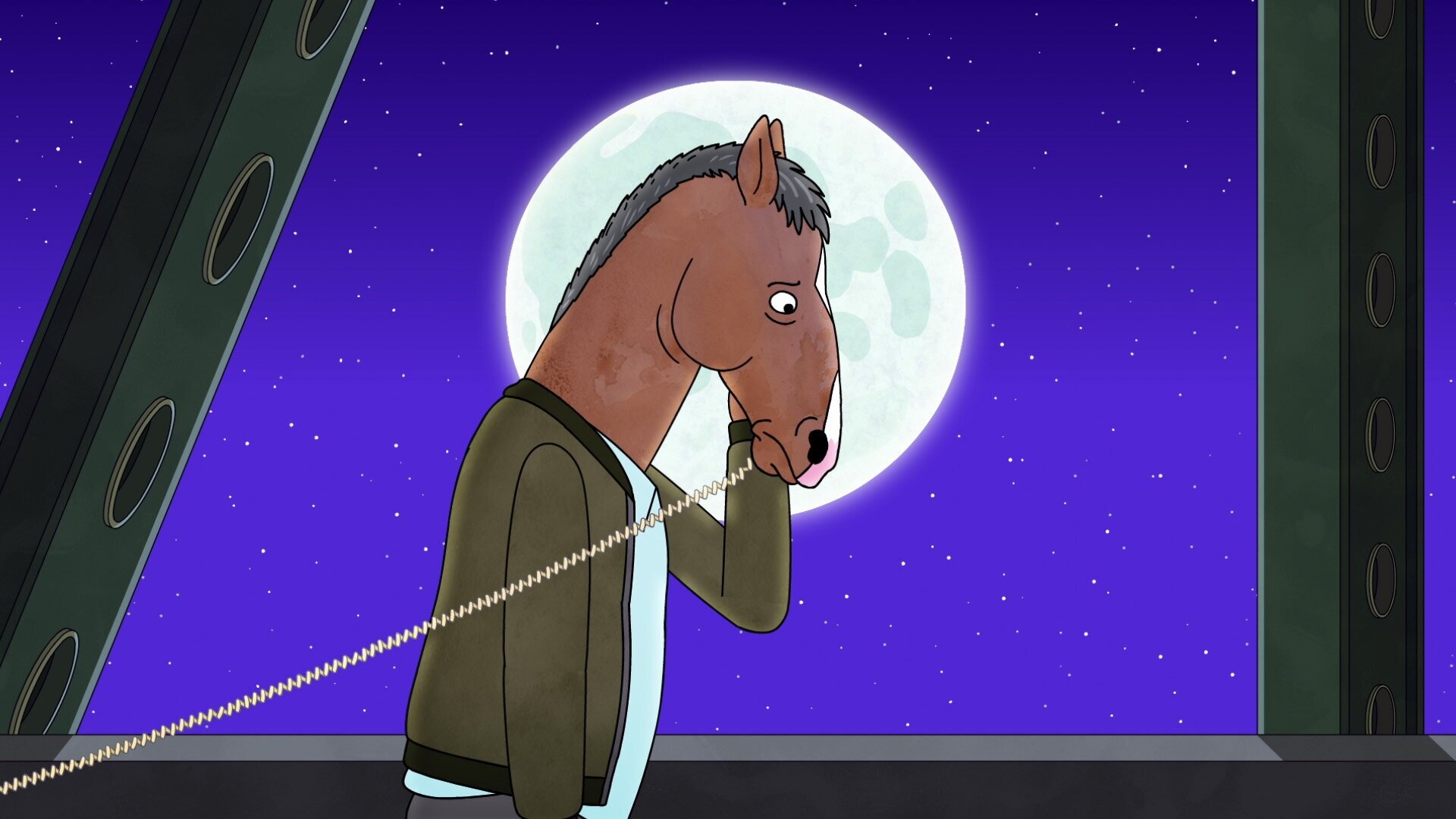
4. BoJack Horseman (2014-2020) created by Raphael Bob-Waksberg
Some may be tired of articles that highlight depictions of troublesome, moody men, and that is valid. BoJack Horseman‘s Rick and Morty-esque embrace of sardonic nihilism is enough to make skeptical would-be viewers avoid Raphael Bob-Waksberg’s show about a washed-up 90s sitcom star who processes conflict by drinking, manipulating, and self-imploding. As a character, BoJack is more than troublesome: his behavior is appalling and occasionally criminal.
But there are two reasons why I include BoJack Horseman on this list: 1) the show often acknowledges and admonishes BoJack’s abhorrent behavior as part of the narrative—BoJack [spoilers] ends the series in prison “for breaking and entering and probably for everything else too”—and 2) BoJack’s depiction of depression is particularly compelling. Much more compelling than the depictions of mental illness we see from characters like Rick Sanchez.
In the season four episode “Stupid Piece of Sh*t,” we see (not for the first time) a glimpse into BoJack’s self-loathing mind:
Piece of sh*t. Stupid piece of sh*t. You’re a real stupid piece of sh*t. But I know I’m a piece of sh*t. That at least makes me better than all the pieces of sh*t that don’t know they’re pieces of sh*t. Or is it worse? . . . Yeah, it is, you stupid piece of sh*t. You’re a real stupid piece of sh*t, and everywhere you go, you destroy people. Of course your mother never loved you, what do you expect? That’s why Sarah Lynn died, that’s why Charlotte will never forgive you.
Those who have experienced depression can likely empathize, to some degree, with BoJack’s self-hating worldview. Many people have moments of heightened insecurity or low self-esteem, but for those who experience depression, their warped sense of self often operates as a seemingly permanent lens that colors all aspects of day-to-day life. It’s a stubborn, pervasive perspective that attaches itself like a parasite to all other thoughts. Moreover, it doesn’t feel like self-doubt: it feels like truth. It feels like a reality that the rest of world will see if they bother to look. Consider these lines from BoJack:
You know, sometimes I think I was born with a leak, and any goodness I started with just slowly spilled out of me and now it’s all gone. And I’ll never get it back in me. It’s too late. Life is a series of closing doors, isn’t it?
But the writers of BoJack Horseman don’t stop there: they show, with surprising nuance, how BoJack’s self-loathing nihilism negatively impacts those around him.
In one episode, BoJack’s “friend” Todd challenges BoJack’s self-pity:
You can’t keep doing this! You can’t keep doing shitty things, and then feel bad about yourself like that makes it okay! You need to be better! […] You are all the things that are wrong with you. It’s not the alcohol, or the drugs, or any of the shitty things that happened to you in your career, or when you were a kid. It’s you. All right? It’s you.
Self-loathing can be unfathomably painful, but depression is not an excuse for casual cruelty.
3. Moonlight (2016) dir. Barry Jenkins
I want to be upfront about the complexities of listing Moonlight as a film about depression: 1) no characters—including the protagonist Chiron—are explicitly labeled as depressed in the context of the film, which means that this analysis may feel like the type of unhelpful amateur diagnosis I mentioned when speaking about Euporia above, and 2) more importantly, the film focuses thematically on the intersections of masculinity, vulnerability, and Black experiences—and I do not want to undermine those conversations by reframing the narrative as a commentary on general mental health issues.
With that in mind, I want to target my analysis of Moonlight by beginning with this thesis: Barry Jenkins’ 2016 coming-of-age film Moonlight offers one of the most compelling portrayals of male emotional turmoil. For some moviegoers, the film does, in fact, offer enough evidence to diagnose Chiron with depression. After all, Chiron experiences several traumatic events as a child, and those events undoubtedly fuel his lifelong search to minimize his apparent feelings of low self-worth, hopelessness, and occasional despair, all of which are characteristic of depression. And some viewers, like The Guardian‘s Deborah Orr, go even further:
In Moonlight, Chiron, played by three actors as a child, a teenager and an adult, already has complex PTSD, to my eyes, as a little kid. Complex PTSD is brought on when a person is subjected to a series of traumas, most often by a caregiver they ought to be able to trust unconditionally, but from whom there is little chance of escape. Abused or neglected children are very susceptible to C-PTSD. By the time Chiron is an adult, from my reading of the film, C-PTSD is rampant.
But let’s take a step back and focus on the spirit of the film, which highlights the complexities of belonging and the emotional frustrations associated with feeling vulnerable. Even if depression is not in the foreground of Chiron’s story, his experiences and emotional reactions nonetheless offer lessons for those—perhaps especially men—who are experiencing depression, which often involves persistent feelings of hopelessness, aimlessness, and emotional frustration. In other words, it is possible to view Chiron’s story through the lens of mental health without overshadowing the other, perhaps deeper themes that drive the narrative.
And through that lens, the blues and purples and yellows of Moonlight‘s story reveal a harrowing bildungsroman of pervasive male loneliness and reluctance to acknowledge the inherent fragility of emotional health. Chiron exists in world where authenticity and vulnerability are chaotically intermingled with escapism and bullheadedness, and his profound struggles to navigate that world are likely familiar to men who have attempted to silently address real mental health issues. It’s like trying to swim without making a ripple—which is to say that it’s nearly impossible to do without drowning. It is no surprise that Moonlight‘s color palette is a clash of dispassionate blues and disruptive purples. And I found it particularly impactful that Juan (a drug-dealing father figure) teaches Chiron how to swim just before encouraging him to walk his own path—to avoid falling prey to the harshness of toxic masculinity.
Researchers and mental health professionals have long known that “men have inherited old social norms” like “requirements of self-reliance, limiting any emotional expression, and, most importantly, never being perceived as weak,” and these (assuredly foolish) norms complicate the process of seeking care for diagnosable mental health issues. As a case study on masculinity, Moonlight spotlights the deep, heart-rending, and psychologically painful consequences of succumbing to the myth of stoic masculinity.
For what it’s worth, researchers have found ways to combat these norms. Consider this excerpt from a study titled “Masculinity, Social Connectedness, and Mental Health: Men’s Diverse Patterns of Practice” from the American Journal of Men’s Health:
There is potential value in mental health promotion strategies which encourage and support men to openly resist, and challenge, the confines of hegemonic masculinity in relation to their social connections with others, such as demonstrating how men can change their practice in terms of social relationships, by actively crossing unwritten boundaries and reaching out to other men to purse emotionally supportive relationships, without placing a higher burden on women to achieve this. There is particular value in promoting such a message to men when they are going through significant or traumatic life events, such as cancer diagnosis or a relationship breakdown.
2. Avengers: Endgame (2019) dir. Anthony Russo and Joe Russo
Let me start with this: I understand the criticisms regarding the film’s treatment of Thor’s weight, but I think the belittling comments made by War Machine, Rocket Raccoon, and others add—likely unintentionally—an additional layer of authenticity to the portrayal of Thor’s depressive experience. In real life, depression often leads to weight gain, and many individuals in the real world are unkind when discussing the weight of others. Do I think the writers added these cheap jokes for the sake of authenticity? No. I think this is a typical case of Marvel writers overusing bathos. But do I think that Thor’s mental health journey is compelling and emotionally relatable, maybe even because of these jokes? Yes.
In fact, I argue that Thor’s journey from the beginning of The Dark World to the end of Endgame is one of the most accurate and intriguing depictions of depression in film—even more compelling than the journey of Thunderbolts‘ Yelena Belova. Intentionally or not—and at least some of it was intentional—the writers managed to portray genuine, meaningful, and lasting melancholy in the life of a literal god. Thor experienced a great amount of loss in the films preceding Endgame: he lost his mother, his father, Heimdall, Loki, his home, his hammer (and thus his self-worth), and half of his people. Like many of us, Thor desperately (and a little bullheadedly) pushed through his trauma, believing that he could out-wrestle his declining mental health. If he could only stop Thanos, then maybe the sting of his depression wouldn’t overtake him. But he couldn’t outrun his feelings, and neither can we. Thanos’s victory—coupled with the emptiness Thor felt when beheading Thanos post-Snap—finally broke him.
In Endgame, we see a man who is adrift—but still holding on. Sometimes, just getting out of bed and interacting with the world requires remarkable strength. Thor is struggling, yes, but he is not weak. Thor’s conversation with his mother is one of Marvel’s most emotionally impactful moments (on par with Yondu’s funeral in Guardians of the Galaxy Vol. 2 and the tributes to T’Challa in Black Panther: Wakanda Forever) because we see true vulnerability from one of the mightiest Avengers. “The future hasn’t been kind to you, has it?” his mother says, causing Thor to break down. And that bit of kindness and validation (from both his mother and Mjölnir) is all Thor needs to prepare himself emotionally to fight Thanos again. Thor’s journey reminds us that vulnerability is a sign of strength, not weakness.
1. Melancholia (2011) dir. Lars von Trier
I am not the first to place Melancholia at the top of a list like this. In 2021, a BBC article asked, “Is Melancholia the greatest film about depression ever made?” The article explores the film’s uniquely nuanced depiction of mental health:
[Melancholia] is so powerful because it refuses to do what people in the grip of mental illness are often pressured to do: make the pain small. There is a defiance to making the pain so big that it literally prefaces the end of the world. The combination of high-concept science-fiction and realistically nuanced characters and relationships is melded together seamlessly.
Many critics and scholars have already discussed the film’s multifaceted and artistic depictions of depression—and I strongly encourage you to watch Nerdwriter’s video essay below—so I will not spend my time parroting the insights of others. Instead, I will offer some thoughts about my personal experiences watching Melancholia in theaters. The first time I saw the movie, I was at the Keystone Art Cinema in Indianapolis. Situated in a mid-to-high-end fashion mall, the movie theater showcased an eclectic mix of foreign, blockbuster, and mildly avant-garde films, all of which were honored with a custom cocktail at the theater’s attached faux dive bar. It was a well-intentioned and very suburban art theater—the kind of place filled with khakis and polite subversion. During and after the viewing of Melancholia, the moviegoers in my theater—many of whom were over fifty years old—were silent, which I felt was appropriate given the subject matter. Depression is a serious illness, and their quietness implied a certain deference.
My second viewing of Melancholia occurred a week later at an arthouse theater near the college I attended. The oldest moviegoer was maybe thirty, and the crowd’s barely whispered conversations continued after the lights dimmed, stopping only when Kirsten Dunst finally appeared on screen. As the movie progressed, the audience reacted, at times, with laughter. When Stellan Skarsgård smashed the plate, they giggled. When Kiefer Sutherland and Charlotte Gainsbourg played with their weird homemade planet-sizing tool, they chuckled. At first, I was confused and a little indignant. Didn’t they understand the significance of what they were viewing?
But eventually, I came to a different conclusion: there is no one right way to respond to depression.
Some responses are more helpful than others, of course—and some escapist strategies can actually worsen depressive feelings—but depression is not a one-size-fits-all experience.
Which is why it is so important that we talk about depression. Honestly and intelligently. Resist the romanticized version of depression you see on TikTok. Focus instead on depictions of depression that wrestle with the truly ugly and wildly confusing facets of this complex mental illness.
Did I miss any compelling depictions of depression? Let me know in the comments.
Ben Boruff is a co-founder of Big B and Mo’ Money. Read more at BenBoruff.com.
Not in an abstract, Shakespearean sort of way. I mean it literally: you are the product of your stories. Your background, your childhood, your traumas, your joys, your cultural heritage, your experience-informed preferences and habits. Your past is a collection of stories, and those stories have molded you into the person you are today.
This is why I encourage others to examine the content they absorb. Last year, I noted how media impacts our views of the world:
I was reminded recently that there is no such thing as mindless scrolling or viewing. Our brains absorb everything we put in front of our eyes, even if it happens in ways we don’t comprehend. So it makes sense that we should analyze the types of media we experience. If the movies and shows I watch impact my perception of the world, I should examine which movies and shows I experience.
But this year, I want to expand on that thesis: the content we experience impacts our perceptions of ourselves as well as our world. Stories are powerful. They can subtly change how we frame our own experiences and alter how we process our own thoughts. If you tell yourself a story often enough, that story becomes indistinguishable from truth. This phenomenon can be powerful or terrifying, depending on the story.
With that in mind, below is an analysis of every movie, television show, video game, and feature-length YouTube video I experienced for the first time in 2025. The data is first, then an analysis, and then a comprehensive list of everything I experienced.
The Data
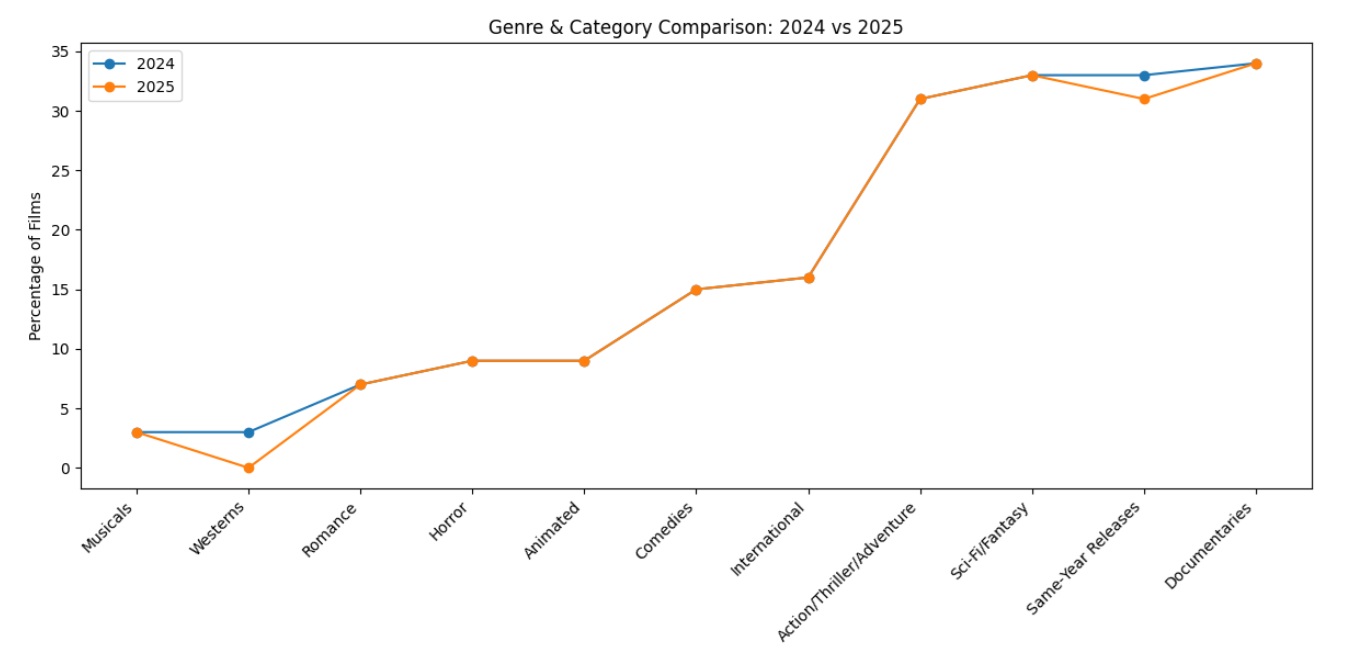
Of the films I watched for the first time in 2025:
0% are Westerns
7% are mysteries
7% are romance films
9% are horror films
9% are animated films
15% are comedies
31% are action, thriller, or adventure films
33% are science fiction or fantasy
31% are films that released in 2025
34% are documentaries
~58% are dramas
Of the television show seasons I watched for the first time in 2025:
~6% are reality television
~8% are historical dramas or comedies
~14% are animated
~17% are science fiction or fantasy
~28% are comedies
~31% are dramas (not reality television)
Analysis
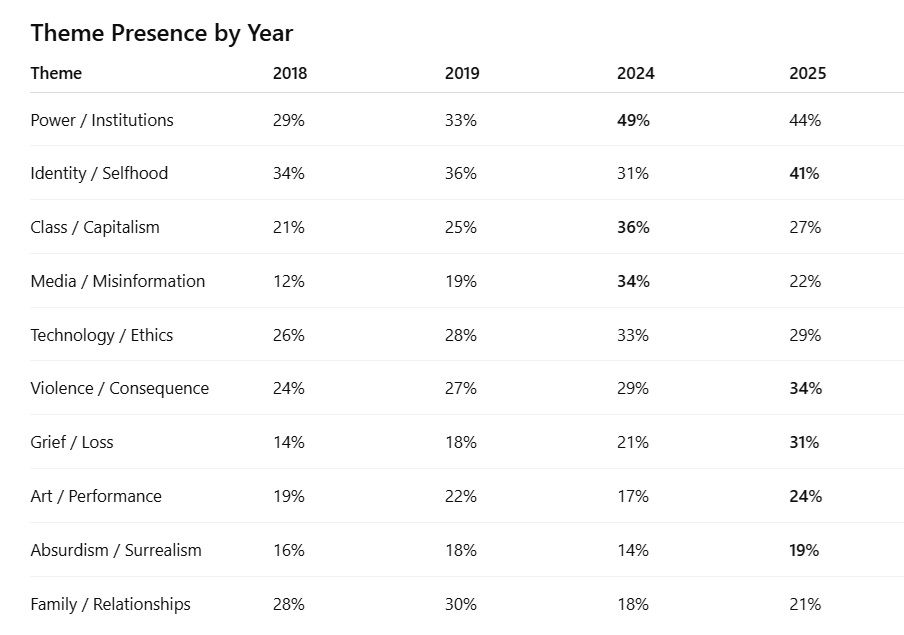
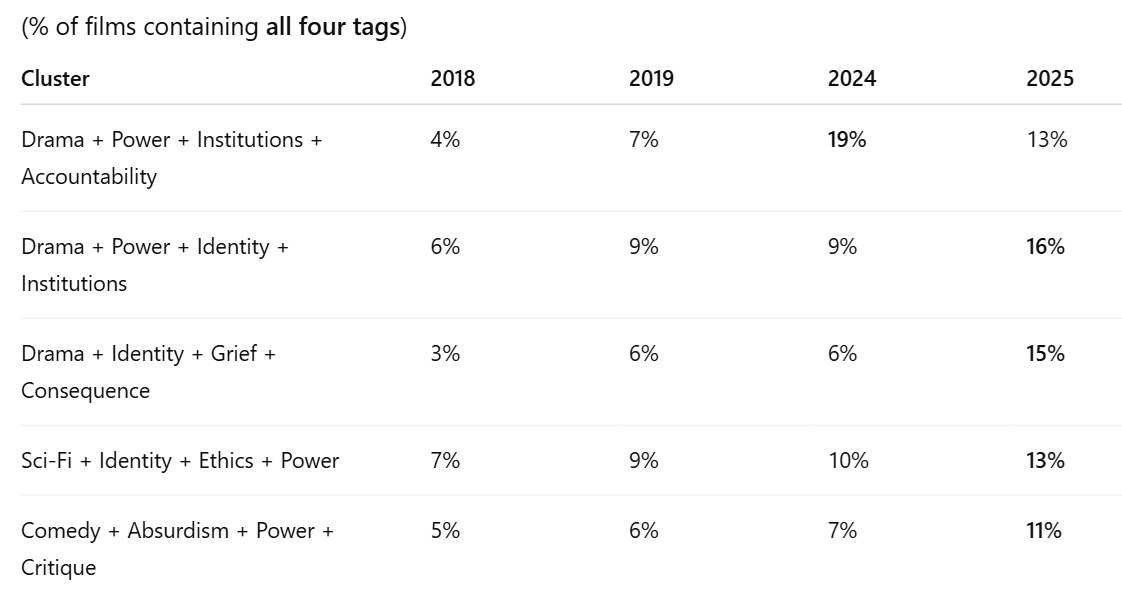
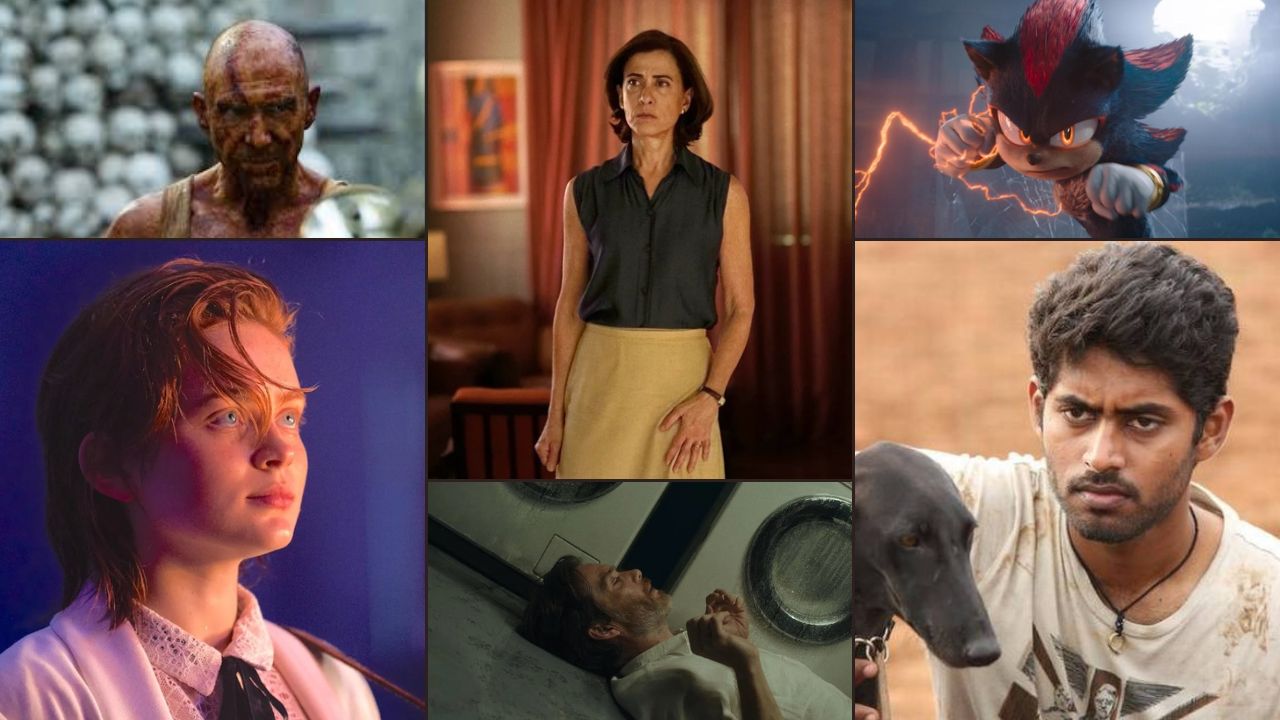
Commentary on Power: I have taught George Orwell’s 1984 more frequently than most any other story. (It is second only to William Shakespeare’s Macbeth.) While we read Orwell’s classic dystopian tale, my students explore the three laws of power: 1) power is never static, 2) power flows through everyday life like water, and 3) power creates opportunities for more power, as TED-ed’s Eric Liu explains. In every scenario, you are either exerting your influence on others, or others are exerting their influence on you. This is why conversations about power are so important: we need to understand the ubiquity of daily power dynamics in order to challenge manipulative, toxic, or dangerous uses of power. I am not sure exactly why my recent film viewing experiences incorporate themes of power and ethics so frequently, but I imagine it has something to do with my continued belief in the value of identifying the intangible-yet-powerful power dynamics in our day-to-day lives. Some of my favorite cinematic explorations of power: Prime Minister (2025), Lilith Fair: Building a Mystery (2025), Join or Die (2023), This Place Rules (2022), and Pariyerum Perumal (2018).
Consistency Is Key(?): Apparently, my film viewing habits are bewilderingly consistent. In regard to genre, my 2025 viewing statistics are nearly identical to my 2024 stats. On one hand, this speaks to the sincerity with which I pursue documentaries and science fiction. My love of knowledge and fantasy is a consistent part of my identity, apparently. On the other hand, I worry that I have stagnated as a moviegoer. In 2024, for example, I explained that I had recently discovered an appreciation for Westerns, yet I did nothing to nurture that appreciation in 2025. Should I consciously pick more romance, horror, and animated films in 2026? Maybe. Or maybe it’s okay that I like what I like. Genre does not determine quality. Either way, I would like to expand my awareness of international, non-U.S. films. That is a worthy goal, and it is my goal for 2026.
Film maudit (films “unfairly maligned” by critics): O’Dessa (2025)—39% on Rotten Tomatoes, 2.5 on Letterboxd, and 5/10 on IMDb, but I absolutely love this film. Highly recommend.
Bullet Train (2022) dir. David Leitch A Scanner Darkly (2006) dir. Richard Linklater Mystery Men (1999) dir. Kinka Usher Gladiator II (2024) dir. Ridley Scott Society of the Snow (2023) dir. J. A. Bayona Tollbooth(2021) dir. Ryan Andrew Hooper This Place Rules (2022) dir. Andrew Callaghan Alien: Romulus (2024) dir. Fede Álvarez Venom: The Last Dance (2024) dir. Kelly Marcel Sonic the Hedgehog 3 (2024) dir. Jeff Fowler A Real Pain (2024) dir. Jesse Eisenberg I’m Still Here (2024) dir. Walter Salles Nickel Boys (2024) dir. RaMell Ross Anora (2024) dir. Sean Baker The Killing of a Sacred Deer (2017) dir. Yorgos Lanthimos The Founder (2016) dir. John Lee Hancock Ghosts of the Deep: Black Sea Shipwrecks (2019) dir. David Belton, Andy Byatt In the Heights (2021) dir. Jon M. Chu The Fallout (2021) dir. Megan Park I’m Totally Fine (2022) dir. Brandon Dermer Flow (2024) dir. Gints Zilbalodis The Electric State (2025) dir. Anthony Russo, Joe Russo The Monkey King: Reborn (2021) dir. Wang Yunfei O’Dessa (2025) dir. Geremy Jasper A Complete Unknown (2024) dir. James Mangold Dave Made a Maze (2017) dir. Bill Watterson Last Exit: Space (2022) dir. Rudolph Herzog The Perfect Weapon (2020) dir. John Maggio Tuesday (2023) dir. Daina O. Pusić Mickey 17 (2025) dir. Bong Joon Ho The Pale Blue Eye (2022) dir. Scott Cooper Ballet Now (2018) dir. Steven Cantor Britain and the Blitz (2025) dir. Ella Wright King Lear (2018) dir. Richard Eyre A Brief History of Time (1991) dir. Errol Morris Parthenope (2024) dir. Paolo Sorrentino Captain America: Brave New World(2025) dir. Julius Onah The Order (2024) dir. Justin Kurzel Seven Veils (2023) dir. Atom Egoyan Thunderbolts* (2025) dir. Jake Schreier The Wild Robot (2024) dir. Chris Sanders Join or Die (2023) dir. Pete Davis, Rebecca Davis Biggest Heist Ever (2024) dir. Chris Smith Mountainhead (2025) dir. Jesse Armstrong Pete’s Dragon (2016) dir. David Lowery Rosetta (1999) dir. Luc Dardenne, Jean-Pierre Dardenne Valley of the Dead (2020) dir. Alberto de Toro, Javier Ruiz Caldera Shock and Awe (2017) dir. Rob Reiner Jazzy (2024) dir. Morrisa Maltz West Side Story (2021) dir. Steven Spielberg Scoop (2024) dir. Philip Martin Ballerina (2025) dir. Len Wiseman Power (2024) dir. Yance Ford Nayakan (1987) dir. Mani Ratnam Pig (2021) dir. Michael Sarnoski Blink Twice (2024) dir. Zoë Kravitz A Minecraft Movie (2025) dir. Jared Hess CTRL (2024) dir. Vikramaditya Motwane Mission: Impossible – The Final Reckoning (2025) dir. Christopher McQuarrie 28 Years Later (2025) dir. Danny Boyle Hotel Transylvania 2 (2015) dir. Genndy Tartakovsky Hotel Transylvania (2012) dir. Genndy Tartakovsky Going Down (1982) dir. Haydn Keenan F1 The Movie (2025) dir. Joseph Kosinski How to Train Your Dragon (2025) dir. Dean DeBlois On Falling (2024) dir. Laura Carreira Maharaja (2024) dir. Nithilan Saminathan The Ron Clark Story (2006) dir. Randa Haines The Fantastic Four: First Steps (2025) dir. Matt Shakman Superman (2025) dir. James Gunn Uncharted (2022) dir. Ruben Fleischer Kuch Kuch Hota Hai (1998) dir. Karan Johar Trainwreck: Poop Cruise (2025) dir. James Ross Trainwreck: The Cult of American Apparel (2025) dir. Sally Rose Griffiths Unknown Number: The High School Catfish (2025) dir. Skye Borgman Bulbul Can Sing (2018) dir. Rima Das Pariyerum Perumal (2018) dir. Mari Selvaraj Trainwreck: The Real Project X (2025) dir. Alex Wood Death of a Unicorn (2025) dir. Alex Scharfman Friendship (2024) dir. Andrew DeYoung Superman: Man of Tomorrow (2020) dir. Chris Palmer Sacramento (2024) dir. Michael Angarano Kaithi (2019) dir. Lokesh Kanagaraj Surviving Ohio State (2025) dir. Eva Orner Superman: Unbound (2013) dir. James Tucker Vaazhai (2024) dir. Mari Selvaraj Elio (2025) dir. Adrian Molina, Domee Shi, Madeline Sharafian Daddio (2023) Christy Hall Prime Minister (2025) dir. Michelle Walshe, Lindsay Utz Tron: Ares (2025) dir. Joachim Rønning Lilith Fair: Building a Mystery (2025) dir. Ally Pankiw Bison Kaalamaadan (2025) dir Mari Selvaraj Peter Hujar’s Day (2025) dir Ira Sachs Enthiran (2010) dir. S. Shankar Steve (2025) dir. Tim Mielants Diary of a Wimpy Kid Christmas: Cabin Fever (2023) dir. Luke Cormican The Santa Clause 2 (2002) dir. Michael Lembeck Thoughts & Prayers: Or How to Survive an Active Shooter in America (2025) dir. Zackary Canepari, Jessica Dimmock Creep (2014) dir. Patrick Brice Caught Stealing (2025) dir. Darren Aronofsky Meiyazhagan (2024) dir. C. Prem Kumar Holy Motors (2012) dir. Leos Carax This Place (2022) dir. V.T. Nayani Home Alone 4 (2002) dir. Rod Daniel Vikram Vedha (2022) dir. Pushkar–Gayathri Vada Chennai (2018) dir. Vetrimaaran Wake Up Dead Man (2025) dir. Rian Johnson Panchatanthiram (2002) dir. KS Ravikumar The Bad Guys 2 (2025) dir. Pierre Perifel Murder in Monaco (2025) dir. Hodges Usry Trainwreck: Mayor of Mayhem (2025) dir. Shianne Brown Trainwreck: The Astroworld Tragedy (2025) dir. Yemi Bamiro, Hannah Poulter Trainwreck: Balloon Boy (2025) dir. Gillian Pachter Wicked Little Letters (2023) dir. Thea Sharrock
LIST OF TV SHOW SEASONS WATCHED FOR THE FIRST TIME IN 2025
Creature Commandos, S1 Archer, S9 Make Some Noise, S3 Invincible, S3 The White Lotus, S3 Barry, S1, S2, S3 Mythic Quest, S4 Search Party, S1, S2, S3 The Pitt, S1 The Last of Us, S2 Survivor, S48 The Terror, S1 Andor, S2 Star Trek: Strange New Worlds, S1 Rick and Morty, S8 Star Trek: Lower Decks, S5 Tires, S2 Castlevania: Nocturne, S2 The Sandman, S2 Grey’s Anatomy, S1, S2, S3, S4, S5, S6 Shadow and Bone, S1 The Bear, S1 Peacemaker, S2 Gen V, S2 Death by Lightning, S1 Victoria, S2, S3 All Her Fault, S1 The Witcher, S4 American Primeval, S1
LIST OF VIDEO GAMES BEAT IN 2025
A Way Out (Xbox) – beat: played as Leo; survived Escape Academy (Xbox) – beat: heart rate increased throughout Super Mario Bros. Wonder (Nintendo Switch) – beat NieR: Automata (Xbox) – beat: Become as Gods Edition; Ending A It Takes Two (Xbox) – beat: played as Cody Diablo IV (Xbox) – beat: played as a necromancer; lots of reaping Far Cry New Dawn (Xbox) – beat: spared Mickey (because she was super cool); killed Joseph Seed (obviously) The Dark Pictures Anthology: Little Hope (Xbox) – beat: saved Andrew, saved Mary Atomfall (Xbox) – beat: killed Oberon; escaped via the Voice on the Telephone Grounded (Xbox) – “beat” i.e. made a spectacular grass-based mansion with James Star Wars: Knights of the Old Republic (Xbox) – beat: go-to companions Jolee Bindo, Juhani, and Zaalbar Assassin’s Creed: Origins (Xbox) – beat Far Cry 4 (Xbox) – beat: sided with Amita (because Sabal was sexist); killed Pagan The Outer Worlds 2 (Xbox) – beat: saved Fairfield; spared Seer Wiley; released skip-drive schematics to public; brokered an alliance between Auntie’s Choice and the Order; spared the Consul; go-to companions Niles and Marisol Dragon Age: The Veilguard (Xbox) – beat: prioritized Treviso; encouraged Emmrich to become a lich; convinced Solas to bond himself to the Veil; Davrin died; go-to companions Lucanis, Emmrich, and Neve
YOUTUBE VIDEOS (VIDEOS & VIDEO ESSAYS OVER 45 MINUTES AND/OR OF NOTABLE QUALITY) WATCHED IN 2025
BONUS: EVERY PODCAST EPISODE I LISTENED TO FOR THE FIRST TIME IN 2025
“Nicholas Hoult” by Conan O’Brien Needs a Friend “Danny McBride” by Conan O’Brien Needs a Friend “Christina Ricci” by Conan O’Brien Needs a Friend “Nathan Lane” by Conan O’Brien Needs a Friend “Bill Hader Returns Again” by Conan O’Brien Needs a Friend “Diego Luna” by Conan O’Brien Needs a Friend “Ayo Edebiri” by Conan O’Brien Needs a Friend “Andy Samberg” by Conan O’Brien Needs a Friend “Janelle James” by Conan O’Brien Needs a Friend “Werner Herzog Returns” by Conan O’Brien Needs a Friend “Rose Byrne” by Conan O’Brien Needs a Friend “Mary, Queen of Scots: Birth of a Legend (Part 1)” by The Rest Is History “Mary, Queen of Scots: The Royal Rivals (Part 2)” by The Rest Is History “Mary, Queen of Scots: The Battle for Scotland (Part 3)” by The Rest Is History “Mary, Queen of Scots: Murder Most Foul (Part 4)” by The Rest Is History “Mary, Queen of Scots: The Mystery of the Exploding Mansion (Part 5)” by The Rest Is History “Mary, Queen of Scots: Downfall (Part 6)” by The Rest Is History “Peter the Great: The Rise of Russia (Part 1)” by The Rest Is History “Peter the Great: Bloodbath in the Kremlin (Part 2)” by The Rest Is History “The Great Northern War: The Battle of the Baltic (Part 1)” by The Rest Is History “The Great Northern War: Revenge of the Cossacks (Part 2)” by The Rest Is History “The Great Northern War: Slaughter on the Steppes (Part 3)” by The Rest Is History “The Great Northern War: Murder in Moscow (Part 4)” by The Rest Is History “Rasputin” by The Rest Is History “The First World War: The Invasion of Belgium (Part 1)” by The Rest Is History “The First World War: The Battle of the Frontiers (Part 2)” by The Rest Is History “The First World War: The Miracle on the Marne (Part 3)” by The Rest Is History “The First World War: The Massacre of the Innocents (Part 4)” by The Rest Is History “The First World War: The Eastern Front Explodes (Part 5)” by The Rest Is History “The First World War: Downfall of the Habsburgs (Part 6)” by The Rest Is History “Elizabeth I: The Fall of the Axe (Part 1)” by The Rest Is History “Elizabeth I: Anne Boleyn’s Bastard (Part 2)” by The Rest Is History “Elizabeth I: The Shadow of the Tower (Part 3)” by The Rest Is History “Elizabeth I: The Virgin Queen (Part 4)” by The Rest Is History “Judd Apatow Returns” by Conan O’Brien Needs a Friend “Quantum Refuge” by Radiolab “Hundred Years’ War: Henry V’s Invasion of France (Part 1)” by The Rest Is History “Hundred Years’ War: The Road to Agincourt (Part 2)” by The Rest Is History “Hundred Years’ War: Bloodbath at Agincourt (Part 3)” by The Rest Is History “Hundred Years’ War: England Triumphant (Part 4)” by The Rest Is History “Will Arnett Returns” by Conan O’Brien Needs a Friend “Hannibal: Rome’s Greatest Enemy (Part 1)” by The Rest Is History “Hannibal: Elephants Cross the Alps (Part 2)” by The Rest Is History “Hannibal: The Invasion of Italy (Part 3)” by The Rest Is History “Hannibal: Roman Bloodbath at Cannae (Part 4)” by The Rest Is History “Custer vs. Crazy Horse: Civil War (Part 1)” by The Rest Is History “Custer vs. Crazy Horse: The Winning of the West (Part 2)” by The Rest Is History “Custer vs. Crazy Horse: Horse-Lords of the Plains (Part 3)” by The Rest Is History “Custer vs. Crazy Horse: Rise of Sitting Bull (Part 4)” by The Rest Is History
Recently, this post popped into my feed: “Normalize not bringing up a relatable story about yourself when someone is telling you something about themselves, and just listen.”
I didn’t think much about it, to be honest. It seemed reasonable to me. Sometimes, folks want to be heard, and—sometimes—feeling heard requires the listener to focus on the speaker’s experience (as opposed to their own).
But then I read some of the comments.
There is much to unpack in these comments, including a few logical fallacies and some arguably misguided assertions about neurodiversity. But what surprised me was the widespread indignation of the commenters. The spirit of the comments is valid: vocalizing shared experience can be a way to empathize and deepen conversations. And, yes, active listening does not require silence on the part of the listener. But those elements were not the focus of the original post. The original post simply asked would-be listeners to spend time focusing on the speaker’s experience before pivoting to their own.
And some commenters couldn’t handle that.
The “Share a Similar Story method,” as one commenter described it, is a feature of empathy, not necessarily active listening, and it can feel dismissive to the speaker. Consider the snow globe analogy from Mae Martin’s stand-up special:
Okay, this is a little abstract, but don’t you think, in a way, our brains and our minds are like our rooms, and we furnish our minds with experiences that we collect to then build what we think of as our identity and selves? And that’s all we’re doing. We’re little experience hunters, collecting these to put them on our brain shelves and be like, “I’m me.” And I always visualize every experience that we collect is like a little novelty snow globe. We’re just going around, being like, “One time I saw Antonio Banderas at the airport. Yes, I did. I’m myself. And no one else is me.” And then all human interaction is . . . just basically taking turns showing each other our snow globes. And being like, “I…” And just pathetically taking turns. And, like, someone will be showing you their snow globe, you know, and you’re trying to be a good listener. It’s a story about a party they went to five years ago. And you’re like, “Yes, and you are you as well.” Like, “Yes, exactly, yes.” “How wonderful to be yourself as well.” But the whole time, your eyes are darting to your own shelf. A hundred percent, the whole time… You’re like, “Mmm, yes. Well, no. Yes.” Waiting for your moment to be like, “And me as well. I have one…”
Sometimes, effective listening requires sacrifice. Sometimes, to truly hear and appreciate the experiences of another person, a listener must abandon the temptation to match those experiences with their own—at least for a little while. While listening to another person, instead of searching your head for your own experience (AKA your snow globe), you could actively listen to (and comment on) the experience presented by the speaker.
For many people, effective listening is not the status quo. In fact, I argue that most people are bad listeners—a reality perpetuated by casual egotism and a widespread tendency to instinctively personalize the stories of others. In a video essay about Noah Baumbach’s 2017 film The Meyerowitz Stories (New and Selected), YouTuber Nerdwriter uses the film to examine the reality of day-to-day conversations. At one point, Nerdwriter dissects a scene between Matt (played by Ben Stiller) and his father Harold (played by Dustin Hoffman):
. . . What makes this exchange so heartbreaking and true to life, at least for me, is that they really are communicating with each other—just not explicitly. Matt brings up a major life change and expresses some of the hopes and fears he has about it, and his father immediately brings up his own major life event and some of the hopes and fears he has about that. Implicitly, Matt is asking for approval, he’s asking for reassurance, and he’s asking for consolation. Harold, on the other hand, is denying approval because he can’t his son being more successful than he is, while asking for reassurance of his own hopes and consolation for his own fears. It’s like the two men are firing a volley of missiles at each other: some are hitting, some are missing, and some are crashing into each other midair. I think Baumbach understands a key dynamic in conversations, especially conversations with family: When we speak to others, we’re often speaking to ourselves, attempting to frame dialogue so that the person we’re talking to will reflect back the things that we want to believe about us. . . . And the result is often conflict or a conversation that just goes nowhere.
Ultimately, much of this issue comes down to the nuances of specific conversations. If, for example, I quickly mention the fact that I have experienced depression as a way to establish a connection with someone who has just shared a story of their experiences with a recent depressive episode, I am showing empathy. If, however, I respond to my friend’s story about their depressive episode with an unsolicited story about my mental health, I am no longer just showing empathy—I am hijacking their moment to highlight my own experience.
The line between empathizing and commandeering is sometimes tricky to see, especially for those with notably solipsistic tendencies. Listeners must quickly consider a number of contextual variables: level of familiarity, the emotional disposition of the speaker, power dynamics, physical location, and more. If “reading the room” was easy, miscommunications and hurt feelings would never occur. But they do occur. Frequently, in fact. Which means that some of us are not as good at listening as we assume we are.
So let’s look at examples of obviously ineffective listening and fine-tune our approach from there. When arguments occur, we often demand understanding through tone and volume. During an argument, the struggle to feel heard often manifests as vocalized frustration: we shout to keep the other person from overlooking our perspective. Consider the flawed styles of communication in movies like Sam Mendes’s Revolutionary Road, Noah Baumbach’s Marriage Story, and Justine Triet’s Anatomy of a Fall.
In all three cases, the characters shout their feelings and experiences at each other, and they do so without earnest attempts to appreciate perspectives beyond their own. Most individuals, I imagine, would agree that these cinematic conversations exemplify a failure of effective communication. In these scenes, much is communicated, but little is understood. It’s easy to look at arguments and see the dangers of selfish exchanges. But self-centeredness is not limited to heated arguments: the clearly ineffective elements of hostile communication—the chaotic drive to be heard and the self-focused tendency to personalize the experiences of others—can also exist in casual, non-hostile conversations. They’re just more subtle.
My contention is that when attempts at empathetic “listening” are driven primarily by a desire to verbalize relatable experiences, those attempts often suffer from the same pitfalls as the arguments in Anatomy of a Fall—just maybe to a lesser degree. In both situations, understanding is overshadowed by verbalized personal experience. In the mind of the speaker, it is not clear if the listener has truly internalized what was said.
Let’s use Fences, the 2016 film adaptation of August Wilson’s play, as a case study. Troy Maxson (played by Denzel Washington) is a toxically masculine father who cheats on his wife Rose Maxson (played by Viola Davis). Like Willy Loman from Arthur Miller’s Death of a Salesman, Troy is a problematic communicator: he has a notably tunnel-visioned view of the world that informs everything he says. Every comment or reply is filtered through a limited lens of baseball references and unyielding personal philosophies.
At the beginning of a pivotal scene, Troy tells Rose that he has fathered a baby with another woman, and this admission sparks a conversation about their marriage. Rose is understandably frustrated, and she explains that Troy should have “held her tight,” regardless of any emotional distance between them. Then Troy’s language shifts: he tries to explain his perspective through a series of baseball metaphors (“I bunted” and “I wasn’t gonna get that last strike” and “I wanted to steal second” and “I stood on first base for eighteen years”). Troy makes little attempt to empathize with Rose; instead, he insists on framing the conversation in a way that makes sense to him. He insists on language that reinforces his experience, not hers. (And, intriguingly, Troy actually accuses Rose of “not listening.” Sometimes, the most thunderous among us are the quickest to feel unheard.)
Finally, Rose yells, “We’re not talking about baseball! We’re talking about you going off to lay in bed with another woman—and then bring it home to me. That’s what we’re talking about. We’re not talking about no baseball.”
Now imagine that Troy is one of Rose’s friends, not her husband. Imagine that Rose is talking to a friend about her interactions with her adulterous husband, and Rose’s well-intentioned friend responds with a litany of baseball analogies. Would you describe that friend as an effective listener?
Now replace those baseball analogies with the “Share a Similar Story method.” Imagine that Rose is sharing her experiences, and her well-intentioned friend pivots to their own experience with an unfaithful partner. Would “effective listener” be an appropriate label for that friend?
Sometimes, effective listening requires sacrifice. Sometimes, as a listener, it’s not about you, and quickly pivoting to your experience—even if well-intentioned—feels self-serving. You may not mean to dominate or personalize the conversation, but impressions impact feelings more than intentions.
I believe that genuinely listening to another human being can change that person’s life. All human beings want to feel heard. All human beings crave the feeling of safety, sanity, and comfort that comes from knowing that another person truly heard, appreciated, and validated what they had to say. So when you have the opportunity to offer that to someone else, remind yourself that this is their life-changing moment, not yours.
Ben Boruff is a co-founder of Big B and Mo’ Money. Read more at BenBoruff.com.
Mike Birbiglia’s 2013 stand-up special My Girlfriend’s Boyfriend begins with a targeted critique of marriage:
So about five years ago, pretty much everyone who I know started to get married, and that was strange for me because I don’t really believe in the idea of marriage. And that would have been fine, except I have a problem where sometimes when I think that I am right about something, it can be a real source of tension between me and the person I’m arguing with. And the reason it’s a source of tension is that I’m right. And so I remember distinctly talking to my friend Dana, and she goes, “Well, you don’t believe in marriage for you, but, of course, you believe in it for other people.” And I was like, “No, I think it’s insane, you know, for anyone.” And she said, “Why?” And I said, “Well, first of all, it just seems doomed.” You know, 50% of marriages end in divorce. That’s just first marriages, by the way. Second marriages, 60% to 62% end in divorce. Third marriages, 70% to 75% end in divorce. That’s a learning curve.
And he doesn’t stop there. In his comedy special, This American Life and The Moth regular Mike Birbiglia reinforces his anti-marriage worldview with jokes about actively resisting the pending marriages of his friends:
I had one ally in all this, which is my friend Andy, and he’s a comedian as well. Not only did we decide we weren’t gonna get married, we actually tried to stop other people we knew from getting married. Yeah, we were pretty good at it. Like, we stopped or put on hold three or four marriages, you know. We were pretty good. I mean, we weren’t like the best in the world. I’m sure there are better in Europe. But we were solid, you know. Like, so, like, for example, at point my friend Alex was about to get engaged. And so we just took him to dinner. And during dessert, we gave him a long, hard stare. We said, “Are you sure this is what you want to do?” And then we went cold to give him the sense of what it would feel like when we weren’t friends anymore.
Throughout his special, Billionsand Orange Is the New Black guest star Mike Birbiglia critiques the gaudiness of marriage ceremonies (“I don’t buy into the flamboyant pageantry that goes into celebrating it”), the history of marriage (“marriage is an archaic institution invented in the middle ages based on exchanging property”), the legal mores of marriage (“why does it need to be written into a government contract?”), and marriage’s inherent connections to religion (“I’ve been to more weddings of my friends where the people on the altar don’t believe in the religion of the church they’ve invited us to!”).
Then, Cedar Rapids (2011) and Trainwreck(2015) actor Mike Birbiglia tells a personal story about the comically tragic aftermath of a car accident—a story he has told on This American Life and elsewhere—before transitioning back to his girlfriend Jenny: “The only person who would talk to me at this point was Jenny.”
Famoussleepwalker Mike Birbiglia ends his 2013 special with a heartwarming admission of his own stubbornness and a confession of his marriage to poet Jen “Jenny” Stein:
July 7, 2007, Jenny and I went to city hall and got married. I still didn’t believe in the idea of marriage, and I still don’t. But I believe in her, and I’ve given up on the idea of being right.
It’s sweet.
But I hate it. I hate it because it doesn’t stop there.
At the beginning of his 2019 comedy special The New One, casual Taylor Swift friend Mike Birbiglia acknowledges his dislike of children:
Maybe I have a low tolerance for children. I’ve lost a lot of great friends to kids. Because it really is like a disease in some ways. But it’s worse than a disease because they want you to have it too. [zombie voice] “You should have kids too.” I’m watching you do it, and I’m thinkin’ I’m gonna not do it. They’re like zombies, they’re like [zombie voice] “You should eat brains.” I’m watching you eat brains, and it seems like it ruined your life.
By his own admission, past Late Night with Conan O’Brien intern Mike Birbiglia’s desire for a childless life was unambiguous: “I was very clear when we got married that I never wanted to have a kid. . . . I was clear I would never change.”
And throughout The New One, he offers specific reasons for not wanting kids:
Number one, I’ve never felt like there should be more of me in the world. . . . I had cancer, life-threatening sleeping disorder, Lyme disease, diabetes. I’m not exactly handing off A-plus genes here. Number two. I love my marriage, and I feel…I really do, I feel so lucky to have found my wife. . . . And I don’t want to give that up. I don’t want that to change. I don’t want a third person showing up, like, “What about me?” I’m like, “We don’t even know you!” Number three. I don’t know anything and I’m not ready to teach the children. I mean, I’ve read hundreds of books. I’ve retained very little. . . . Number four, I have a cat. Number five. I have a job. . . . It took me a long time to figure out anything I was good at. I wasn’t good at video games, or archery, or whatever the hell kids do. And then, I figured this out. I don’t want to give that up. My brother’s like, “Mike, you can have a kid and a career.” And I said, “Yeah, Joe, but it’ll be worse.” If we’re being honest with ourselves kids hold us back. . . . Number six. I don’t think there should be children anymore. Nothing drastic. I think the current children can see through their term. I just think maybe we cut it off there, because, look, we were given the earth and we failed. . . . Number seven. People aren’t great. Not just Nazis. I mean, people in general are not great. And look, you guys seem fine. And the conventional wisdom is that people are generally good. But are they?
And Jimmy KimmelLive fill-in Mike Birbiglia allegedly told his wife all of that: “Why would you want to bring a child into this world with me? I’m a walking pre-existing condition, the earth is sinking into the ocean, we’re about to be living in the movie Waterworld, which did terribly at the box office. People are horrible, and I’m not great.”
His wife allegedly responded, “I know all of that. And I think you’d be a good dad.”
So they had a kid. Not just in the comedy special anecdote. Real-life married father Mike Birbiglia actually has a child now.
Mike Birbiglia betrayed us.
I want to be abundantly clear: The problem is not that Birbiglia is married and has a child. Unlike Birbiglia in his own stand-up special, I do not mind when others get married or have children. The problem is that Birbiglia publicly and enthusiastically advocated for single, childless lifestyles before getting married and having a child—and then uses his past advocacy as fodder for comedy.
Consider the current socio-political landscape as it applies to perceptions of marriage, parenting, and “traditional” families:
In 2015, Pope Francis said that couples who choose not to have children are “selfish.” Pope Francis reinforced that belief again in 2024, praising cultures with averages of three to five children per household: “Keep going like this. It is an example for all countries.”
In 2016, Bella DePaulo, Ph.D., explained the inherent psychological biases we have against single individuals: “Nearly every other person describing married people, approximately 49 percent, spontaneously suggested that married people are kind, caring, or giving. Only 2 percent of the participants describing single people came up with those same characteristics. Every third person describing married people, around 32 percent, said that they were loving. No one—not one person—described single people this way. Married people were also more often described as happy, secure, loyal, compromising, and reliable. Single people, though, were more often described as independent.”
In 2021, JD Vance criticized “childless cat ladies,” which according to to NPRis an insult with a long history designed to paint childless women as either frightening or pitiful. (Vance has since claimed that his comment was meant as a critique of the “anti-family and anti-child” Democratic Party.)
Also in 2021, JD Vance stated that the idea of childless educators having influence over children “disorients” and “really disturbs” him. (Again, Vance later reframed his comment as a critique of “left-wing indoctrination” in schools.)
Again in 2021, JD Vance wondered during an interview whether or not childlessness might make people “people more sociopathic and ultimately our whole country a little bit less mentally stable.” The full quote: “There’s just these basic cadences of life I think are really powerful and really valuable when you have kids in your life, and the fact that so many people, especially in America’s leadership class, just don’t have that in their lives, you know — I worry that it makes people more sociopathic and ultimately our whole country a little bit less mentally stable.”
In 2022, a survey showed that “52% of 1,000 single UK adults reported experiencing single shaming ‘since the start of the pandemic.'” According to BBC, “researchers asked about the common ‘shaming phrases’ single people have heard from others, and 35% said they were told ‘you’ll find someone soon’. Twenty-nine percent heard ‘you must be so lonely’, while 38% reported general pity over their relationship status.”
A 2024 study from the Personality and Social Psychology Bulletin, unveiled “four overlapping ‘archetypes’ [perceptions] of single women and men”, including “‘Heartless (‘selfish,’ ‘promiscuous’), and Loner (‘lonely,’ ‘antisocial’).”
So when folks like Mike Birbiglia softly belittle genuine concerns about marriage and procreating, they are perpetuating a longstanding and wholly damaging status quo of pro-marriage, pro-procreating propaganda. In his comedy specials, Birbiglia presents himself as an underdog who reluctantly succumbs to happiness, but he’s really just punching down. He creates a fun, quirky, freethinking single-life caricature of himself only so that he can later use self-deprecation as a means of discounting singleness and/or childlessness.
Mike Birbiglia is not the only one who does this. My least favorite scene in the entire run of Parks and Recreation is this one:
Like Birbiglia, April Ludgate had valid reservations about having a child. But then Andy, Ben, and Leslie effectively bully April into having children. And so she does. (Leslie tells April that she likes her “team” and would love to see more “team members,” whatever that means.)
In the episode, Ben’s assertion that April will inevitably “get there” and change her views about children is particularly heinous.
There are valid reasons to oppose marriage and/or a child-filled lifestyle. According to 2025 numbers from Forbes, 43% of first marriages end in divorce. Yes, that’s lower than the commonly spread divorce statistic of 50%, but a 57% success rate is still hardly worth celebrating. If a restaurant had a 57% satisfaction rate, would you make a reservation? If a university had a 57% job placement rate, would you pay tuition? The average wedding in 2023 cost $30,119, and the cost of raising one child is, on average, $21,681 per year, not including the cost of saving for college. (The cost of raising a child over 18 years is $237,482 “just for the basic necessities”). Plus, the idea of marriage as an act of love is relatively new. Marriage was “rarely a matter of free choice” until the late 20th century. For most of human history, “romantic love was not the primary motive for matrimony.”
Finally, there’s nothing selfless about having children, unless you can somehow guarantee that your kid is going to cure cancer or be the first interstellar pioneer to colonize another solar system. Otherwise, you’re having a kid for you—because you want a child. This is perfectly fine, but let’s be honest about it.
Even if someone does not have “valid” reasons for being hesitant about (or outright opposing) marriage and procreation, you should still respect those views without comment or objection. The validity of the worldview is not the point: the hesitation itself is the point. Many in society—pastors, parents, purveyors of the patriarchy—proselytize endlessly about the importance of the bonds of marriage and the roles of parenthood. So shouldn’t folks think long and hard about whether or not they want to enter into those commitments? Shouldn’t that hesitation be celebrated, not belittled? But, instead, many treat having children like buying lottery tickets: lots of uninformed finger-crossing (with plenty of awkward scratching and dirty fingernails, I assume).
But I’ll leave you with one of my favorite portrayals of a confident, single, and childless character—which, incidentally, comes from Parks and Recreation. Not early-seasons April Ludgate or Leslie Knope. I’m talking about Jennifer Barkley.
Yes, I know that the character of Jennifer Barkley reinforces the “heartless” stereotype of the single, childless individual and is a less-than-perfect symbol of my argument. But I can’t resist the comparison: In a world utterly filled with Leslie Knopes and April Ludgates, be bold enough to be a Jennifer Barkley.
Ben Boruff is a co-founder of Big B and Mo’ Money. Read more at BenBoruff.com.
Near the beginning of 2019, I watched Life Itself, the 2014 documentary about the life and work of famous film critic Roger Ebert. Consider this quote from Ebert:
“We are all born with a certain package. We are who we are. Where we were born, who we were born as, how we were raised. We are kind of stuck inside that person, and the purpose of civilization and growth is to be able to reach out and empathize a little bit with other people, find out what makes them tick, what they care about. For me, the movies are like a machine that generates empathy. If it’s a great movie, it lets you understand a little bit more about what it’s like to be a different gender, a different race, a different age, a different economic class, a different nationality, a different profession, different hopes, aspirations, dreams and fears. It helps us to identify with the people who are sharing this journey with us. And that, to me, is the most noble thing that good movies can do and it’s a reason to encourage them and to support them and to go to them.”
If you have ever tried to explain your deep appreciation of a piece of art anywhere on the internet, you likely understand how much amateur criticism and intense posturing exists online.
At best, this negativity is an aggravating byproduct of crowdsourcing artistic validation. At worst, this persistent and indiscriminate criticism is a symptom of a relatively new and alarmingly widespread brand of groupthink. One that is unquestioningly unimpressed—always.
Either way, we seem to be entering a modern era of discontent, and this problem is worth dissecting.
With that in mind, meet a proud part of the problem: Cinema Sins. Continue reading →
Seemed like a simple question. Easy enough to answer.
Then I began to compile a list of all of the superhero movies I’ve seen. And when that list grew larger than 90 movies (watched over many, many years), I panicked. “Damn. What is my favorite superhero film? Could I even narrow it down to a top ten?” Continue reading →
Warning: Article contains links to pages that contain profanity and offensive content.
Updated on 6/19/24 to remove dead links and clarify information.
At 7:45 PM on June 15th, Twitch streamer and Twitter user Ashley “ashleeeeean” Leann posted this tweet:
The Twitch mixer was a get-together on Wednesday, June 14, 2017 for Twitch streamers at the Electronic Entertainment Expo (E3), a gathering of gamers and game developers in Los Angeles. Around 20 hours had passed since friends, family, and social media followers had heard from Twitch streamer and GEXCon host Tia “LauraLania” Zimmer, so ashleeeeean decided, as she described in a video on Twitter, to use “my platform and my following to be able to get the word out there.”
“I did not expect it to blow up as much as it did,” she added. Continue reading →