When modern pop cinema replaced heart-of-gold rebel archetypes with more multifaceted characters, where did the archetypes go? When Disney seemed to shift their focus from High SchoolMusical-style filmsto more elaborate plots, where did the teen soap opera storylines go? When tween, teen, and young adult films began to offer more ethnically and economically diverse characters, where did the old racially stereotypical ensembles go?
Prom is a collection of all the outdated elements of popular teen film. Star-crossed lovers without depth. Random bursts of hormonal emotion. Smug, out-of-context attempts at wit. A disheartening lack of interracial couples. This repository of outcast archetypes boldly attempts to unravel years of social and cinematic progress.
In fact, the only somewhat uniquecharacter in Prom is Rolo, a curly-haired stoner who may or may not have a career in adult film. After spending the majority of the film casually responding to accusations that Athena, his Greek girlfriend from Canada, is not real, Rolo steals the show when he enters the prom-filled auditorium with a supermodel at his side. This spectacular entrance fascinates the other Prom characters and adds fuel to the idea that the Prom Committee may not be Rolo’s only extracurricular activity.
Movies that sport simplified moralities have some charm. Good is good, and bad is bad. There are no ethical dilemmas to process. Captain Hook has few friends; Sharptooth is Littlefoot‘s enemy; and no one cheers for the Huns in Mulan. But, sometimes, our multifaceted minds overcome our oversimplified childhoods, and we fall to the temptations of a good moral dilemma.
The modern world of superheroes and masked villains is full of such ethical quandaries. In the early 1970s, Green Lantern and Green Arrow debated various sociopolitical issues, and Spider-Man became an anti-drug icon (long before Spider-Man 3, of course). These moral questions blurred the rigid lines of right and wrong that plagued early versions of some superhero universes.
As many masked individuals have taught us, disrupting the status quo can be good or bad, depending on the situation. If crime, oppression, or apathy is the status quo, then perhaps disruption is a good idea. If the status quo is relatively pleasant and harmless, then maybe disruption is bad.
In the spirit of absurdity, I have chosen three characters that represent various approaches to existing conditions and will offer some ideas about what a possible three-way brawl might look like.
V
The only verdict is vengeance; a vendetta held as a votive, not in vain, for the value and veracity of such shall one day vindicate the vigilant and the virtuous.
Watching V for Vendettais a morally challenging experience. Or at least it should be. After the initial awe I experienced from watching a cleverly masked, cape-wearing, alliteration-abusing, knife-wielding, egg-cooking freedom fighter blow up buildings and dance around a secret hideout that could be featured on MTV Cribs, I realized that V is, in fact, a terrorist. In The Matrix, the Wachowskisiblings dulled the moral backlash against violence by allowing the would-be terrorists to run around in a fake world. V for Vendetta, however, takes place in London. A future, dystopian version of London, but still London. V did not explode fabricated buildings inside a virtual reality with the power of his mind—he blew up real buildings in London. Aside from the possible sociopolitical arguments for anti-oppression coup d’états, V for Vendetta, the film, provides a platform for unrestricted violence against authority. At best, it is violence without adequate context. At worst, it is glorified Western terrorism.
And that is what makes V such a contender in the fight against the Joker and Rorschach. V is deliberate, confident, and he can do some crazy things with knives. He’s like a masked hibachi chef who has a problem with authority (which is, by the way, a wonderful idea for a new superhero).
The Joker
You see, madness, as you know, is like gravity. All it takes is a little push!
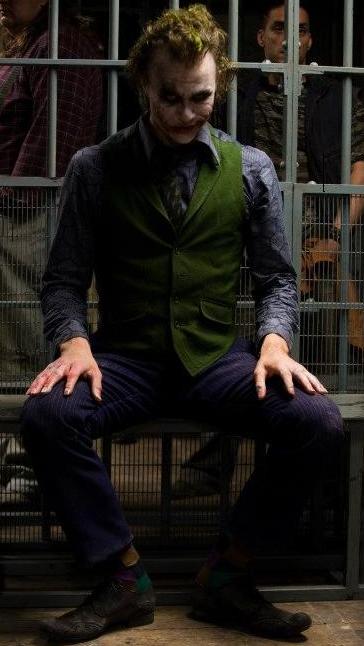
There have been many versions of the Joker. Heath Ledger played the Joker in Christopher Nolan’s The Dark Knight. And, before that, Jack Nicholson offered us an older, more bizarre Joker, a Joker that was a notch creepier than a birthday clown and a notch more acceptable than a birthday clown for a postpubescent birthday party.
There have been many animated versions of the Joker. Mark Hamill provided the Joker’s voice for a number of television shows and video games, and John DiMaggio, the guy who gives Futurama‘s Bender his voice, was the Joker in Batman: Under the Red Hood.
Think about that. The Joker has Luke Skywalker and Bender running through his voice box. If there were any character who could do justice to the juxtaposition of saber-wielding Skywalker and bolt-filled Bender, it’d be the Joker. As a villain, the Joker is a character that can make an audience laugh; question the appropriateness of laughing at dark, unprovoked violence; and then drown their moral apprehensions in cheers for more wit. As much as we love Batman, we don’t want to see the Joker die. Save Arkham Asylum for the unappealing villains like Killer Moth and Catman.
The Joker’s unpredictability is his greatest advantage. The Joker wouldn’t follow any of Brad Pitt‘s rules if he joined Fight Club. He’d wear a shirt and shoes AND tell all of friends about the group. And, if it were his first time at Fight Club, he wouldn’t fight. He’d just stand in the corner until the rest of the group forgot about him. Then he’d start multiple fights with multiple people. And then he’d leave because the Joker doesn’t join clubs.
Rorschach
Never compromise. Not even in the face of Armageddon.
Rorschach has the punch of wasabi and the cleansing power of sorbet. Rorschach is the Chuck Norris of grim superheroes. His Bauer-like no-nonsense attitude complements his Anton Chigurh brutality. He has the voice of Batman, the wit of Mr. Blonde, and the wardrobe of Dick Tracy. He employs a Corleone-style morality and a Dignam-ish sense of duty. He is, in a word, badass.
Rorschach fights criminal aggression with patient brutality. To say he fights fire with fire is to misrepresent Rorschach’s intensity. Rorschach fights fire with hotter, bigger, more awesome fire. His ironclad integrity allows him to take his struggles against criminality personally without losing motivation or willpower. And we love him for it. In Watchmen, Dr. Manhattan’s blue manhood may be enjoying a lot of fresh air, but it is Rorschach who steals the show.
Morally, Rorschach is problematic. Because he subscribes to an end-justifies-means philosophy, Rorschach’s actions often score high on immorality scales, but we don’t question his status as a good guy. His response to villains is villainy, but Rorschach himself is still a hero. This paradox is unraveled somewhat by Rorschach’s self-sacrificial actions at the end of Watchmen. Rorschach must step aside for peace to survive.
This is why I believe that, if they were ever to fight, Rorschach would beat V and the Joker. Rorschach’s intensity and personal conviction ultimately trump V’s intentionality and the Joker’s unpredictability. Before you disagree, watch this trailer one more time:
I saw Melancholiatwice in theaters. The first time I saw the movie was at an artsy theater in Indianapolis. The audience was quiet, focused, and alert, absorbing all of the subtle and profound emotions portrayed by Kirsten Dunst and Charlotte Gainsbourg.
The second time was at a theater in a college town. The audience was loud, talkative, and arrogant. And they were definitely more intoxicated than the Indianapolis audience, which is weird because the artsy theater offered alcohol (and the university had a supposedly dry campus). Though, to be fair, I don’t blame the college students. If I was sporting a 1.5 GPA because of a moderate Call of Duty addiction and was going to see a movie about the slow demise of our planet, I’d probably drink too.
What intrigued me, however, was how the different audiences impacted my perception of the movie.
via IMDb.com
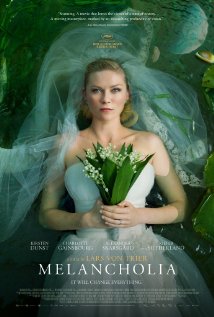
Before diving into that ocean of gaudy introspective self-praise, though, I need to explain a little about Melancholia.Lars von Trier‘s 2011 film is a beautiful juxtaposition of the emotional and mental struggles of two sisters and a newly discovered planet that likes to invade Earth’s personal space. Kirsten Dunst plays Justine, a personification of depression and doom. For the first half of the film, the audience watches Justine destroy her wedding bit by excruciating bit. The second half of the film follows Claire, Justine’s sister, as she tries to juggle Justine’s emotional state, a creepily quiet child, Jack Bauer, and a new planet that may end all life.
So when the booze-filled audience burped their laughs, I was surprised. Depression and interplanetary tango is not exactly comedic gold. But, in some ways, it worked. Melancholia offers a dark look at life on the edge (in more than one way), and sometimes mild laughter is a good way to deal with impending doom. Also, if good movies aren’t your preference and you get bored while watching this wonderful film, it’s sort of fun to imagine Spider-Man swooping in to save Kirsten. Or Kiefer Sutherland yelling at someone.
“Life is only on Earth. And not for long,” says Justine with tired eyes.
“Like Hell it is!” growls Jack Bauer, cocking his gun and running toward the sunset.
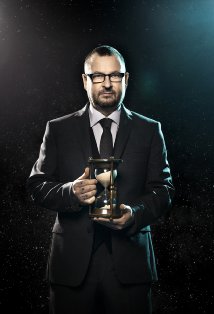
Lars von Trier: Director
Lars von Trier: Writer
Kirsten Dunst, Charlotte Gainsbourg, and Kiefer Sutherland: Stars
If you’re looking for a movie about well-dressed, foul-mouthed gangsters who tell tasteless jokes and spend great amounts of time debating the finer sociological aspect of tipping at restaurants, Quentin Tarantino’s Reservoir Dogs is the movie for you. It is a simple, mobster-style movie peppered with flashbacks and gunfire. Though the plot is coated with mystery, the film plays more like a character-drama, chronicling some important moments in the lives of a few complicated individuals.
Oh, and congratulations, Steve Buscemi.
WARNING: OFFAL SPOILER ALERT
Congratulations, Steve Buscemi. Reservoir Dogs highlights the crazy antics of one of Buscemi’s most successful characters. In this case, “successful” refers not to the critics’ responses to Buscemi’s character but to the character’s relative success in the actual events that occur during the course of the movie. This relative success is celebration-worthy because Buscemi’s characters don’t often succeed. A Buscemi-played character is likely to become mentally unstable, mangled, or dead. Let’s look at some of Steve Buscemi’s characters:
Carl Showalter, Fargo (1996). A hot-tempered crook whose deranged mind has trouble processing changes to well-made plans. Deceased.
Rockhound, Armageddon (1998). A bizarre genius who shows no respect for the seriousness of working on an asteroid. Mentally unstable.
Donny Kerabatsos, The Big Lebowski (1998). A curious pushover who suffers through verbal abuse and unprovoked hostility without complaint. Deceased.
James McCord, The Island (2005). A helpful techie whose philanthropic spirit doesn’t get to see the second half of the movie. Deceased.
Wiley, Grown Ups (2010). An overgrown child whose friends have little respect for his physical well-being. Mangled.
And that is just a sample. Sure, there are exceptions to this trend, but the already small list of anomalies is saturated with relatively unlikable characters like Randall Boggs from Monsters, Inc., Garland Greene from Con Air, and Clint Fitzer from I Now Pronounce You Chuck & Larry.
Of course, given the release dates of these movies, it is possible that Buscemi perfected his oddball character type after playing Mr. Pink in Reservoir Dogs. But, still, it’s comforting to know that at least a couple of Steve Buscemi’s characters had relative success in their respective universes. And it is relative success: Mr. Pink probably died.
But, of course, all of this is a testament to Buscemi’s artistic skill. His ability to consistently provide moviegoers with compelling and often comedic weirdos/sociopaths is unparalleled. Thank you, Steve Buscemi, and congratulations.
When I watch a movie for the first time, I try to experience it. I allow the colors and sounds to guide my thoughts. I set my brain to autopilot and repress the part of my mind that prides itself on analysis and critical thought. I forget about financial woes, annoying friends, and other daily stresses and immerse myself in whatever world is on the screen. My goal is to create memories, not brain wrinkles.
But that is the first time. If I watch the movie again, the gloves are off. My brain cracks its knuckles and prepares to pick apart the film. No scene, motif, or character escapes my analysis. My mind becomes a warrior of intellect, attacking ignorance and feeding on subtlety and nuance.
Some friends have told me that they don’t appreciate casual film analysis. “Chicago is not a social commentary.” “I don’t like to think of Aslan as Jesus.” “I don’t care if WALL-E wants me to save the planet.” But these friends are missing a crucial element of movie-watching. There is nothing wrong with intelligent responses to film.
via IMDb.com
Many films offer viewers guided tours through various philosophical musings and sociopolitical statements, and those messages demand critical thought. Like literature, music, and other forms of art, the burden of interpretation falls to the viewer. Films cannot easily be divided into groups based on the existence of a moral or social statement—those with messages and those without—and moviegoers who are only willing to analyze films that advertise as social commentaries (like FernGully: The Last Rainforestand Sicko) hide themselves from deeper understandings of their favorite movies. Analyzing film does not somehow ruin the simple pleasures of movie-watching, and thinking about the more profound aspects of a specific movie does not lessen the movie’s initial impact. Instead, injecting critical thought into the movie-watching experience enhances the adventure. The Lord of the Rings is better when considering Tolkien’s background. 30 Rock is funnier with an understanding of the show’s social commentary. And appreciating Reefer Madness: The Movie Musicalas social satire brings the music to life.
So, the next time a friends tells you to stop analyzing movies, just remember that critical thought is film’s best friend. Feel free to tell your friend something like, “I’ll stop analyzing movies when you start paying for my movie tickets. Until then, I pay for these experiences, and I’m going to make the most of them.”
Flashbacks of a Fool is a coming-of-age tale about forbidden romance, teenage innocence, and the dangers of old sea mines. More importantly, it is evidence that brilliance can exist without coherence or flow.
The movie is about a struggling Hollywood star and his bizarre past. The star, played by Daniel Craig, is a promiscuous, emotionally immature has-been who discovers that a childhood friend has passed away. Instead of casually reminiscing about his childhood while relaxing on his couch or listening to Enya’s “Orinoco Flow” over and over (which is a great way to relax, by the way), Joe Scot (Craig) decides to go for a semi-drunk swim. This, of course, brings about a rather long flashback, a flashback that lasts for nearly half of the movie and includes impromptu dancing, intergenerational intercourse, and unexploded mines.
Baillie Walsh, the writer/director, guides the audience through a beautiful cacophony of settings, camera angles, and storylines without regard for context or flow. This is Walsh’s first and only feature film, but that fact didn’t seem to stop the novice director from peppering the occasionally cliché film with some beautifully absurd scenes. The film is a constant war between art and kitsch, and Walsh doesn’t seem to care which side wins. Using the flashback gimmick as a weak invisibility cloak for randomness, Walsh embraces the kitsch of his protagonist’s childhood, and that willingness to flaunt cinematic spontaneity allows Walsh to blur the lines between gaudiness and beauty. The movie’s flashback scenes, as a whole, are like the contents of a particularly unique party mix—both delicious and unnerving—and their weirdness helps explain the protagonist’s reluctance to relive his past.
Flashbacks of a Fool encourages paradoxical descriptors. It is both fascinating and dull, gaudy and beautiful, kitschy and artsy, ignorant and self-aware, easy and confusing, complicated and simple. The video below (featuring the lovely Felicity Jones) is beauty without context. When the scene first appears in the film, it seems random and spontaneous, yet it is crucial to the film’s ending. Enjoy its beauty. Embrace its absurdity.
Baillie Walsh: Director
Baille Walsh: Writer
Daniel Craig, Harry Eden, and Felicity Jones: Stars
After a long sabbatical, Big B and Mo’ Money are back, and we are pumped to talk about movies. And we will talk about movies. Eventually. But instead of talking about specific movies right now, we’d like to discuss something else.
Fan Fiction
Ladies and gentleman, fan fiction is powerful. It allows devout followers to keep their favorite shows and movies alive. It encourages unpaid writers to continue their trade. And it creates communities of like-minded individuals, lost souls who cannot quench their thirst for scenes simply by watching television. The world of fan fiction is an ever-changing world, a malleable universe that sits atop layers and layers of fabricated content.
Big B has written some fan fiction.
That’s right. Big B has created his own unique fan fiction. You have seen fan fiction for everything from RENT to Charlie Brown, from Ace Ventura to Happy Feet, from Scrubs to Green Lantern. But you have perhaps never seen fan fiction for this State Farm commercial:
The Vengeful and Well-Insured Falcon
Gregory, the man with the falcon, and his wife, Liz, return home. Liz is obviously displeased with her husband’s purchase, but Gregory doesn’t seem to notice. As Liz washes the dishes, Gregory attempts to teach his falcon how to play foosball. Gregory’s loud attempts to high-five his falcon irritate Liz. After a few minutes, she walks to the living room to confront Gregory.
LIZ
Are you going to help me with these dishes?
GREGORY
Let me just finish this game. I can’t believe he’s beating me!
LIZ
(Lauging) It sounds like you love that falcon more than me.
GREGORY
…
LIZ
That’s it. We’re getting rid of the falcon. We’re going to take him to an animal shelter tomorrow. I don’t care if we get our money back.
GREGORY
(Turning quickly to Liz) Maybe I should get my money back from marrying you!
LIZ
Wha–
Gregory picks up his falcon and runs to the door. Liz, shocked, places one hand over her mouth and lets the other fall to her side. Gregory grabs his coat from the coat rack. Liz mumbles something as Gregory, maneuvering the bird from hand to hand, quickly puts on his coat.
GREGORY
You know what really kills me, Liz? We could have been happy together. The three of us. We could have been happy.
LIZ
I…
GREGORY
(Standing in the doorway) That’s fine. You don’t need to say anything. You just haven’t found your falcon yet.
Gregory stands in the doorway holding his falcon and looking at Liz for nearly a minute. Just before Gregory turns to leave, Liz’s expression changes. As the door closes, Liz speaks.
Though I eventually decided that “Welcome Back: A Tribute to Will Smith” most effectively described the intent of this blog post, any number of titles would have appropriately reflected my feelings. Other titles I considered:
Will Smith: The Man of My Heart
Huzzah! – The Story of Will Smith and Big B
Why I Haven’t Loved Since 2008
Men in Black III will be Off the Chain
I Am Going to Have Three Kids and Name Them Bagger Vance, Fresh Prince, and Agent J
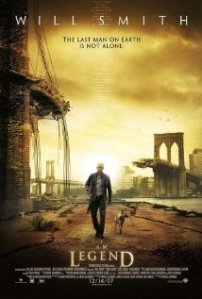
Will Smith, star of movies like Independence Day (1996) and The Legend of Bagger Vance (2000), has been absent from the screen since 2008, the year he made Seven Pounds. Given the dismal quality of Seven Pounds, true Will Smith fans were not surprised when Smith took some time away from acting. After all, artists need time to reflect on their work. But, as the years rolled on, Smithians (fans of Will Smith) began to wonder if their idol would ever return. Some coped with Smith’s absence by hosting The Fresh Prince of Bel-Air marathons while others reenacted the plot of Hitch with strangers. But, for all, the lack of Will Smith movies made those few years nearly unbearable.
via IMDB.com
But, finally, Smithians can put down their copies of Bad Boys II and breathe a sigh of relief. Will is back. No longer do they have to listen to hours of “Whip My Hair,” praying that Willow’s voice will somehow connect them to Mr. Smith. Men in Black III, starring Will Smith, should be in theaters in May of 2012.
Some faux-Smithians wonder if Smith will be rusty after such a long sabbatical. But, true Smithians simply reply, “He is legend,” and allow the anticipation for another Will Smith blockbuster to overshadow less important thoughts. To prepare for Smith’s return, some Smithians may rehearse the theme song of The Fresh Prince of Bel-Air. Some may grow a mustache in honor of The Pursuit of Happyness (2006). Some may burn copies of Seven Pounds. And some may write fan fiction for Shark Tale (2004).
Me? I’m going to listen to this song. Again and again.
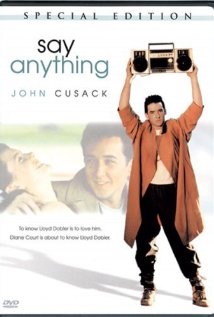
For hopelessly romantic introverts such as myself, the dating world can be unkind and troublesome. Words don’t come out right, and romantic gestures are misinterpreted. Luckily, we have movies to give us scripted romantic scenarios. From John Cusack and his stereo to Tom Hank’s online connection with Meg Ryan, movies have offered us wonderful pick-up lines and possible dating situations.
Unfortunately, some movies are more practical than others. And some romantic movie moments should never be attempted by nonfictional individuals. So, in the spirit of camaraderie amongst hopeless romantics, I’ve created a list of some movie moments you shouldn’t attempt at home.
(Romantic scenes often double as final scenes. So, by nature, this post is full of spoiler alerts. Consider yourself warned.)
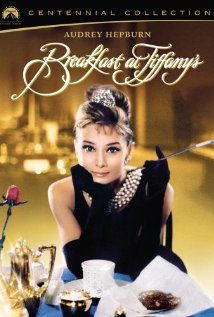
Breakfast at Tiffany’s is a wonderful movie with many clever lines to try on your date. The film’s romantic finale, though, probably shouldn’t be reproduced in real life. By the end of the scene, Audrey Hepburn and George Peppard are kissing in the rain and snuggling with a newly found cat. But, the cat has to be lost before it can be found. To orchestrate this admittedly romantic moment, Audrey Hepburn tosses her adorable feline from a taxi in the middle of a city during a rainstorm. While kissing in the rain should be on every romantic’s bucket list, animal cruelty should never be a by-product of infatuation. If Audrey Hepburn’s cat had run away (as perhaps it should have) then Audrey and her man-friend would have spent their romantic moment searching through crates and trashcans in a dark, wet alley. So, don’t try this moment at home unless your cat is a stuffed animal. Or imaginary.
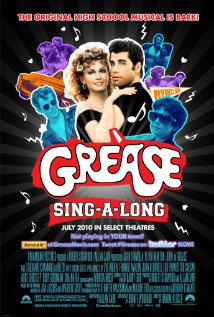
Grease is full of semi-romantic scenes that are only possible in the leather-filled, fictional world of Rydell High. Amidst awkward drive-in flirting and dances on carnival rides, Grease doesn’t offer much practical dating advice. But there is one scene that should be particularly avoided in real life, and it’s not the film’s absurd flying-car ending. Ladies and gentlemen, don’t date drag racers. Even if they’re competing against age-old rivals or defending the honor of a bro, drag racing is a sport that is better left to Kenickie and the wonderfully dense characters of The Fast and the Furious (2001). Though I have never participated, I imagine drag racing in concrete ditches is less romantic than it may initially seem. Sure, drag racing offers whiplash and the intoxicating smell of fuel, but a true racer learns to turn. If Danny Zuko had stopped cheating on Sandy with Greased Lightning, Danny and Sandy could have ridden away in their flying car much earlier.
Secret flirtations can be delightful. Filled with passionate whispers and subtle glances, such relationships can jump-start the heart of even the most cynical bachelor or bachelorette. Couples enticed by secrecy, however, must be willing to commit to the role. The whole appeal of clandestine relationships is the thrill of confidentiality (and perhaps love of one’s partner), and PDA is an easy way to unveil a once-classified hook-up. And, as seen in the secret relationship between Ewan McGregor and Nicole Kidman, these situations are further complicated when authority figures forbid such relationships. So, if you are going to yield to the temptations of secret love, remember that PDA is, indeed, public. If you can see others while you’re snogging near the red satin curtains of an old stage, the confused and oddly entertained audience in the theater can probably see you.
If you manage to find someone who makes your heart flutter and who can match wits with you in a game of flirtatious small talk, get his or her contact information. Serendipity is perhaps one of the most emotionally frustrating romantic comedies of the past couple decades. John Cusack and Kate Beckinsale meet, spend an adorable few moments together, and then, for some awful reason, decide to leave their future in the hands of fate. After the movie’s initial scenes, viewer have to sit through an irritating hour of wrong decisions and missed opportunities. Though the ending is happy, no last-minute romantic embrace can fully justify the emotional angst of handing possible love over to fate like giving a baby to a hooded figure sporting some hate tattoos at a low-budget daycare. Again, if you’ve managed to find someone worth seeing again, get some contact information. Phone number. E-mail address. Or enough random information to enable successful Facebook stalking. Get something.

 When modern pop cinema replaced heart-of-gold rebel archetypes with more multifaceted characters, where did the archetypes go? When Disney seemed to shift their focus from High School Musical-style films to more elaborate plots, where did the teen soap opera storylines go? When tween, teen, and young adult films began to offer more ethnically and economically diverse characters, where did the old racially stereotypical ensembles go?










 Big B and Mo' Money