The Favorite Movie Phenomenon: How Much Should Movies Impact Real Life?

How much should movies impact real life? To explain my answer, I have to share my thought process. Bear with me.

About six months ago, I entered the world of online dating. I was lonely and convinced myself that online dating was a step in the right direction. My logic was this: Most people my age meet their boos at bars, but bars are my social kryptonite. Something about the volume sucks the confidence out of me, killing all suaveness. Besides, my ideal meet-cute doesn’t involve vague vomit smells. Coffee shops and bookstores would be perfect for my brand of small talk, but woman aren’t expecting to be hit on while they’re sipping a vanilla latte and thumbing through the latest James Patterson. At least I don’t think so. Either way, I don’t know how to approach someone whose eyes are pinned to a book. It requires interrupting, and it’s awkward.
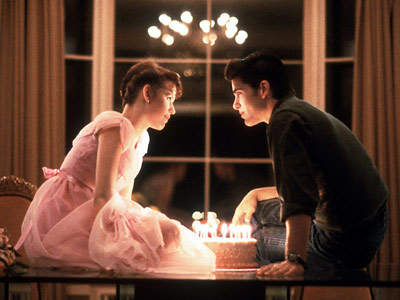
So I gave online dating a try. Aside from the weirdos, the creeps, and the Photoshopped fabricators, it’s a pleasant environment, like window shopping for companionship. What startled me, however, was the value I placed on my matches’ favorite movies. I found myself naturally drawn to those who listed Wes Anderson, Christopher Nolan, or John Hughes, and I quickly blocked anyone who wrote “all Nicholas Sparks movies.” But was I being too judgmental? How much do movie preferences tell us about a person? How much should movies impact real life?

I’ve bounced back and forth like a pong ball between the idea that movies mirror real life—think Brian Cox’s “Nothing happens in the world?” speech from Adaptation—and the idea that film and TV are more like Huxley’s soma or the escapism noted in Scrubssitcom episode. On one hand, society should hope that movies impact real life; otherwise, documentaries and films like FernGully: The Last Rainforest would serve no purpose. On the other hand, I’d hate to live in a town that used Michael Cera as its moral compass.

Some enjoy framing this conversation as a chicken-and-egg scenario—do movies mirror life, or does life mirror movies?—but that’s ridiculous. It’s both. The two aren’t mutually exclusive, and any nut with a brain and a remote should be able to give examples of each. The question is about the extent to which movies (should) impact our daily lives.

My perspectives are as clouded as any, clouded by my love of Aaron Sorkin and the fact that, perhaps unfairly, I am irked by social conservatives who love Glee and Rent, but I believe that the entertainment industry can do more than entertain. As Good Night, and Good Luck teaches us, televisions and movie screens can and should do more than reinforce escapism.

But if we fully embrace the messages of all films, comedies would be less funny, and horror would be more terrifying—no one would babysit alone ever again.

So there is a middle ground. But the existence of a middle ground shouldn’t be an excuse for moviegoing mediocrity. We should allow ourselves to take lessons from movies, relying on our discretion to guide us. In the same way, it does matter which movies are listed on an OkCupid profile—ideas matter. But people are multifaceted, and a love of The Blind Side doesn’t diminish your time in the Peace Corps.

~Big B

90s Kid’s TV Shows: Why My Childhood Was Better Than Yours

“Music these days is awful. It’s much worse than it used to be.”

“I only like movies made before 1985. Modern films are stupid.”

“Back in my day, food was good and nurturing. It gave us energy. Not like today’s food. You can’t chop wood with a belly full of McNuggets.”

You’ve heard the arguments. Perhaps while at Applebee’s with your moderately hipster friend who takes pleasure in critiquing the barely audible background music. Perhaps on an international flight when your seat-neighbor insists on critiquing your television show selection instead of watching his own screen. Or perhaps at the movie theater when you accidentally sit in front of the loud and opinionated older couple who thought Moonrise Kingdom didn’t appropriately represent the Cub Scouts of America. It’s difficult to escape the judgmental gaze of haters of modernity.

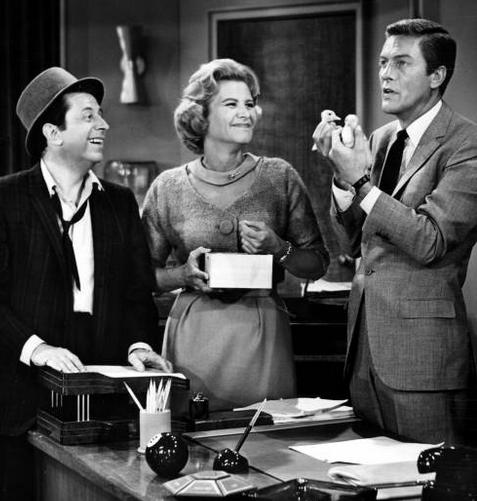
What makes such pretentiousness so frustrating is its commitment to tunnel-visioned subjectivity. First, many of these opinions are fueled by the same visceral nostalgia that connects today’s youth with modern pop culture. You may appreciate The Dick Van Dyke Show (which is a wonderful show), but is your love inspired by the brilliance of Carl Reiner, Dick Van Dyke, and Mary Tyler Moore? Or is it fueled by the fact that The Dick Van Dyke Show reminds you of childhood memories? Though they are not mutually exclusive, there is a difference between nostalgia and critical thought.

Even if hipsters, older generations, and the overly opinionated can swallow the red pill and bypass the temptation to limit criticism to new media, their perspectives of pop culture timelines are often distorted. Pitbull, Katy Perry, and Taylor Swift might not create the most poetically inspired albums, but post-Y2K years are not the only years with arguably bad music. Both Dan Hill’s “Sometimes When We Touch” and Billy Ray Cyrus’s “Achy Breaky Heart” were 90s Billboard hits; “Boogie Oogie Oogie” by A Taste of Honey was a 70s disco success; and Patti Page’s “(How Much Is) That Doggie in the Window?” reached the top of the charts in the 1950s. But a nostalgia-infused lens either eliminates such songs from memory or persuades its wearer that hits like “I Write the Songs” by Barry Manilow—”I write the songs that make the whole world sing / I write the songs of love and special things”—are examples of profound lyricism.

There is one specific type of media, however, that I believe has declined in quality since the 90s.

While all decades contain examples of poor programming, the 90s was the best decade for kid’s television. Television shows for children and tweens had not yet reached their potential before 1990, and shows created after 1999 have been, with several exceptions, meaningless and uninspired. The sighs of relief as our computers continued to operate on January 1, 2000 signaled the beginning of over a decade of mediocre programming for kids.

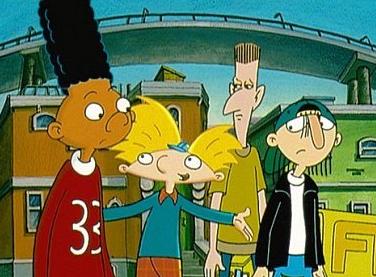
The 90s played host to a variety of intelligent and unique shows for children and young teenagers. Shows like Hey Arnold! and Recess meaningfully and unpatronizingly highlighted the nuances of life as a kid. The protagonists of these shows offered children understandable and often humorous environments in which to consider more profound topics, concepts like divorce, obscenity, multiculturalism, and gender stereotypes. Even secondary characters like Stoop Kid and Swinger Girl, while simple in some ways, contained layers of relatable emotions.

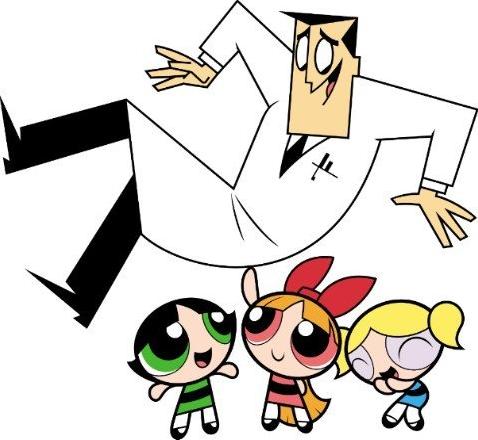
Though not all 90s kid’s shows offered the readily applicable morals of Hey Arnold!, most shows of the decade had something unique to offer. For many, any lack of obvious morality was made up for with bold originality. CatDog featured an anatomically confusing pair of protagonists and an instantly classic theme song; Dexter’s Laboratory introduced an array of fascinating secondary characters and was nominated for four consecutive Primetime Emmys; and The Powerpuff Girls parodied gendered superheroes and had Mojo Jojo.

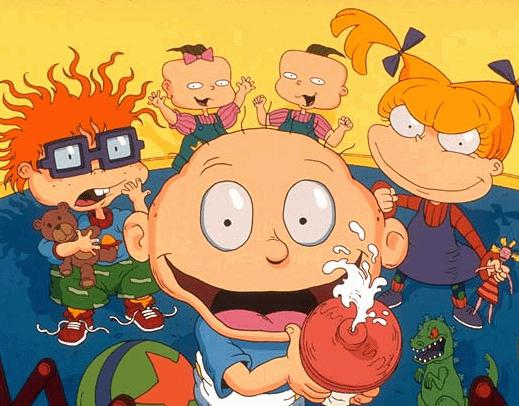
Wishbone, The Magic School Bus, Legends of the Hidden Temple, and Bill Nye, the Science Guy set the standard for educational entertainmentAll That was one of the first sketch comedy shows for kids. Rugrats and Doug became archetypes of kindhearted media for kids. The Big Comfy Couch championed a new generation of imaginative, small-set children’s shows. Animaniacs and Pinky and the Brain uniquely combined academia, pop culture, slapstick comedy, and satire. Goosebumps and Are You Afraid of the Dark? brought the horror genre to kids in a way that has not been done since. Dragon Ball Z and Pokémon peaked in the 90s. And even Mighty Morphin’ Power Rangers, arguably the best of the Power Rangers franchise, existed in the 90s.

Compare these shows with modern entertainment like Dave the BarbarianBrandy & Mr. Whiskers, and The Suite Life of Zack and Cody, and you may notice the difference. While modern music, film, and television programming for adults and older youth are as inspired now as they were in the past, kid’s television shows are not.

More Fan Fiction: Macaroni and Despair

Because of the success of our first attempt at fan fiction, Big B is back with an encore. Find your favorite seat (or sit cross-legged on the floor), pop some popcorn (or boil some vegetables), and enjoy (or not). This piece of fan fiction was inspired by this Kraft Macaroni & Cheese commercial:

The Stranger at My Table

Nelson has just discovered that this father, Harold, has another family. Seemingly unaware of his son’s bewilderment, Harold scoots his chair closer to the table and begins to eat his macaroni one noodle at a time, pausing only to steal more noodles from Nelson’s plate. While Harold eats, Nelson and his son, Tyler, sit motionless at the table. Finally, Nelson speaks.

NELSON

You…you have another family?

HAROLD

(With a mouth full of noodles) Yup.

NELSON

And you decided to tell us on noodle night?

HAROLD

Well, it wasn’t noodle night for me, was it?

NELSON

What do you mean?

Suddenly angry, Harold throws his fork across the room. The fork hits a vase full of white flowers, and the vase falls to the floor, breaking on impact. With wild eyes, Harold turns and points his finger at Nelson. Shocked, Nelson opens his mouth, but no words come out. After a few intense moments, Harold lowers his finger, stands up, and walks toward the broken vase.

HAROLD

You never give me any noodles. Did you see my plate before I stole your noodles? One piece of chicken—that’s all I had. One tiny piece of chicken.

NELSON

Don’t make this about your problems. You have another family!

HAROLD

And they are my first family! My original family. You’re the other family!

NELSON

But—

HAROLD

(Interrupting Nelson) And why do you think I decided to get a second family?

NELSON

I don’t…I don’t know.

Harold leans down as if to pick up the broken vase. Instead, he picks up his fork. He walks to the table and gently places the fork beside Nelson’s plate.

HAROLD

They didn’t give me any noodles either. I had to steal from them every day, and I know they resented me for it. I thought that, maybe, with another family, someone would finally offer me some noodles.

NELSON

(Staring at Harold’s fork) You just wanted some noodles.

HAROLD

I just wanted some noodles—from you.

NELSON

(Speaking quickly; stammeringSit…sit down, Dad. You can have some noodles. I’ll take some more from Tyler, and you can have some of mine. You can have my noodles.

HAROLD

Nelson. My son. It’s too late.

NELSON

But Dad…

Harold begins to walk out of the dining room. Just before exiting, he turns back.

HAROLD

I’m going to find a third family. Maybe they’ll give me some noodles. But a bit of advice: Stop taking Tyler’s noodles. He’ll hate you for it, and you’ll end up just like me.

Harold exits. For a moment, Tyler and Nelson sit in silence. Then:

NELSON

I love him. I should hate that old man now, but—dammit!—I love him.

TYLER

But he stole my noodles!

NELSON

And he stole my heart.

END

~Big B

The 84th Academy Awards: Big B’s Oscar Predictions

Best Actress

Viola Davis, “The Help”

Honorable Mention: Rooney Mara, “The Girl with the Dragon Tattoo”

Best Supporting Actress

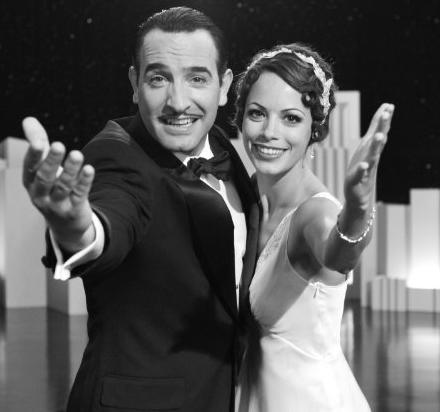
Should win: Bérénice Bejo, “The Artist”

Will win: Octavia Spencer, “The Help”

Best Actor

Jean Dujardin, “The Artist

Honorable Mention: George Clooney, “The Descendants”

Best Supporting Actor

Christopher Plummer, “Beginners”

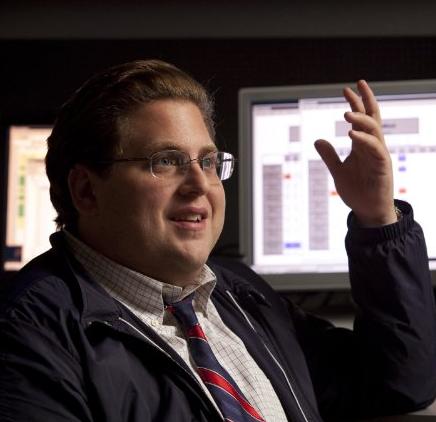
Honorable Mention: Jonah Hill, “Moneyball”

Best Picture

“The Artist”

Best Director

Michel Hazanavicius, “The Artist”

Honorable MentionTerrence Malick, “The Tree of Life”

Best Animated Film

Should win: “Kung Fu Panda 2”

Will win: “Rango”

Honorable Mention: “A Cat in Paris”

Best Art Direction Continue reading

Review: Prom (2011)

When modern pop cinema replaced heart-of-gold rebel archetypes with more multifaceted characters, where did the archetypes go? When Disney seemed to shift their focus from High School Musical-style films to more elaborate plots, where did the teen soap opera storylines go? When tween, teen, and young adult films began to offer more ethnically and economically diverse characters, where did the old racially stereotypical ensembles go?

They went to Prom.

Prom is a collection of all the outdated elements of popular teen film. Star-crossed lovers without depth. Random bursts of hormonal emotion. Smug, out-of-context attempts at wit. A disheartening lack of interracial couples. This repository of outcast archetypes boldly attempts to unravel years of social and cinematic progress.

In fact, the only somewhat unique character in Prom is Rolo, a curly-haired stoner who may or may not have a career in adult film. After spending the majority of the film casually responding to accusations that Athena, his Greek girlfriend from Canada, is not real, Rolo steals the show when he enters the prom-filled auditorium with a supermodel at his side. This spectacular entrance fascinates the other Prom characters and adds fuel to the idea that the Prom Committee may not be Rolo’s only extracurricular activity.

Sydney White, 17 Again, and even Camp Rock 2: The Final Jam (yes, the sequel) have more inherent entertainment value than the visually pleasing, regurgitated drama-slush of Prom.

Thank goodness for Rolo.

Joe Nussbaum: Director

Katie Wech: Writer

Aimee Teegarden, Thomas McDonell, DeVaughn Nixon: Stars

V vs. The Joker vs. Rorschach

Movies that sport simplified moralities have some charm. Good is good, and bad is bad. There are no ethical dilemmas to process. Captain Hook has few friends; Sharptooth is Littlefoot‘s enemy; and no one cheers for the Huns in Mulan. But, sometimes, our multifaceted minds overcome our oversimplified childhoods, and we fall to the temptations of a good moral dilemma.

The modern world of superheroes and masked villains is full of such ethical quandaries. In the early 1970s, Green Lantern and Green Arrow debated various sociopolitical issues, and Spider-Man became an anti-drug icon (long before Spider-Man 3, of course). These moral questions blurred the rigid lines of right and wrong that plagued early versions of some superhero universes.

As many masked individuals have taught us, disrupting the status quo can be good or bad, depending on the situation. If crime, oppression, or apathy is the status quo, then perhaps disruption is a good idea. If the status quo is relatively pleasant and harmless, then maybe disruption is bad.

In the spirit of absurdity, I have chosen three characters that represent various approaches to existing conditions and will offer some ideas about what a possible three-way brawl might look like.

V

The only verdict is vengeance; a vendetta held as a votive, not in vain, for the value and veracity of such shall one day vindicate the vigilant and the virtuous.

Watching V for Vendetta is a morally challenging experience. Or at least it should be. After the initial awe I experienced from watching a cleverly masked, cape-wearing, alliteration-abusing, knife-wielding, egg-cooking freedom fighter blow up buildings and dance around a secret hideout that could be featured on MTV Cribs, I realized that V is, in fact, a terrorist. In The Matrix, the Wachowski siblings dulled the moral backlash against violence by allowing the would-be terrorists to run around in a fake world. V for Vendetta, however, takes place in London. A future, dystopian version of London, but still London. V did not explode fabricated buildings inside a virtual reality with the power of his mind—he blew up real buildings in London. Aside from the possible sociopolitical arguments for anti-oppression coup d’états, V for Vendetta, the film, provides a platform for unrestricted violence against authority. At best, it is violence without adequate context. At worst, it is glorified Western terrorism.

And that is what makes V such a contender in the fight against the Joker and Rorschach. V is deliberate, confident, and he can do some crazy things with knives. He’s like a masked hibachi chef who has a problem with authority (which is, by the way, a wonderful idea for a new superhero).

The Joker

You see, madness, as you know, is like gravity. All it takes is a little push!

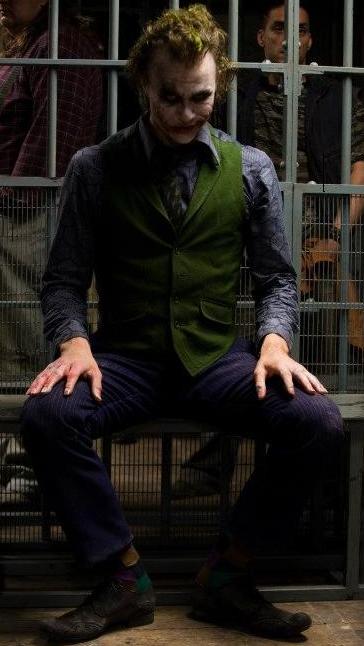
There have been many versions of the Joker. Heath Ledger played the Joker in Christopher Nolan’s The Dark Knight. And, before that, Jack Nicholson offered us an older, more bizarre Joker, a Joker that was a notch creepier than a birthday clown and a notch more acceptable than a birthday clown for a postpubescent birthday party.

There have been many animated versions of the Joker. Mark Hamill provided the Joker’s voice for a number of television shows and video games, and John DiMaggio, the guy who gives Futurama‘s Bender his voice, was the Joker in Batman: Under the Red Hood.

Think about that. The Joker has Luke Skywalker and Bender running through his voice box. If there were any character who could do justice to the juxtaposition of saber-wielding Skywalker and bolt-filled Bender, it’d be the Joker. As a villain, the Joker is a character that can make an audience laugh; question the appropriateness of laughing at dark, unprovoked violence; and then drown their moral apprehensions in cheers for more wit. As much as we love Batman, we don’t want to see the Joker die. Save Arkham Asylum for the unappealing villains like Killer Moth and Catman.

The Joker’s unpredictability is his greatest advantage. The Joker wouldn’t follow any of Brad Pitt‘s rules if he joined Fight Club. He’d wear a shirt and shoes AND tell all of friends about the group. And, if it were his first time at Fight Club, he wouldn’t fight. He’d just stand in the corner until the rest of the group forgot about him. Then he’d start multiple fights with multiple people. And then he’d leave because the Joker doesn’t join clubs.

Rorschach

Never compromise. Not even in the face of Armageddon.

Rorschach has the punch of wasabi and the cleansing power of sorbet. Rorschach is the Chuck Norris of grim superheroes. His Bauer-like no-nonsense attitude complements his Anton Chigurh brutality. He has the voice of Batman, the wit of Mr. Blonde, and the wardrobe of Dick Tracy. He employs a Corleone-style morality and a Dignam-ish sense of duty. He is, in a word, badass.

Rorschach fights criminal aggression with patient brutality. To say he fights fire with fire is to misrepresent Rorschach’s intensity. Rorschach fights fire with hotter, bigger, more awesome fire. His ironclad integrity allows him to take his struggles against criminality personally without losing motivation or willpower. And we love him for it. In Watchmen, Dr. Manhattan’s blue manhood may be enjoying a lot of fresh air, but it is Rorschach who steals the show.

Morally, Rorschach is problematic. Because he subscribes to an end-justifies-means philosophy, Rorschach’s actions often score high on immorality scales, but we don’t question his status as a good guy. His response to villains is villainy, but Rorschach himself is still a hero. This paradox is unraveled somewhat by Rorschach’s self-sacrificial actions at the end of Watchmen. Rorschach must step aside for peace to survive.

This is why I believe that, if they were ever to fight, Rorschach would beat V and the Joker. Rorschach’s intensity and personal conviction ultimately trump V’s intentionality and the Joker’s unpredictability. Before you disagree, watch this trailer one more time:

Review: Melancholia (2011)

via IMDb.com

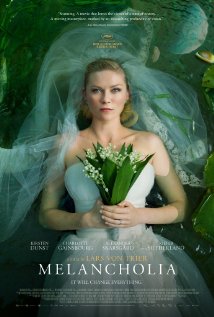
I saw Melancholia twice in theaters. The first time I saw the movie was at an artsy theater in Indianapolis. The audience was quiet, focused, and alert, absorbing all of the subtle and profound emotions portrayed by Kirsten Dunst and Charlotte Gainsbourg.

The second time was at a theater in a college town. The audience was loud, talkative, and arrogant. And they were definitely more intoxicated than the Indianapolis audience, which is weird because the artsy theater offered alcohol (and the university had a supposedly dry campus). Though, to be fair, I don’t blame the college students. If I was sporting a 1.5 GPA because of a moderate Call of Duty addiction and was going to see a movie about the slow demise of our planet, I’d probably drink too.

What intrigued me, however, was how the different audiences impacted my perception of the movie.

via IMDb.com

Before diving into that ocean of gaudy introspective self-praise, though, I need to explain a little about Melancholia. Lars von Trier‘s 2011 film is a beautiful juxtaposition of the emotional and mental struggles of two sisters and a newly discovered planet that likes to invade Earth’s personal space. Kirsten Dunst plays Justine, a personification of depression and doom. For the first half of the film, the audience watches Justine destroy her wedding bit by excruciating bit. The second half of the film follows Claire, Justine’s sister, as she tries to juggle Justine’s emotional state, a creepily quiet child, Jack Bauer, and a new planet that may end all life.

So when the booze-filled audience burped their laughs, I was surprised. Depression and interplanetary tango is not exactly comedic gold. But, in some ways, it worked. Melancholia offers a dark look at life on the edge (in more than one way), and sometimes mild laughter is a good way to deal with impending doom. Also, if good movies aren’t your preference and you get bored while watching this wonderful film, it’s sort of fun to imagine Spider-Man swooping in to save Kirsten. Or Kiefer Sutherland yelling at someone.

“Life is only on Earth. And not for long,” says Justine with tired eyes.

“Like Hell it is!” growls Jack Bauer, cocking his gun and running toward the sunset.

Lars von Trier: Director

Lars von Trier: Writer

Kirsten Dunst, Charlotte Gainsbourg, and Kiefer Sutherland: Stars

Review: Rise of the Planet of the Apes (2011)

As I left the theater after watching Rise of the Planet of the Apes, my mind was working hard. There was something about the film that remained unexplained, some undefined plot hole that overshadowed an otherwise wonderful movie. I just couldn’t think of what it was. Then my friend turned to me and asked me this question:

“Man, why does Draco hate monkeys so much?”

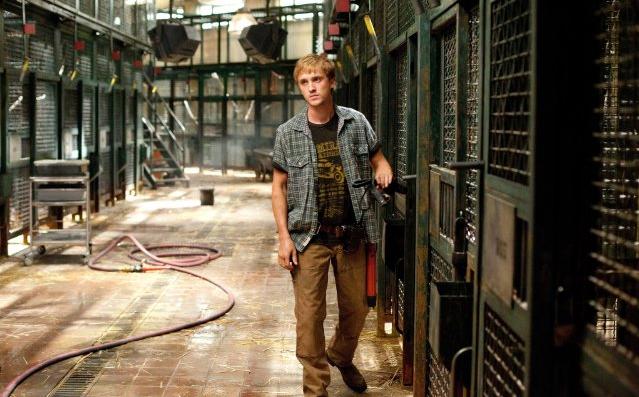
That was it! What the hell was wrong with Draco? Every time Tom Felton‘s character appeared on screen, the film took an unnecessarily dark turn. It was like a grim version of Annie, except that Miss Hannigan was a hormonal boy and the orphans were apes (which is the plot of my next Annie-inspired fan-made musical, It’s a Hard Ape Life). Tom Felton’s Ratched-like character spent every on-screen moment either antagonizing the apes (and one particularly entertaining orangutan) or showing some of his unnamed friends how awesome he looks when he commits acts of animal cruelty.

Tom Felton in Rise of the Planet of the Apes via IMDb.com

What made this character—named Dodge, for some reason—particularly troubling, though, was that he had no reason to dislike apes. At no point in the film is the audience introduced to some dark backstory or an emotional disorder that would help explain Dodge’s aggressive anti-primate behavior. Instead, the audience is left to assume that Dodge is a genuinely and unnecessarily awful human being. At least Draco Malfoy could blame his parents…and Voldemort. Dodge can only blame himself. Get him, PETA.

Reservoir Dogs (1992) and Steve Buscemi

via IMDb.com

If you’re looking for a movie about well-dressed, foul-mouthed gangsters who tell tasteless jokes and spend great amounts of time debating the finer sociological aspect of tipping at restaurants, Quentin Tarantino’s Reservoir Dogs is the movie for you. It is a simple, mobster-style movie peppered with flashbacks and gunfire. Though the plot is coated with mystery, the film plays more like a character-drama, chronicling some important moments in the lives of a few complicated individuals.

Oh, and congratulations, Steve Buscemi.

WARNING: OFFAL SPOILER ALERT

Congratulations, Steve BuscemiReservoir Dogs highlights the crazy antics of one of Buscemi’s most successful characters. In this case, “successful” refers not to the critics’ responses to Buscemi’s character but to the character’s relative success in the actual events that occur during the course of the movie. This relative success is celebration-worthy because Buscemi’s characters don’t often succeed. A Buscemi-played character is likely to become mentally unstable, mangled, or dead. Let’s look at some of Steve Buscemi’s characters:

  • Carl Showalter, Fargo (1996). A hot-tempered crook whose deranged mind has trouble processing changes to well-made plans. Deceased.
  • Rockhound, Armageddon (1998). A bizarre genius who shows no respect for the seriousness of working on an asteroid. Mentally unstable.
  • Donny KerabatsosThe Big Lebowski (1998). A curious pushover who suffers through verbal abuse and unprovoked hostility without complaint. Deceased.
  • James McCord, The Island (2005). A helpful techie whose philanthropic spirit doesn’t get to see the second half of the movie. Deceased.
  • Wiley, Grown Ups (2010). An overgrown child whose friends have little respect for his physical well-being. Mangled.

And that is just a sample. Sure, there are exceptions to this trend, but the already small list of anomalies is saturated with relatively unlikable characters like Randall Boggs from Monsters, Inc., Garland Greene from Con Air, and Clint Fitzer from I Now Pronounce You Chuck & Larry.

Of course, given the release dates of these movies, it is possible that Buscemi perfected his oddball character type after playing Mr. Pink in Reservoir Dogs. But, still, it’s comforting to know that at least a couple of Steve Buscemi’s characters had relative success in their respective universes. And it is relative success: Mr. Pink probably died.

But, of course, all of this is a testament to Buscemi’s artistic skill. His ability to consistently provide moviegoers with compelling and often comedic weirdos/sociopaths is unparalleled. Thank you, Steve Buscemi, and congratulations.

In Defense of Intelligent Responses to Film

via IMDb.com

When I watch a movie for the first time, I try to experience it. I allow the colors and sounds to guide my thoughts. I set my brain to autopilot and repress the part of my mind that prides itself on analysis and critical thought. I forget about financial woes, annoying friends, and other daily stresses and immerse myself in whatever world is on the screen. My goal is to create memories, not brain wrinkles.

But that is the first time. If I watch the movie again, the gloves are off. My brain cracks its knuckles and prepares to pick apart the film. No scene, motif, or character escapes my analysis. My mind becomes a warrior of intellect, attacking ignorance and feeding on subtlety and nuance.

Some friends have told me that they don’t appreciate casual film analysis. Chicago is not a social commentary.” “I don’t like to think of Aslan as Jesus.” “I don’t care if WALL-E wants me to save the planet.” But these friends are missing a crucial element of movie-watching. There is nothing wrong with intelligent responses to film.

via IMDb.com

Many films offer viewers guided tours through various philosophical musings and sociopolitical statements, and those messages demand critical thought. Like literature, music, and other forms of art, the burden of interpretation falls to the viewer. Films cannot easily be divided into groups based on the existence of a moral or social statement—those with messages and those without—and moviegoers who are only willing to analyze films that advertise as social commentaries (like FernGully: The Last Rainforest and Sicko) hide themselves from deeper understandings of their favorite movies. Analyzing film does not somehow ruin the simple pleasures of movie-watching, and thinking about the more profound aspects of a specific movie does not lessen the movie’s initial impact. Instead, injecting critical thought into the movie-watching experience enhances the adventure. The Lord of the Rings is better when considering Tolkien’s background. 30 Rock is funnier with an understanding of the show’s social commentary. And appreciating Reefer Madness: The Movie Musical as social satire brings the music to life.

So, the next time a friends tells you to stop analyzing movies, just remember that critical thought is film’s best friend. Feel free to tell your friend something like, “I’ll stop analyzing movies when you start paying for my movie tickets. Until then, I pay for these experiences, and I’m going to make the most of them.”