Indie/Alternative Music in Blockbuster Films

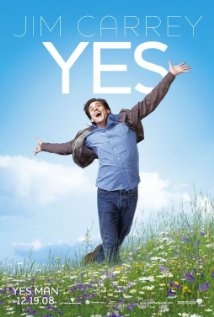
The “Yes Man” soundtrack heavily featured Eels (via IMDB.com)

Recently, theaters (and not just the artsy theaters) have offered experiences similar to those gained from chilling in a store’s alternative music section for two hours. This phenomenon is not new, but the status of independent and alternative artists in big-name films has shifted. Now, songs from such artists are highlighted as climactic-moment songs or as songs in movie trailers instead of being relegated to background music for on-screen moments of contemplation.

Before I continue, I offer a disclaimer: I have no education or background that makes me particularly qualified to discuss independent or alternative music. Read this post as one would read the comments section of a YouTube video (approach it with vague interest and hints of cynicism). To eliminate semantically driven debate over “indie” and “alternative,” I will use the labels given to these artists by third parties such as iTunes and Last.fm.

The growing phenomenon of alternative music in blockbuster films first gained my attention when I rented Yes Man (2008) on pay-per-view. The film’s soundtrack heavily features the brilliant music of the Eels. (The only other group on the soundtrack is Munchausen By Proxy, a fictional band featuring Zooey Deschanel and Von Iva.) Eels contributed a total of nine songs to the movie, including “Sound of Fear” and “Flyswatter.” And Yes Man isn’t the only movie to use the Eels’ music: the group also has soundtrack credits on movies such as Shrek the Third (2007) and Shrek 2 (2004). Other artists such as Eddie Vedder and Belle and Sebastian have benefited from the popularity of blockbusters as well. Eddie Vedder provided the music for Into the Wild (2007), and Belle and Sebastian’s music appeared in Forgetting Sarah Marshall (2008). The O.C. has used or featured music from Sufjan Stevens, Imogen Heap, Beck, and Modest Mouse. And Bon Iver, Death Cab for Cutie, Grizzly Bear, Muse, OK Go, and St. Vincent, among others, all have tracks on the New Moon (2009) soundtrack. And, recently, Florence and the Machine was featured on Glee (a wonderful episode).

New Moon via IMDB.com

So what does this mean? Nothing, really, except that indie-loving movies such as Juno (2007), Nick and Norah’s Infinite Playlist (2008), and (500) Days of Summer (2009) no longer have a monopoly on the use of independent and alternative music. Now, moviegoers are just as likely to hear their favorite independent artist in a film featuring Robin Williams as they would in a film starring Michael Cera. And, given how much Cera’s particular brand of teen angst is starting to annoy me, I consider this a welcome change.

Now, for those of you who are still skeptical about your favorite independent or alternative artist ending up in a blockbuster, consider this trailer of It’s Kind of a Funny Story (2010) featuring “Oh My God” by Ida Maria. Regardless of how you feel about the movie, you must admit that Ida Maria’s song fits this preview beautifully.

Review: The King’s Speech (2010)

Colin Firth and Helena Bonham Carter (movie photo via Oscar.go.com)

Tom Hooper’s The King’s Speech (2010) is a delightfully inspirational and intriguing movie about stuttering, family issues, and the endearing relationship between King George VI of England and Lionel Logue. But the quality of the film is obvious. The King’s Speech received twelve Oscar nominations, seven Golden Globe nominations, four Screen Actors Guild Award nominations, and thirteen nominations from the British Academy of Film and Television Arts. The King’s Speech speaks for itself.

To add more praises for The King’s Speech to the Internet would be a waste of virtual space. So, instead, I’d like to talk about Timothy Spall. Timothy Spall‘s performance in The King’s Speech as Winston Churchill has received some criticism. Some call it Tom Hooper’s only mistake. Others consider Spall to be a poor representation of Churchill. The Guardian calls Spall a “woefully thin pastiche,” and USA Today writes, “The only weak link is Timothy Spall, miscast as Winston Churchill. It’s not clear who Spall is playing, but it doesn’t appear to be Churchill.” For those who haven’t seen The King’s Speech, here is a clip featuring Timothy Spall as Churchill.

Timothy Spall as Winston Churchill (photo via news.uk.msn.com)

I disagree with the criticism of Timothy Spall’s performance. So, to counter such criticism, I offer three arguments:

1) Churchill was an intriguing character. His cigar poses are awesome. His drunken episodes are legendary. And some of his first words as Prime Minister to the British House of Commons were “I have nothing to offer but blood, toil, tears and sweat.” Also, Churchill’s interests were as broad as his chin. He enjoyed painting and writing, and he even received the 1952 Nobel Prize in Literature. So, when critics say that Timothy Spall’s version of Churchill didn’t match the rest of the picture, they didn’t consider that perhaps that’s because Timothy Spall believes that Winston Churchill’s awesome qualities didn’t match the rest of twentieth-century Europe.

via IMDB.com

2) Who else? Some critics believe strongly that Timothy Spall was a poor choice, but I have yet to hear any feasible alternatives. Winston Churchill, though awesome, provides a unique challenge to directors who like to create semi-accurate physical portrayals of historical figures. To understand my point, consider, for a moment, some possible alternatives. Frank Langella: This lanky Churchill would be too similar to Langella’s portrayal of Nixon, and, while it may be interesting, a Nixon-infused Churchill is not what The King’s Speech needs. Alec Baldwin: Intriguing but ultimately wrong; this emotionless Churchill lacks the raw manliness of the real man. Martin Sheen: This Churchill doesn’t sound like Churchill. Bill Nighy: This Churchill has the sound and the attitude but not the look. Geoffrey Rush: Already in The King’s Speech. My conclusion is this: Timothy Spall may not be the right Churchill, but he is certainly the best.

3) Love for Peter Pettigrew. Timothy Spall has devoutly played Wormtail in every Harry Potter movie from Prisoner of Azkaban to Deathly Hallows: Part 1. That alone should earn him our love and respect.

So, The King’s Speech is a wonderful movie with well-written dialogue, excellent directing, and one stunning Winston Churchill.

Review: Exit Through the Gift Shop (2010)

Film picture via Oscar.go.com

Prior to seeing Exit Through the Gift Shop (2010), I knew very little about the world of graffiti and street art. After seeing Banky’s film, I still know little about this world, but I now have a growing appreciation for those who can climb about rooftops late at night with large sheets of personalized paper and buckets of paste. And I have an even bigger appreciation for those who can do so with grace and style.

The film outlines the evolution of Thierry Guetta (later known as Mr. Brainwash), a hopelessly enthusiastic videographer and aspiring street artist. The film’s juxtaposition of Guetta with the suave, laid-back Banksy offers viewers a comedic introduction to a number of street art subtleties, not the least of which is the existence of street art imitators. Guetta, though endearing, is (spray-)painted as a somewhat annoying copycat of established street artists such as Shepard Fairey and Banksy. After discovering the world of street art, Guetta follows Fairey, Space Invader, and others as they make and share street art. Guetta documents the entire process, occasionally offering odd commentaries to otherwise stunning scenes. Guetta later tries his hand at beautifying cities with his own street art and eventually hosts his own high-profile art show as Mr. Brainwash. The transformation of Thierry Guetta into Mr. Brainwash challenges many assumptions about art and graffiti. Even Banksy himself wonders aloud (with perfect comedic timing) if art is truly accessible: “I used to encourage everyone I knew to make art; I don’t do that anymore.”

Exit Through the Gift Shop via IMDB.com

Some speculate that Exit Through the Gift Shop is another elaborate Banksy hoax. Perhaps Banksy hired Thierry Guetta. Or, maybe, Guetta and Banksy are one and the same. As a recent convert to the wonders of street art, including the works and character of Bansky, I have no guess as to how the film came to be. Hoax or not, Banksy’s film is wickedly entertaining and offers a commentary on some genuine issues within the world of street art. The film, despite its aggressive satire, is surprisingly inspirational. Were my drawings anything more than oddly high-brow stick figures, I’d be tempted to share them with the world. For those, like me, who don’t have great artistic abilities, Exit Through the Gift Shop is an entertaining reminder that beauty can be found (and put) anywhere. Amidst this often misunderstood counter-cultural movement, true art can emerge.

Exit Through the Gift Shop, Banksy’s directorial debut, received a Oscar nomination in the Documentary Feature category, and Banksy was nominated for an award from the British Academy of Film and Television Arts (BAFTA) for Outstanding Debut by a British Writer, Director or Producer. In the Oscar race, I’m rooting for Exit Through the Gift Shop. I have nothing against the other Documentary Feature nominees (Gasland, Inside Job, Restrepo, and Waste Land), but I’m curious if Banksy would show up to accept his award.

Dissecting the Best Director Nominees: 2011 Oscars

This year’s Academy Award nominees for Best Director seem fairly standard. All five directors are nominated for films that also received Best Picture nominations. All five films feature well-known celebrities. All five films and directors fared relatively well in other award ceremonies this year (though the Coen pair was nudged out of the Golden Globes by Christopher Nolan, and David O. Russell didn’t get nominated for a Critics’ Choice Award). David Fincher has already grabbed the Golden Globe and the Critics’ Choice Award for directing The Social Network, and many have written off the Directing category at the Oscars as an easy win for Fincher. But these five (the Coens here considered a single unit) directors have interesting backgrounds and unique perspectives. While Fincher may very well grab the Oscar, viewers shouldn’t underestimate the other four.

Darren Aronofsky via IMDB.com

Darren Aronofsky: The Weirdo

Sliding into the pop-cinema scene with the psychological thrillers Pi (1998) and Requiem for a Dream (2000), Darren Aronofsky quickly made a name as the creator of bizarre brainteasers. Aronofsky’s films tend to leave moviegoers confused, amazed, and slightly disturbed. Some of his movies look and feel like a combination of Christopher Nolan’s intriguing psycho-cinema and Reefer Madness‘s, well, madness. While The Wrestler (2008) was arguably a break from the typical Aronofsky dazzler, Black Swan, his latest thriller and 2010 Oscar-nominated film, certainly bears the Aronofsky mark of madness.

This is Aronofsky’s first Oscar nomination. Despite the bizarre brilliance of some of his past films, none of them gained Aronofsky notice as a director or writer at the Academy Awards. Aronofsky has screenplay writing credits for Pi (1998), Requiem for a Dream (2000), and The Fountain (2006). Interestingly, Aronofsky is also a producer of The Fighter (2010), the film that gained David O. Russell his nomination for directing. Regardless of what one may say of his past films, Darren Aronofsky’s recent breakthrough at the Oscars gives me a reason to see the upcoming installment of the Jackman-as-Wolverine franchise (The Wolverine), which Aronofsky will direct.

David O. Russell via IMDB.com

David O. Russell: The Underdog

The Fighter (2010) is just David O. Russell’s latest addition to his expanding underdog filmography. His early films, Spanking the Monkey (1994) and Flirting with Disaster (1996), feature humorously agitated underdogs who struggle with romance and identity. His 1999 film, Three Kings, transformed three male prima donnas (George Clooney, Mark Wahlberg, and Ice Cube) into an underdog trio of soldiers who become thieves and, eventually, heroes. And perhaps his most popular film until now, I Heart Huckabees (2004), features a couple of hopelessly lost thinkers (Jason Schwartzman and, again, Mark Wahlberg) who simply want to understand the world around them.

In addition to the out-of-towner-like qualities of his characters, David O. Russell may be the underdog of the 2010 nominated directors. When all counted, Russell has less past nominations/awards than the other four nominees. Not only is this Russell’s first nomination for directing, this is Russell’s first nomination in any category at both the Academy Awards and the Golden Globes. The film that landed Russell these nominations, The Fighter, is also Russell’s first high-profile attempt at a drama.

Tom Hooper via IMDB.com

Tom Hooper: The Historian

Tom Hooper’s filmography almost reads like the index of a history textbook. Hooper featured the life of English sports manager Brian Clough in The Damned United (2009). He highlighted the voice and mind of British politician Lord Longford in Longford (2006). In 2005, he directed a mini-series about Queen Elizabeth I , and, in 2008, he directed a mini-series about John Adams. And, now, Hooper presents the life of King George VI of England in his Oscar-nominated film, The King’s Speech (2010). According to this interview with Tom Hooper, bits of Lionel Logue’s actual diary even made it into the movie’s script.

Like Russell and Aronofsky, this is Hooper’s first Oscar nomination. This is, however, not Hooper’s first nomination for directing. The majority of Hooper’s directing experience is in television. In fact, Hooper has been nominated for three Emmy Awards. He was nominated in 2004 for directing ExxonMobil Masterpiece Theatre: Prime Suspect 6; in 2006 for Elizabeth I; and again in 2008 for John Adams. Of the three, only Elizabeth I won Hooper an Emmy.

David Fincher via IMDB.com

David Fincher: The Voyager

From Seven (1995) to The Social Network (2010), David Fincher has dazzled audiences with his wonderfully risky direction. His early films, Alien³ (1992), Seven (1995), and The Game (1997) showed that Fincher had a knack for putting his characters through emotional (and sometime physical) hell. Fincher fine-tuned his bold approach to filmmaking in 1999 when he directed Fight Club. Fincher’s screen adaptation of the Chuck Palahniuk novel earned him status as a pop-culture icon. Having improved his adventurous, risk-taking style of direction, Fincher went on to direct two thrillers, Panic Room (2002) and Zodiac (2007). Fincher’s first brush with the Academy Awards came from his direction of The Curious Case of Benjamin Button (2008). The movie earned thirteen Oscar nominations, one of which was for Fincher’s directing. Though Danny Boyle was given the Oscar that year for directing Slumdog Millionaire, Fincher’s film still won three Oscars (Art Direction, Makeup, and Visual Effects).

Through The Social Network (2010), Fincher has once again polished his adventurous approach to films and protagonists. Feature-length films, however, are not the only items on his resume. Fincher has worked on music videos for Aerosmith, Paula Abdul, and Madonna. And Fincher lent his voice to the Oscar-nominated short film Logorama (2009). Fincher’s intensity and unpredictability (and his work with Aerosmith, perhaps) make him a true voyager.

Joel Coen via IMDB.com

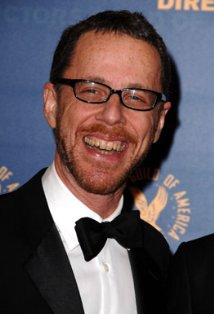
Joel Coen and Ethan Coen: The Veterans

Joel and Ethan Coen’s resume is as diverse as it is brilliant. The early films Raising Arizona (1987), Miller’s Crossing (1990), Barton Frink (1991), and The Hudsucker Proxy (1994) seemed to serve as test drives of the Coen brothers’ unique and eventually well-rewarded style. Their first big break, Fargo (1996), caught the eye of the Academy Awards, earning them nominations for both directing and writing. The Coen brothers then went on to direct The Big Lebowski (1998) and O Brother, Where Art Thou? (2000). Both films earned the brothers esteem and recognition, and O Brother, Where Art Thou? helped the Coens’ grab another Oscar nomination for writing. Turning back to a directing style reminiscent
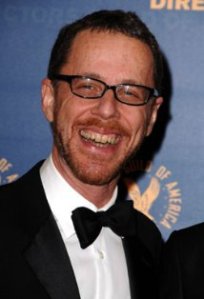
Ethan Coen via IMDB.com

of their early work, Joel and Ethan Coen then directed The Man Who Wasn’t There (2001). Despite the comparisons, The Man Who Wasn’t There was substantially more successful than the Coens’ earlier work of a similar style. Intolerable Cruelty (2003), The Ladykillers (2004), and Paris, Je T’Aime (2006) were relatively well-received by the movie-going public. From 2007 to 2010, the Coen brothers directed four films that received notice at the Academy Awards, the Golden Globes, or both. No Country for Old Men (2007) won Oscars for directing, writing, and best picture. Burn After Reading (2008) received two Golden Globe nominations, one for Best Motion Picture – Comedy or Musical. A Serious Man (2009) was nominated for two Academy Awards, including best picture. And, now, True Grit (2010) is nominated for an impressive ten Oscars. The fact that True Grit went unmentioned at the Golden Globes seems to be less indicative of the quality of the Coen brothers’ film and more of the quality of the awards themselves.

Bonus Character

Christopher Nolan via IMDB.com

Christopher Nolan: The Runner-Up

Success at the box office sometimes parallels poor performance at the Academy Awards. And, given some of the movies that succeed at the box office (Clash of the Titans and New Moon, for example) this heuristic is well-proven. In Christopher Nolan’s case, however, many (including myself) believe that his successes in directing should rise above the stigma of the box office. In terms of direction, perhaps films like Following (1998), Insomnia (2002), and The Prestige (2006) aren’t Oscar-worthy, but Nolan has directed other films that, in regards to direction and writing, rival those of the Coen brothers and James Cameron. Many Nolan fans felt robbed when Nolan was not recognized at either the Oscars or the Golden Globes for The Dark Knight (2008). Though the film received eight Academy Award nominations, none were for Nolan, the film’s director and writer. And, now, Christopher Nolan’s directing talents go, once again, unnoticed at the Oscars despite the originality and flow of Inception (2010) (though he is nominated as the writer of Inception‘s original screenplay).

At least Nolan fans have the next installment of Nolan’s Batman franchise to look forward to in 2012. The Dark Knight Rises is looking like it will be a dream-come-true for those who love superheroes and celebrities. Christian Bale, Gary Oldman, Morgan Freeman, and Michael Caine will return as Batman, Gordan, Fox, and Alfred. Tom Hardy (from Inception) and Anne Hathaway will be added to the cast as Bane and Catwoman, respectively. And, recently, it has been rumored that Robin Williams will play Hugo Strange. Though, I’m learning not to trust rumors about the cast of The Dark Knight Rises. Past rumors suggested that either Eddie Murphy or Johnny Depp would play the Riddler; Philip Seymour Hoffman would play the Penguin; and Shia LeBeouf would play Robin. So, while I think Robin Williams would be a wonderful addition to the film, I’m not holding my breath.

Review: Newsies (1992)

Newsies via IMDB.com

Have you ever wondered what it’d be like if Batman and the President of the United States from Independence Day sang a song together?

Or, have you ever wondered what it’d be like if the cast of High School Musical found themselves in the late 19th century with nothing more than a pack of newspapers, some cigarettes, and hearts of gold?

Or, have you ever wondered how news traveled before the Internet?

Newsies, a film starring Bill Pullman and a young Christian Bale (among others) and directed by the guy who brought you all three High School Musical films, will tickle your inspiration and dazzle your dance shoes. When the cost of selling newspapers goes up, a ragtag group of newsboys go on strike. And, in a display of true patriotism, they voice their social concerns in the form of song and dance.

But their jazz hands quickly turn to brass knuckles when the authorities and Joseph Pulitzer come after them. In some fight scenes reminiscent of Charlie Chaplin movies, the newsies struggle for their independence (day).

Though there are a number of storylines running throughout the movie (a love plot, a bromance plot, a New Mexico plot, and a teen rebellion plot), and though any of those storylines could have led the audience to the victorious finale, I choose to believe that the newsies were led to victory by only two things: dancing and Gov. Theodore Roosevelt. In fact, had Gov. Roosevelt showed up earlier, the newsboys wouldn’t have had to practice parkour all around New York, and Crutchy wouldn’t have had a run-in with the fuzz.

But, Roosevelt didn’t. And the newsies did.

It all worked out in the end though. The guy gets the girl, the newsies get a better price for the papers, and the citizens of New York finally get to know what the heck is going on in the world.

Review: Easy A (2010)

I saw Easy A recently. And, before I continue with this review, I have a confession to make: I love inspirational teen and/or school-based movies. I loved the wit and emotion of Julia Stiles and Heath Ledger in 10 Things I Hate About You as much as I loved the choreography of Bring It On. I loved every moment of She’s All That, and movies like A Walk to Remember tug hard at my heartstrings. Remembering great entertainment like The New Guy and the television series Freaks and Geeks makes me miss the pre-Cera age when teen comedies were either overtly slapstick or genuinely relatable. And any inspirational teen movie list wouldn’t be complete without movies like The Breakfast Club, Ferris Bueller’s Day Off, and Mean Girls.

Easy A via IMDB.com

So, of course I loved Easy A. It was witty, fun, and it even tugged at my emotions a bit. In a world filled with hopelessly awkward teen comedies and hopelessly angst-filled teen dramas, Easy A was a refreshing change of pace. I won’t rush to place it on the same level as Mean Girls, but I was pleasantly entertained and frequently inspired by the charm of the movie. And the dialogue, though not quite as fast-paced, occasionally reminded me of that wonderful Gilmore Girls banter. (Admittedly, I’m easily pleased by fast-paced talking, which is why I thoroughly enjoy 30 Rock, The West Wing, and, of course, Gilmore Girls.)

Also, I’ve adored Stanley Tucci, who plays Emma Stone’s father, ever since I first saw The Devil Wears Prada.