

[Warning: Though no profanity has been written into this article, many of the songs discussed in this article feature lyrics that contain profanity. Listener discretion is advised.]
During my last semester as an undergrad at Indiana University, I took a course titled The Music of Bob Dylan taught by the great Glenn Gass. The class changed my life. As we moved through Dylan’s discography—from Bob Dylan (1962) to Modern Times (2006)—I gained a more nuanced understanding of the intersections of revolution, social progress, and art. Though Dylan’s relationship with protest music is complicated, his early albums nonetheless help set a standard for anti-establishment songwriting: protest songs can (and perhaps should) be profound, pointed, and unbending. Consider these lyrics from “With God on Our Side,” Dylan’s 1964 folk ballad about the dangers of religious justifications for militaristic action:
But now we got weapons
Of the chemical dust
If fire them we’re forced to
Then fire them we must
One push of the button
And a shot the world wide
And you never ask questions
When God’s on your side
Protest music has evolved since Dylan released The Freewheelin’ Bob Dylan (1963) and The Times They Are a-Changin’ (1964). Folk is no longer the standard-bearer for socially conscious music. (Arguably, hip hop and rap have taken up that mantle.)
But I want to offer a new subgenre of protest music for consideration:
the pop-adjacent anti-wealth anthem
And—though you may roll your eyes at it today—there is one song that perfectly epitomizes this genre: “Thrift Shop” by Macklemore & Ryan Lewis.
Before I explain the countercultural artistry of “Thrift Shop” and similar songs, I want to acknowledge the long history of poignant, socio-politically relevant protest music. What follows is a brief, non-comprehensive overview of protest music by decade and topic. I encourage you to explore these important songs. Then we’ll return to Macklemore and others.
Pre-1960 Protest Songs
- “Bad Housing Blues” by Josh White – racism, wealth inequality
- “Strange Fruit” by Billie Holiday – racism, violence
- “This Land Is Your Land” by Woody Guthrie – wealth inequality, capitalism
Protest Songs from 1960s
- “A Change Is Gonna Come” by Sam Cooke – systemic racism
- “Blowin’ in the Wind” by Bob Dylan – systemic racism, injustice, violence
- “For What It’s Worth” by Buffalo Springfield – police brutality
- “Gimme Shelter” by The Rolling Stones – war, violence
- “Give Peace a Chance” by Plastic Ono Band – war, violence
- “Only a Pawn in Their Game” by Bob Dylan – racism, socio-economic injustice, corruption
- “Say It Loud (I’m Black and I’m Proud)” by James Brown – racism
- “War” by Edwin Starr – war, violence
- “You Don’t Own Me” by Lesley Gore – sexism, misogyny
Protest Songs from 1970s
- “Big Yellow Taxi” by Joni Mitchell – environmental destruction
- “Don’t Go Near The Water” by Johnny Cash – environmental destruction
- “Ohio” by Crosby, Stills, Nash & Young – governmental corruption, violence, militarization
- “Hurricane” by Bob Dylan – racism, racial profiling
- “Imagine” by John Lennon – materialism, xenophobia, exclusivist religion
- “Inner City Blues” by Marvin Gaye – wealth disparity, socio-economic injustice
- “Man in Black” by Johnny Cash – economic injustice, mass incarceration, war
- “You Haven’t Done Nothin’” by Stevie Wonder – governmental corruption, systemic racism
- “What’s Going On” by Marvin Gaye – police brutality, systemic racism
Protest Songs from 1980s
- “Born in the U.S.A.” by Bruce Springsteen – social and economic injustice
- “Fight The Power” by Public Enemy – systemic racism, governmental corruption
- “**** tha Police” by N.W.A. – police brutality, racial profiling
- “It’s a Sin” by Pet Shop Boys – conversative religion
- “Sisters Are Doin’ It for Themselves” by Eurythmics & Aretha Franklin – sexism, misogyny
- “Talkin’ Bout A Revolution” by Tracy Chapman – socio-economic injustice, income inequality
- “The Message” by Grandmaster Flash & The Furious Five – socio-economic injustice, income inequality
Protest Songs from 1990s
- “Burn Hollywood Burn” by Public Enemy – racism in Hollywood
- “Changes” by 2Pac – systemic racism, police brutality
- “Killing In the Name” by Rage Against The Machine – systemic racism, police brutality
- “Rebel Girl” by Bikini Kill – sexism, misogyny, homophobia
- “Testify” by Rage Against The Machine – governmental manipulation, oppression
- “The General” by Dispatch – war, violence
- “To the Teeth” by Ani DiFranco – gun violence
- “What it’s Like” by Everlast – poverty, socio-economic injustice, sexism
- “Youth Against Fascism” by Sonic Youth – fascism, racism
Protest Songs from 2000s
- “American Idiot” by Green Day – governmental corruption, indifference/ignorance, conservatism
- “American Skin (41 Shots)” by Bruce Springsteen – systemic racism, police brutality
- “Dear Mr. President” by P!NK – war, homophobia, transphobia, other
- “Holiday” by Green Day – war, conservatism
- “Paper Planes” by M.I.A. – immigration-based prejudice, racism
- “Sixteen Military Wives” by The Decemberists – war, infotainment, celebrity culture
- “Wake Up America” by Miley Cyrus – climate change
- “When the President Talks to God” by Bright Eyes – war, governmental corruption/manipulation
Post-2010 Songs About Racism
- “Alright” by Kendrick Lamar
- “Hell You Talmbout” by Janelle Monáe
- “Don’t Shoot” by Shea Diamond
- “Racists” by Anti-Flag
- “Rikers Island” by Raphael Saadiq
- “Say Her Name” by Janelle Monáe
- “Sin Aire” by Rafa Pabon
- “The Bigger Picture” by Lil Baby
- “This Is America” by Childish Gambino
Post-2010 Songs About Sexism, Misogyny, and/or Reproductive Rights
- “Tiny Hands” by Fiona Apple
- “Touch Me Again” by Petrol Girls
- “Man Down” by Rihanna
- “Quarterback” by Kira Isabella
- “Q.U.E.E.N.” by Janelle Monáe
- “Run the World (Girls)” by Beyoncé
- “Say It” by War On Women
- “Sit Still, Look Pretty” by Daya
- “Smoke ´em Out” by CocoRosie
Post-2010 Anti-Orthodoxy, Anti-Establishment, and/or Anti-Corruption Songs
- “Abomination” by Shamir
- “C’mon Armageddon” by Fantastic Cat
- “Commander In Chief” by Demi Lovato
- “**** Your Labels” by Carlie Hanson
- “Turntables” by Janelle Monáe
- “We the People….” by A Tribe Called Quest
Post-2010 Pro-LGBTQ+ Songs
- “Girls Like Girls” by Hayley Kiyoko
- “Nonbinary” by Arca
- “Queen” by Perfume Genius
- “This Hell” by Rina Sawayama
- “True Trans Soul Rebel” by Against Me!
- “Uprising of Love” by Melissa Etheridge
A Spotify playlist of all these songs can be found here.
Now back to our new breed of protest music: the pop-adjacent anti-wealth anthem.
If you search for Dubai on Tripadvisor today, you might see a description like this:
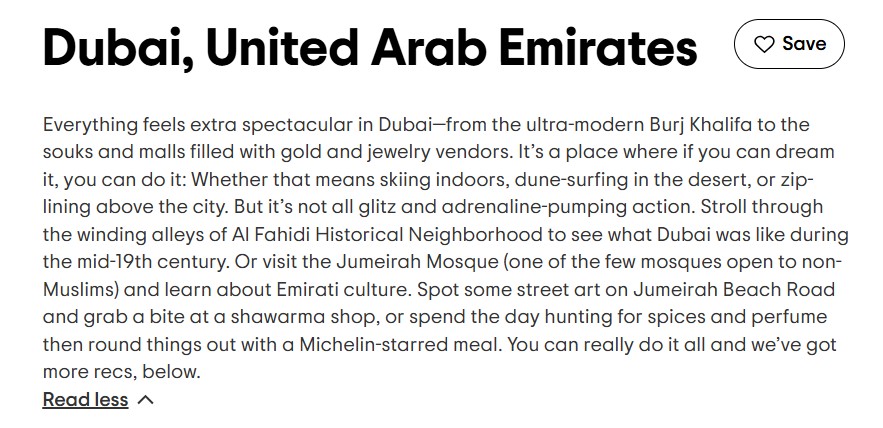
Dubai is often described as a city of “ubiquitous glitz” that “lives and breathes a sense of possibility and innovation.” Some even call it the “most luxurious city in the world.”
But what Tripadviser likely won’t tell you is that Dubai is part of the “most unequal region in the world” in regard to income inequality. In Dubai, migrant workers are manipulated into working in arguably harrowing conditions for extremely low wages—and their behind-the-scenes work is allegedly used to keep Dubai’s public-facing reputation as one of glamour, luxury, and wealth. (Side note: There are undoubtedly many wonderfully compassionate and socially conscious individuals who live in Dubai. This commentary should not be used to villainize the people of Dubai. Dubai’s systemic inequality is the focus here.)
Dubai is an intriguing case study of a more widespread problem: fantasies of wealth that perpetuate systemic inequalities and social injustices. We see this everywhere. From Silicon Valley entrepreneurs embracing bro culture (the “Tech Bro“) to the dark side of glossy social media influencing. From the crypto-obsessed “bro-economy” (the “Finance Bro“) to the insidious “Prosperity Gospel” and all of its various forms. Or, if nothing else, just think of that guy you know who wears khaki shorts, a Ralph Lauren polo shirt, and a TAG Heuer watch—and who spends his time sending unsolicited messages to folks on Snapchat while listening to Joe Rogan and/or Andrew Tate. The common thread: socio-economic elitism bolstered by visions of financial grandeur.
Money is one of the most divisive topics today—a fact that is readily apparent in America’s divided reaction to the arrest of Luigi Mangione. According to a 2024 Pew Research Center survey, economic issues (inflation, healthcare affordability, and the federal budget) are at the top of the public consciousness.
As scores of young men and women hustle forward with hopes of wealth and luxury, income inequality and wealth disparity plague the nation. One important solution is to target the super-rich through policy and satire. But another partial solution is to convince the masses that a lifestyle of extreme wealth, glamour, and luxury is overrated. Often, the pursuit of visible displays of wealth occurs at the expense of socially conscious action, so changing the minds of wannabe Finance Bros and glamour-obsessed influencers could reinvigorate America’s push toward socio-economic justice.
Enter Macklemore.
Macklemore’s 2012 song “Thrift Shop” took thrifting to the top ten of the Billboard Hot 100. It also “topped the R&B/Hip-Hop Songs chart for fourteen consecutive weeks” and “set a record on that chart as the first song to reach two million streams in a single week.” And it contains lyrics like this:
Coppin’ it, washin’ it, ’bout to go and get some compliments
Passin’ up on those moccasins someone else has been walkin’ in
Bummy and grungy, **** it, man, I am stunting and flossin’
And saving my money and I’m hella happy, that’s a bargain, *****
I’ma take your grandpa’s style, I’ma take your grandpa’s style
No, for real, ask your grandpa, can I have his hand-me-downs? (Thank you)
In an era of luxury-chasing consumers and extreme wealth disparity, this is a protest song. Macklemore glamorizes the non-glamorous, and he actively criticizes the type of superfluous consumerism and luxury that operate in contrast to a socially and environmentally conscious lifestyle. Intentionally or not, Macklemore is protesting the perceptions of wealth and luxury that perpetuate poverty and inequality. In a world of Finance Bros, Macklemore is a proud pop-music thrifting king, which is pretty damn countercultural. If you consider economic powers to be as potentially harmful as religious powers, then Macklemore’s “Thrift Shop” is just as socially relevant as Dylan’s “With God on Our Side.”
And Macklemore’s “Thrift Shop” isn’t the only song that challenges the status quo of extreme-wealth hustle-culture glamour. Below are additional songs that represent this new-ish era of anti-wealth protest music.
“Victoria’s Secret” by Jax (2022)
God, I wish somebody would have told me when I was younger
That all bodies aren’t the same
Photoshop itty bitty models on magazine covers
Told me I was overweight
I stopped eating, what a bummer
Can’t have carbs and a hot girl summer
If I could go back and tell myself when I was younger
I’d say, “Psst!
Jax’s “Victoria’s Secret” is an upbeat condemnation of absurd beauty standards pushed by men in the fashion industry. The chorus points a finger directly at men who profit off of the insecurities of women: “I know Victoria’s secret / And, girl, you wouldn’t believe / She’s an old man who lives in Ohio / Making money off of girls like me.” Many artists and activists have criticized greedy fashion companies, but few of those critiques have featured as many catchy verses and memorable beats as Jax’s pro-women anthem. Les Wexner, the businessman who made Victoria’s Secret what it is today, is worth $7.9 billion. Jax’s song protests how Les Wexner made his wealth. And the song’s message apparently resonated with many: the song reached number 35 on the Billboard Hot 100.
“Royals” by Lorde (2013)
But every song’s like
Gold teeth, Grey Goose, trippin’ in the bathroom
Bloodstains, ball gowns, trashin’ the hotel room
We don’t care, we’re driving Cadillacs in our dreams
But everybody’s like
Cristal, Maybach, diamonds on your timepiece
Jet planes, islands, tigers on a gold leash
We don’t care, we aren’t caught up in your love affair
“Royals” came out the same year as “Blurred Lines,” Robin Thicke’s horrifyingly sexist and dangerous song that dehumanizes women (“Tried to domesticate you / But you’re an animal”) and trivializes assault (“I hate these blurred lines / I know you want it”). The music video for “Blurred Lines”—which is just as stupid as the song itself—features Robin Thicke, T.I., and Pharrell Williams dressed in expensive clothes and standing/dancing awkwardly behind models in lingerie. In many ways, “Royals” is the antithesis of “Blurred Lines”: Lorde’s song is a pop-music critique of extravagant displays of wealth and status. Robin Thicke seems obsessed with looking powerful and elite, but that “kind of lux just ain’t for” Lorde and her listeners. (Plus, her music video is infinitely better than the rubbish Thicke’s crew made.)
“Here” by Alessia Cara (2015)
Excuse me if I seem a little unimpressed with this
An anti-social pessimist, but usually I don’t mess with this
And I know you mean only the best
And your intentions aren’t to bother me, but honestly, I’d rather be
Somewhere with my people, we can kick it and just listen to
Some music with a message, like we usually do
And we’ll discuss our big dreams, how we plan to take over the planet
Alessia Cara’s “Here” does not challenge wealth in the way that “Thrift Shop” and “Royals” do, but it nonetheless operates as a commentary on the type of lifestyle that favors expensive thrill over connection. The song is not anti-party or anti-Type-A (though it certainly doesn’t celebrate those things); instead, it is an anthem that celebrates introspection (“we’ll discuss our big dreams”), genuine connection (“Not in this room with people who don’t even care about my well-being”), and independence (“I’m stand-offish”). Consider the non-speaker characters in Cara’s song: a boy “who’s hollerin’,” a girl “who’s always gossipin’ about her friends,” a boy “who’s throwin’ up / ‘Cause he can’t take what’s in his cup no more,” and a girl who is “talkin’ ’bout a hater” (despite the fact that she “ain’t got none”). Now imagine those characters in the wealthy sections of Dubai or in an episode of Keeping Up with the Kardashians, and you’ll understand why Alessia Cara’s “Here” is an anti-wealth protest song like “Royals.” The song’s speaker is a “little unimpressed” with glam-chasing lifestyles and “can’t wait ’til we can break up out of here.” Same, Alessia Cara. Same.
“Thicker Than Dust” by K.Flay (2014)
I’ve got a brand new passion, we found a whole new way to see
Might spend a whole night smashing, wait for the blowback patiently
World never seemed like a fair place, bad people got the nicest things
Same s**t playing on the airwaves, naked girls, diamond rings
All my life been a good kid, so what I got a broken car
Moved my shit out of Brooklyn, laughed out loud, fell apart
Money’s overrated, sex ain’t hard to find
We’re not in love, since when is that a crime
“Thicker Than Dust” comes from K.Flay’s debut album Life as a Dog. Most songs on this album are brilliant, and many of them examine the nuances of camaraderie. But “Thicker Than Dust” provides are more biting commentary: this song directly criticizes traditional expectations of wealth and success. K.Flay doesn’t hold back: “F*** living life in an office” she sings before wondering about the nature of existence (“we look better with the stars out, waking up to go to sleep again”). The song expresses no interest in extreme glamour; in fact, K.Flay’s lyrics actively dismiss it. The song even takes some jabs at music that glorifies wealth: “Same sh*t playing on the airwaves, naked girls, diamond rings.” (Looking at you, Robin Thicke.)
Need for More
The pop-adjacent anti-wealth protest genre is still fairly small, but we need it now more than ever. For every K.Flay, there is a Finance Bro ready to talk about wealth on a podcast. It’s been over ten years since “Thift Shop” was released, and the world could benefit from another upbeat reminder that tunnel-visioned views of wealth, status, luxury, and glamour are overrated—and maybe dangerous.
Know of any other anti-wealth songs? Let us know!
Ben Boruff is a co-founder of Big B and Mo’ Money. Read more at BenBoruff.com.
Bonus Song
“Lifestyles of the Rich and Famous” by Good Charlotte (2002)
Lifestyles of the rich and the famous
They’re always complaining, always complaining
If money is such a problem
Well, they got mansions, think we should rob them



 Big B and Mo' Money